
Being agile is about staying light on your feet
I’ve been working with agile now for a few years and I do find that often it is misunderstood massively within organisations. This is mostly the reason businesses just never get the benefits from an agile approach to delivery of projects. In many ways it just seems too simple but the reality is that positive adaptation of agile is really challenging because it takes engagement. How can I put this clearly?
Agile is not a thing you take out of a box and just let go and be free. It is like a new puppy, it needs training and nurturing and in many ways loving. It takes consistency and effort and establishment of some solid ground rules.

It takes responsibility to wield agile with purpose and it takes the involvement of the whole organisation, not just the poor development team. After all the benefits of agile that is working will be realised by everyone.
All too often I hear simple statements of the purpose of agile and yet the foundations of agile are covered by the manifesto and principles. For those unsure about them they are here;
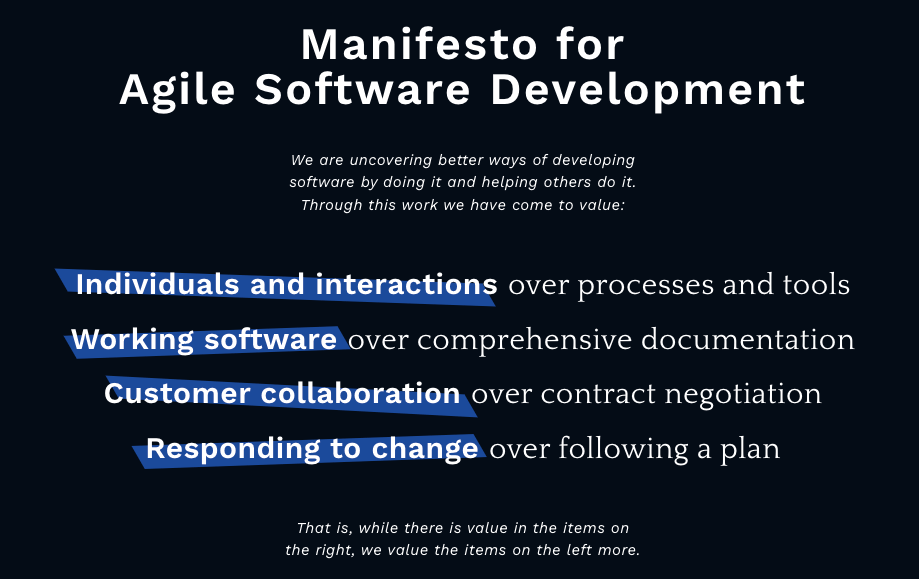
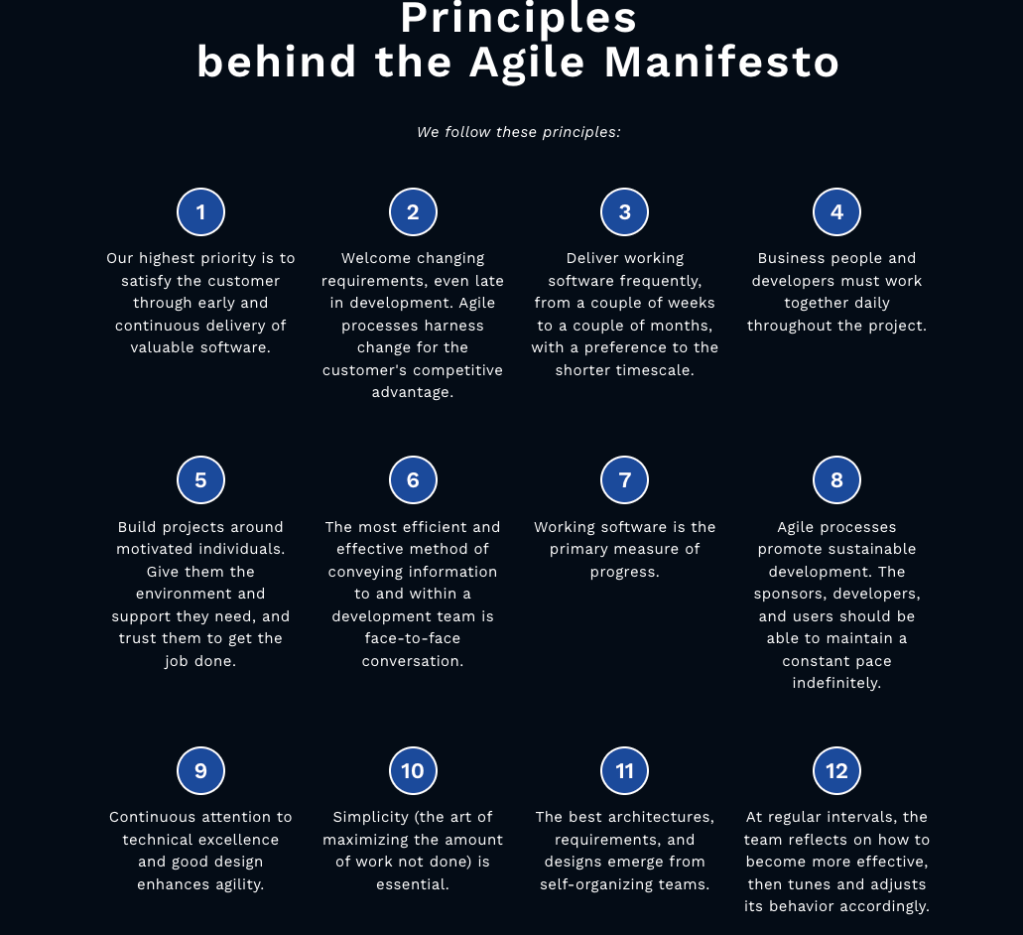
There is a lot here to digest and if you do not come up with questions and searches for clarity then you need to read them again. I don’t believe they were ever intended as a complete answer and there is a lot to dig into. Each principle for example will need careful consideration and unpicking. I will start to go through the principals one at a time in later editions.
The fact remains that using the word ‘agile’, is in my humble opinion the laziest starting point and having read ‘Make work more fun’, by the corporate rebels gave me an insight that the businesses that seem to be excelling in agile practices are the ones who don’t call themselves ‘agile’.
“Don’t do agile, be agile…”
So what do I mean about staying light on your feet? Simply, although there is a lot of complexity around making agile work, the fundamentals are that the purpose of an agile approach to project delivery is that you don’t continue to invest in projects where the cost of implementation cannot realistically be realised by the work being carried out. Understanding and being clear about the value objectives and also being realistic about the benefits are one thing. The other main element of agile is that more is unknown at the beginning of the project and as more details come to light the greater the understanding is to identify the realities of the value. As the team learn more and share their knowledge, the better they set to be honest about the benefits to the customer and the users. Why waste precious time doing work that will not pay the dividends?
Of course this puts a very simplistic perspective on the problem because not all effort can be measured in financial rewards directly as there are often works that must be completed from a strategic perspective. Moving products to the cloud for example, although there should be an element of value, there could also be a stability or benefits from cloud support elements that are a factor too and the longer term impact needs to be taken into consideration.
This is why it is so important (more so), that organisations are fully transparent about its objectives and strategy. I do love simple goals and objectives, so that they can remain in the forefront of peoples memory but this has to be enhanced by deeper and more complex understanding of the complexity. Life is never simple, but having a heading that is simple to understand and backed up by greater knowledge will enhance the teams ability to ask those difficult questions when value is This is why it is so important (more so), that organisations are fully transparent about its objectives and strategy. I do love simple goals and objectives, so that they can remain in the forefront of peoples memory but this has to be enhanced by deeper and more complex understanding of the complexity. Life is never simple, but having a heading that is simple to understand and backed up by greater knowledge will enhance the teams ability to ask those difficult questions when value is getting close to being unrealised.
 The mastery of life, work and Photography