Archive

Uncategorized

Being a professional photographer comes with pressure.  Probably mostly from within.  Not always though.  Do I want to see any bad images out there to reflect my skill or lack of it?

MRN-2013-012-003 MRN-2013-012-074

There are always times when photography should come second.  Family time is precious and there are few times as our children grow up that we can spend that quality time together…….. but I must take my camera…… I must…… you never know when that killer shot will show you an opportunity.

MRN-2013-012-034

True.

MRN-2013-012-042

MRN-2013-012-099

MRN-2013-012-066


MRN-2013-012-103 MRN-2013-012-106

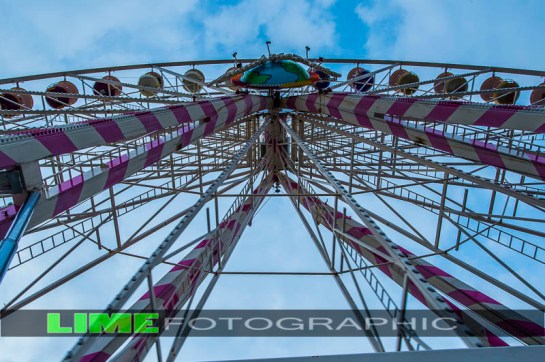
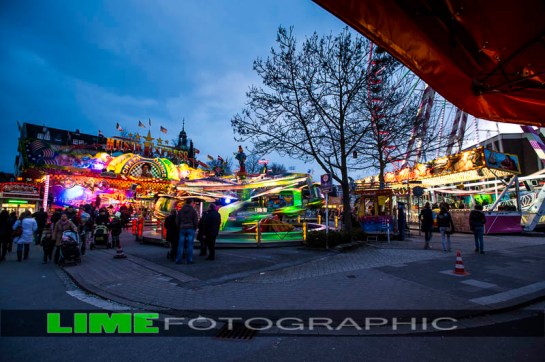
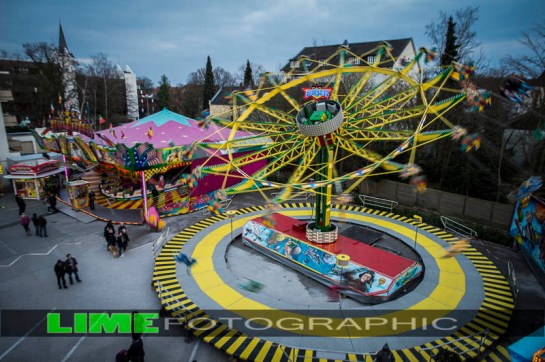
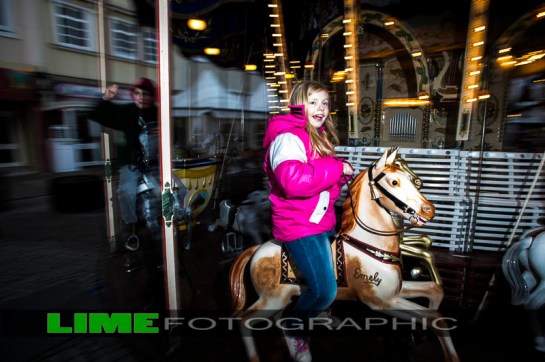
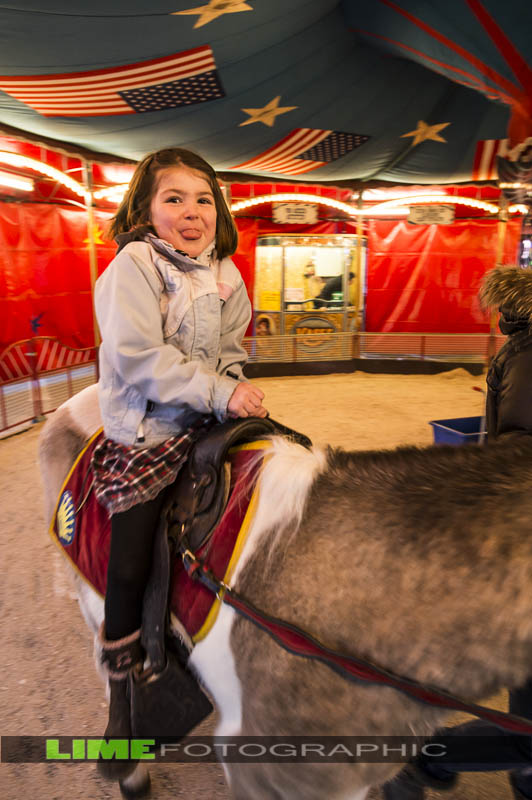
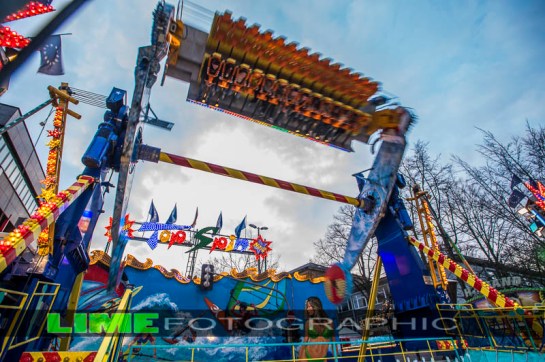
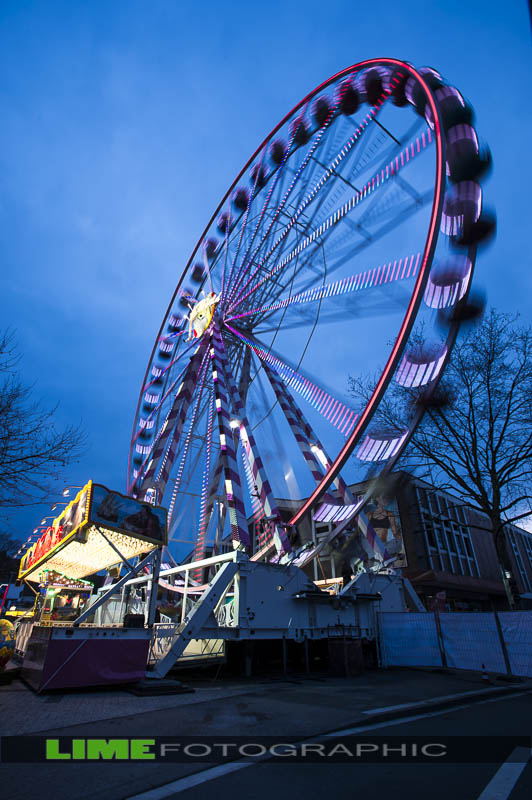
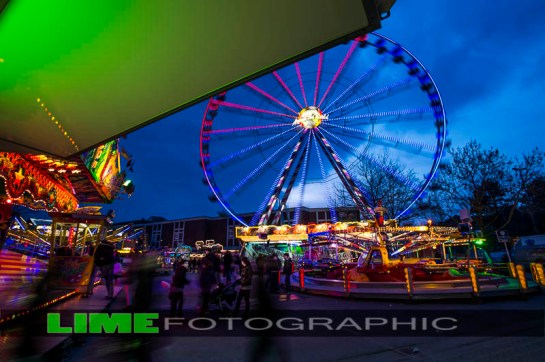
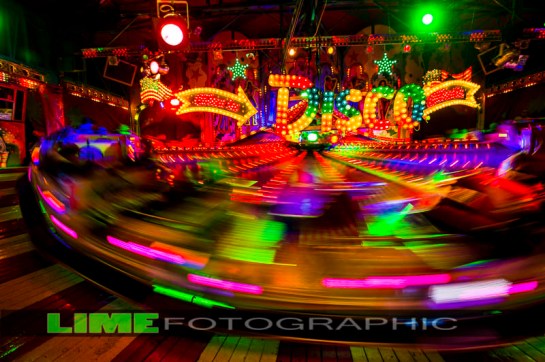
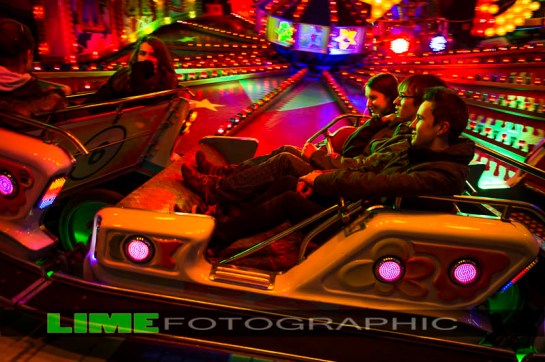
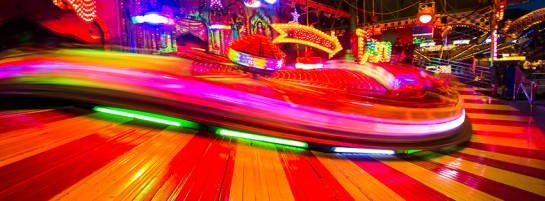
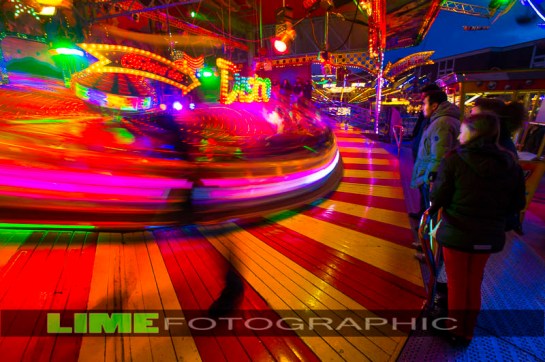
Fairgrounds are so much fun, especially as a child (we had three kids with us), the colour is amazing, the speed, the screams, the laughter, the food.  They are great fun to shoot too, but quite challenging.  I wanted to take a few images but still keep the balance with spending some of that quality time together.

MRN-2013-012-207 MRN-2013-012-142 MRN-2013-012-127 MRN-2013-012-118

I have now been a photographer for a few years now.  As with any vocation it has its highlights and lowlights (no pun intended), but its unlike that many vocations it can be as incredibly rewarding.  It is by its very nature a creative process in many cases, even in the documentary field.  It comes in many guises with to some extent a requirement to specialise in one field or another.  Now at the moment I am fortunate to be employed to do what I enjoy so much (even the bad days are not that bad), but being employed also has its down side.  It does restrict to a degree my own direction and personal ambition, or maybe place certain ideas and concepts on hold.

In this time of financial uncertainty, I guess it is better to be in employment than not (although no-one seems safe).  With employment I do also get the freedom an opportunity to expand and improve (an important concept for any creative type) with relative comfort.

I have recently been reworking my archive, looking for something to document a transition or a journey.  As any photographer will tell you, when you train in the fundamentals and technical aspects of an industry regarded by many as magical, you get to understand these but how do you take that knowledge and make it your own?  I hear much about having an eye for a photo, and whilst this is true, I also believe that to a degree this can be taught.  There is a skill in seeing something and making a conscious decision about what shutter speed will work best or how much depth of field is needed, or what exposure value do I want to use.
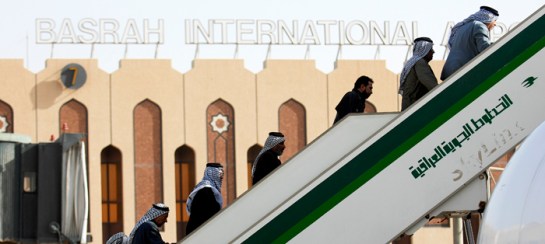
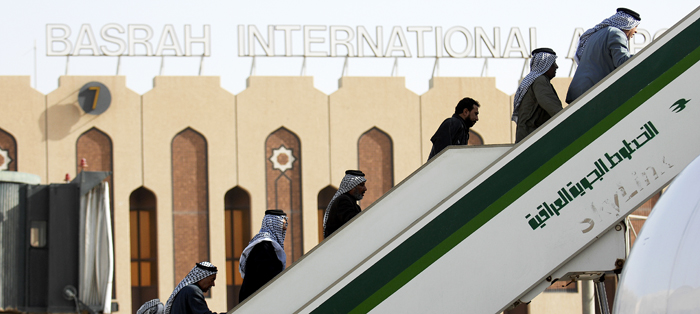
I used to really search for the justification to consider photography as an art form.  My thinking was that was it fair to snatch a frame in a tiny fraction of a second, trusting at least to some luck that if the subject was talking I wasn’t going to capture a blink or one of those awkward expressions from mid sentence.  How can the blink of an eye compare to a masterpiece painting or sculpture that takes months or even years?  I think now that the truth is they should not be compared in terms of time taken.  My time as a media or PR photographer taught me to look for context in an image but to try to keep the image as simple as possible.  I took the image above along side a fellow photographer to illustrate the reopening of the Basrah airport for the annual Haaj pilgrimage.  As I took this particular shot my colleague was stood beside me, and I remember thinking that we must both have captured the same or very similar image.  I remember thinking that the framing and context seemed obvious.  It was only when we got back to the office that I saw he had gathered a set of shots completely different to mine (no better or worse).  I then realised that there is really no such thing as an obvious shot.  Our minds are all wired differently.  In that sense I think that an image can represent graphically the thoughts and contexts of the photographers eye at the time it was taken.
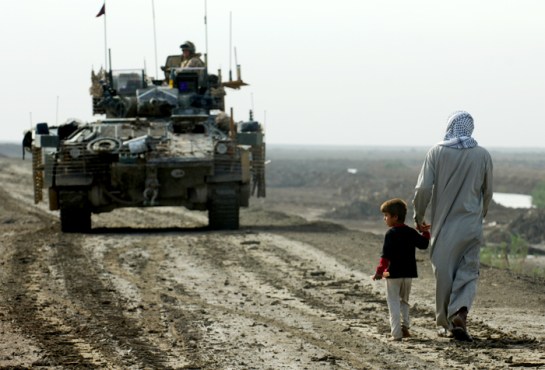
This is not enough to make any image stand out, as there are precious few that do.  I talk of course of the iconic images like the shot of Marilyn Monroe holding down her skirt over the vent or the controversial image of the raising of the Stars and Stripes on Iwo Jima.  There is an inevitable element of luck in both of these images.  There is no doubt that both of these images are great but what if another photographer had been there?  Well I would imagine that both these images would have been different, and having that knowledge would they then be considered iconic?  Who knows?

Sorry I have jumped off track a bit.

As I look through my archive, I look uncomfortably at some of my early images, (but then a get uncomfortable about some of the recent work too) especially when I try to remember why I took them.  In truth I would probably admit that those early days like all photographers I was experimenting with ideas.  Most don’t work in the beginning but I find that as time goes on, I still experiment but now I experiment with experience (some at least) behind me and have a certain expectation of the results.As with digital photography there is much you can do now that would have been much harder with film, if possible at all.  Photoshop skills are part of the trade now and should not be ignored or marginalised, as these skills are now as much part of the image as ever before.  These imaging skills are now available to all with editing software cheap to acquire.
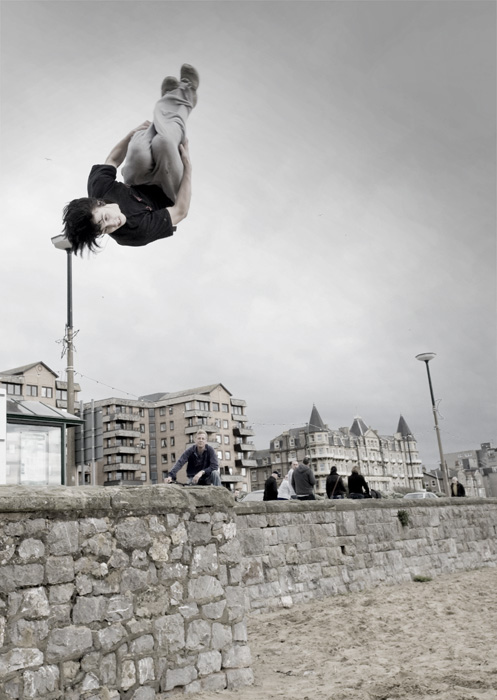
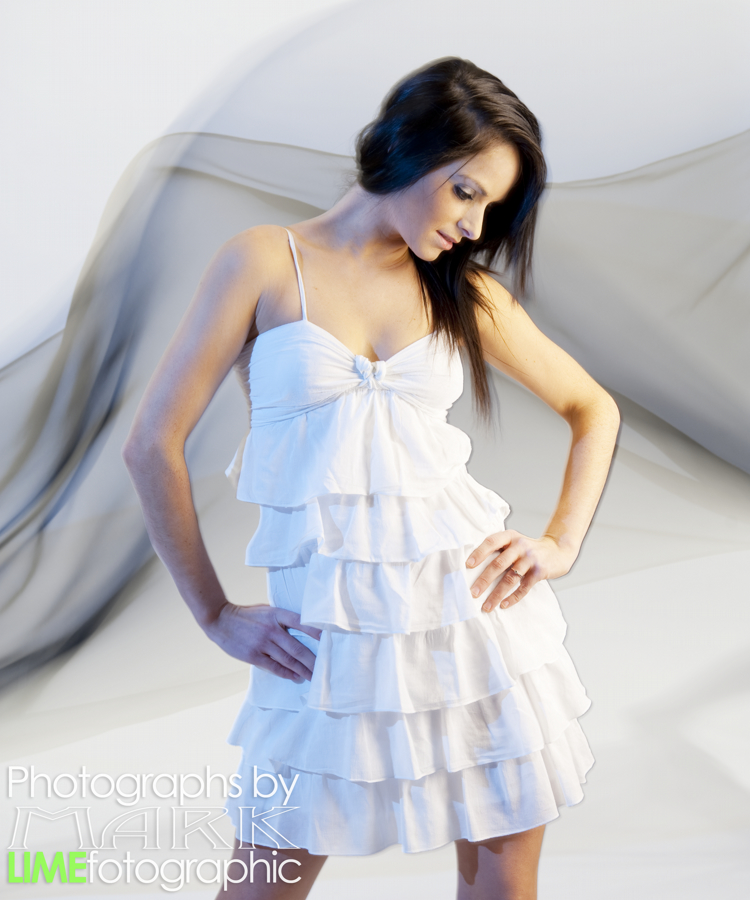
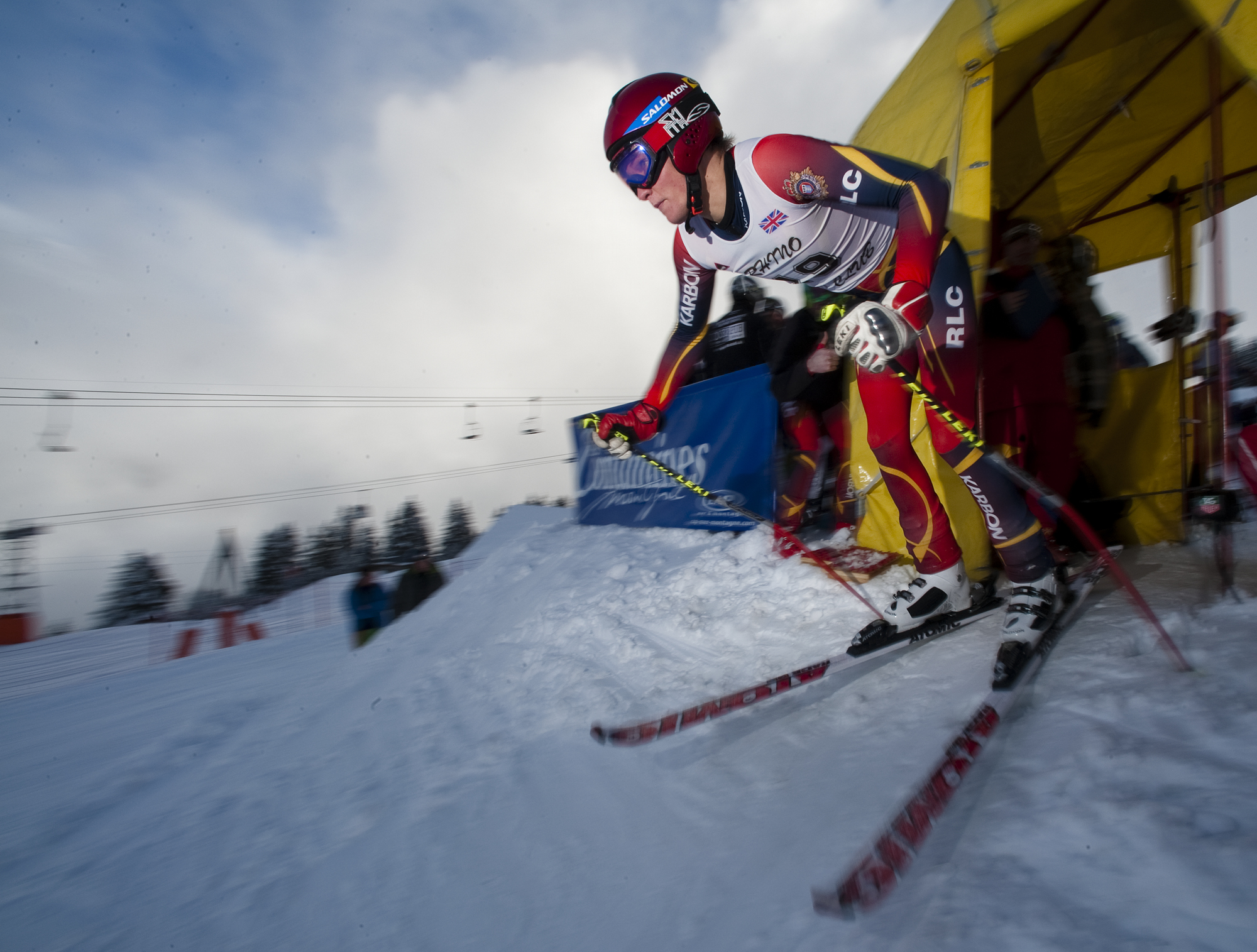
That said there is still plenty of opportunity to capture shots in camera, and utilise the dynamics of photography, Still photography can capture motion but not as the eye seem it.Over the recent couple of years I have experimented more with studio work and at times have found it can be so rewarding, a studio portrait can be dull, lighting can lift it but sometimes you still need an expression.
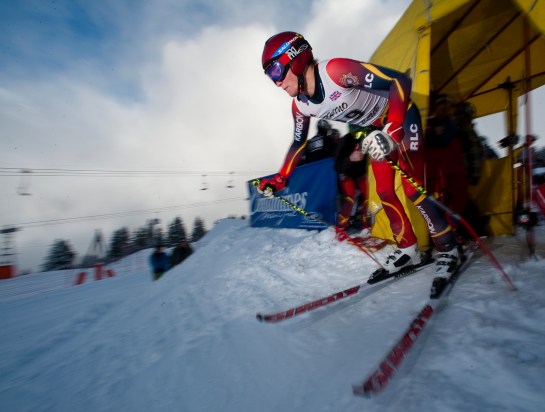
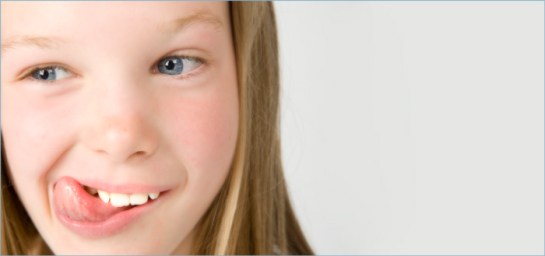
What I like the most with studio work especially when working with real people, not models, is the effort it takes at times to break into a person.  It is always a challenge, never easy but not always a success.  The more experience I get, the better I get, but I never expect the killer shots as I can’t help but feel that is the slippery slope to mediocrity, and then failure.
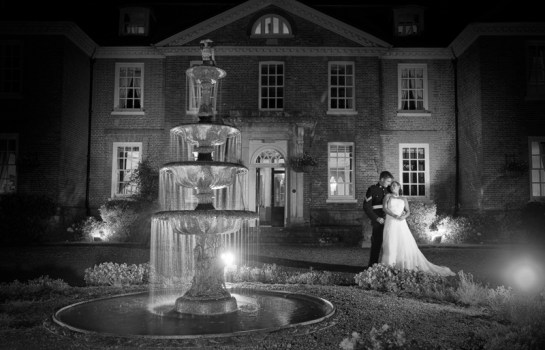
I am not naive enough to believe that my photography is ground breaking or innovative, but by continuing to work at the skills and not be afraid of failing (with a shot), I will continually grow and improve.In many ways I am no different to any other photographer but in that same way I will always be different from any other photographer too.  This is not to say I am a better photographer than the next man (or woman), only you the viewer can decide if you like, hate or are indifferent to my work.Don’t look at one image though and make a decision on me as a photographer, as I grow with experience I adapt my expectations from a shoot to what I have communicated with the subject, but on the flip side, the images I capture today are no more a snap shot in time, they are the result of all those years of experience, of the mistakes and successes, the cold mornings, the hot middays in the desert.  All these things have got me here and the journey goes on.
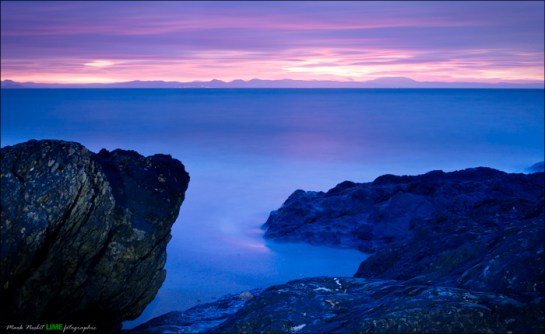
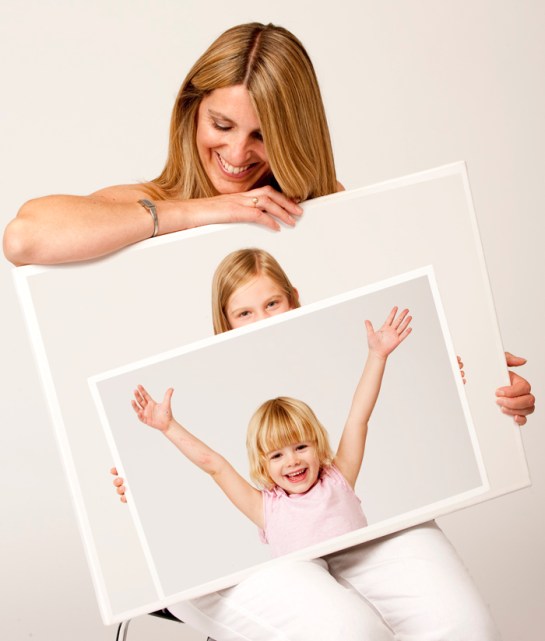
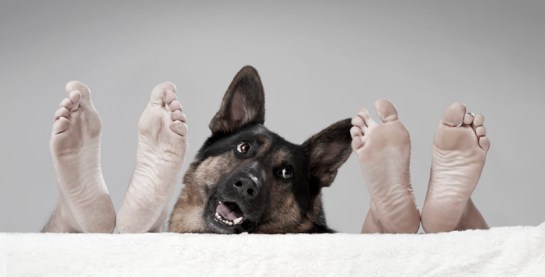
 

So maybe just maybe photography is Art after all?



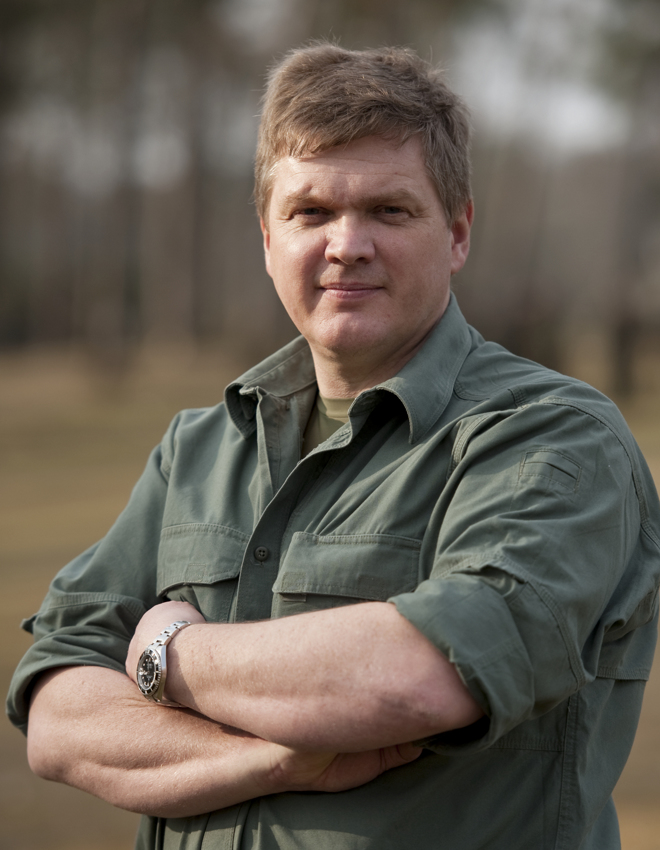
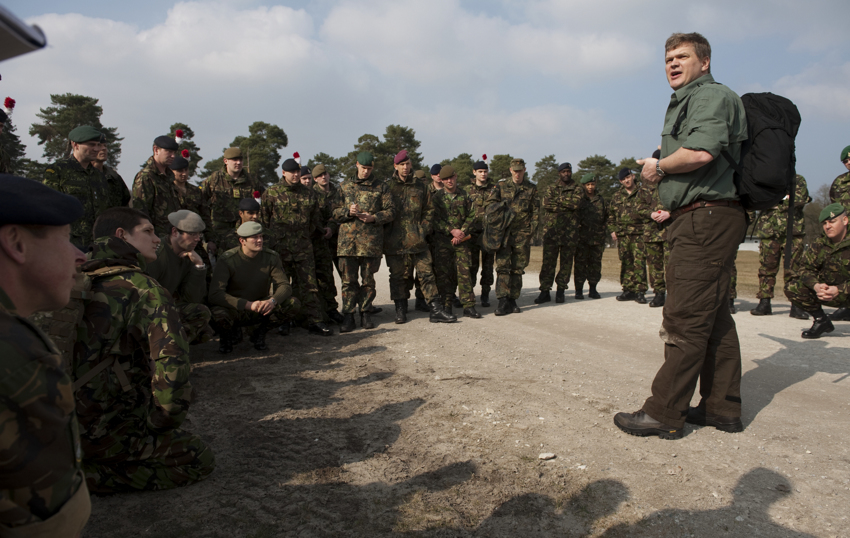
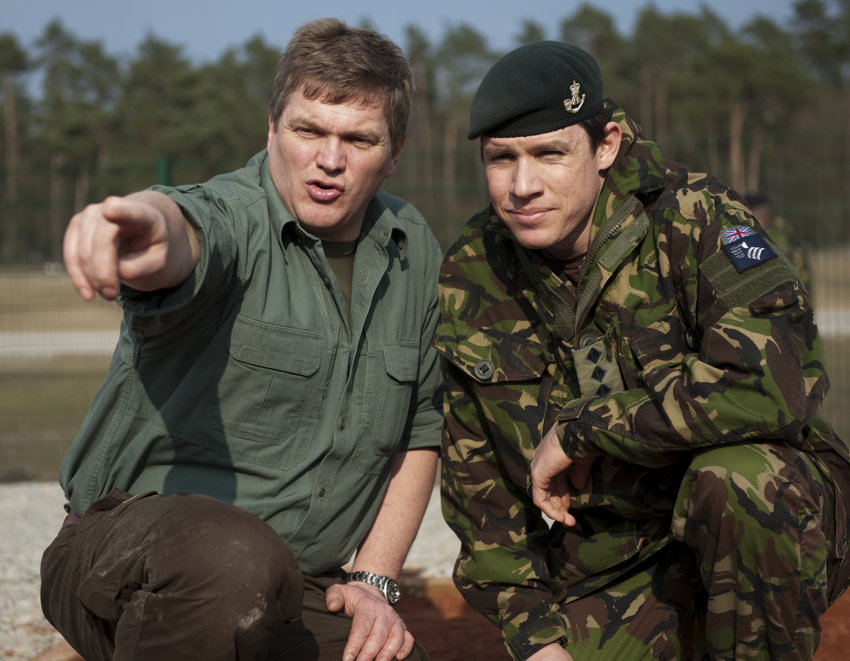
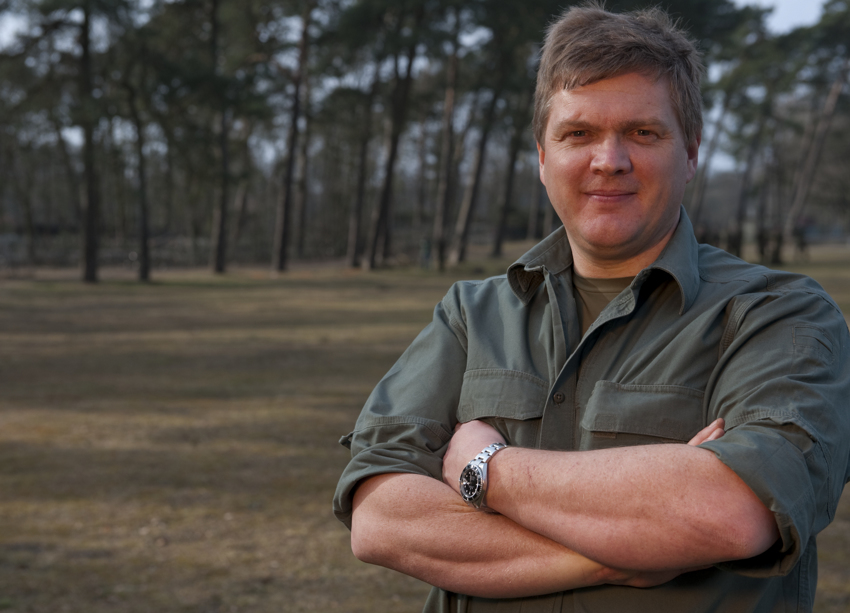
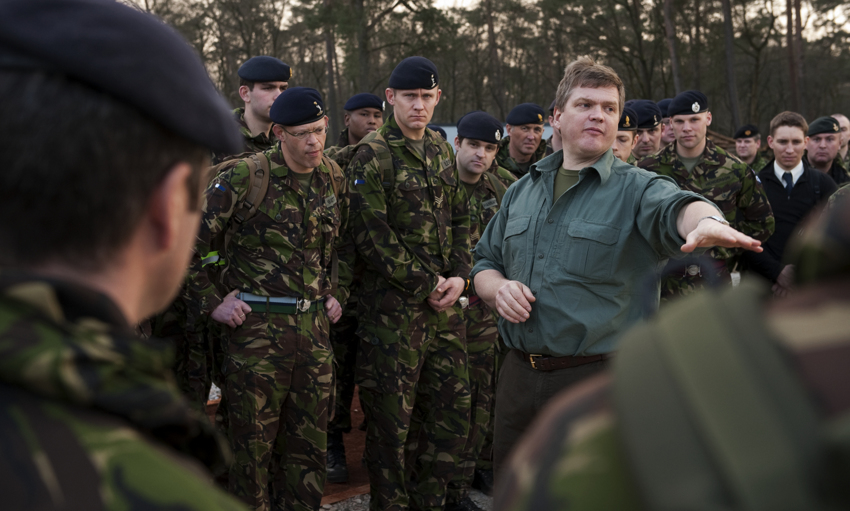
The job of an Army photographer can give you opportunities to meet people you would ordinarily never meet.  This week I was asked to cover a training day with Ray Mears an internationally respected…………. I don’t really know how to describe him with justice!  Now I have had the good fortune to work with Ray once in the past and was really keen to, this time, take the opportunity to take images that I had clearance to use.  He is the kind of guy who will demonstrate how to light a raging fire with nothing more than a twig and some positive thinking, and he is what I could only describe as a survival expert, and a really great bloke to boot.I turned up with a whole host of ideas about shots I wanted to achieve, as is usually the case, the reality turned out quite differently.  I think it is always a good idea to have a few shots in mind, just in case and you never want to be put on the spot and have a blank moment when you have to get the photo.  That said I much prefer to keep an open mind and at least try to create something at the time based on what is going on.So arriving early to get chance to look around the area was basically just an open area surrounded by trees, not much opportunity for an interesting background.  The story was simply the fact that Ray was giving his time voluntarily to teach some of the intricacies of tracking.  The obvious shots were of him surrounded by soldiers as he talked to them.  As I started shooting, I could see that he was wary of me and my camera and as a result I didn’t feel I was getting the shots I needed.Whenever you work with a celebrity (even if they are not typical), it can be quite difficult to introduce yourself and break down the barriers.  You have to be confident and forceful and at times edge in and get their attention.  You also need to be polite and respectful.  His name is Ray Mears, but he doesn’t know me from Adam, so a quick presentation of my hand for a polit handshake and an “excuse me Mr Mears”, good eye contact and you know immediately if you will get on.  A quick reference to our last meeting, he gave the old “thought I recognised you” (which I am sure was just him being polite), we were talking and I could visibly see the atmosphere relax, phew.It was at this point I requested time at some point in the proceedings (if time allowed) to get a couple of portraits to be attached to the press release as well as some posed shots with people we had identified to generate “Home town stories” for in support of the overall article.  This gave us a little time in the program to arrange a conveyor belt shoot to get a few shots (posed) to support the story (Ray training soldiers), we literally had a stolen minute to get seven guys through, so the set up had to be simple and quick.  In the area Ray was giving his talk, I asked each person to kneel down next to Ray and got Ray to point at something whilst looking like he was explaining some detail.  Although the shot is not the most imaginative, we had to get something fast and for me this was the easiest shot we could get under the circumstances and I also had to get something where I could throw the dull background out of focus as much as I could. When capturing supporting imagery for the media, it will pretty much always be a compromise, with some posed images if time or circumstance allows.  You also need to make sure you get the banker shot first and then, only then can you try to be a little bit more creative.  It is very embarrassing if you go straight for a wow shot, find it hasn’t worked and time runs out, resulting in your only shot being a failure.  As it happens, I never really got the chance to go beyond the simple other than a slight warming gel on the flash to give a late afternoon feel.  I felt disappointed I couldn’t get something better, but it was still a usable shot.

In this instance a came away with a few shots that I liked, unfortunately nothing I loved.  That is sometimes how it goes and as always you keep those missed opportunities for another day.

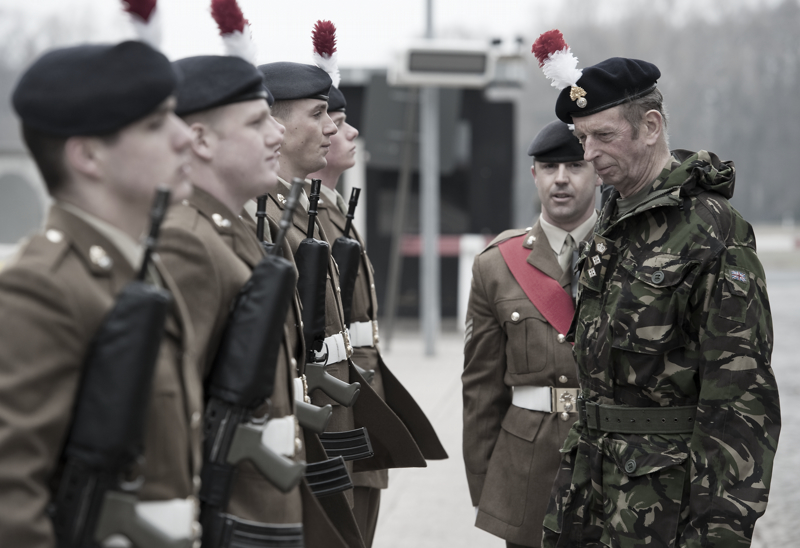
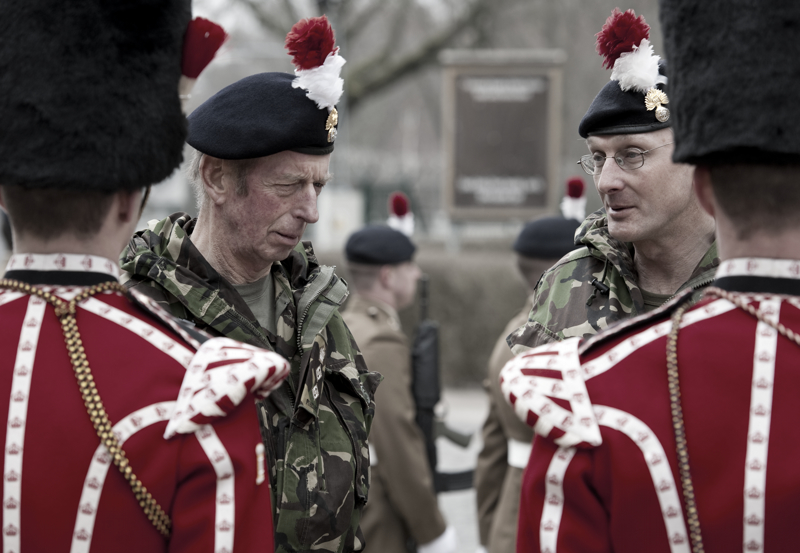
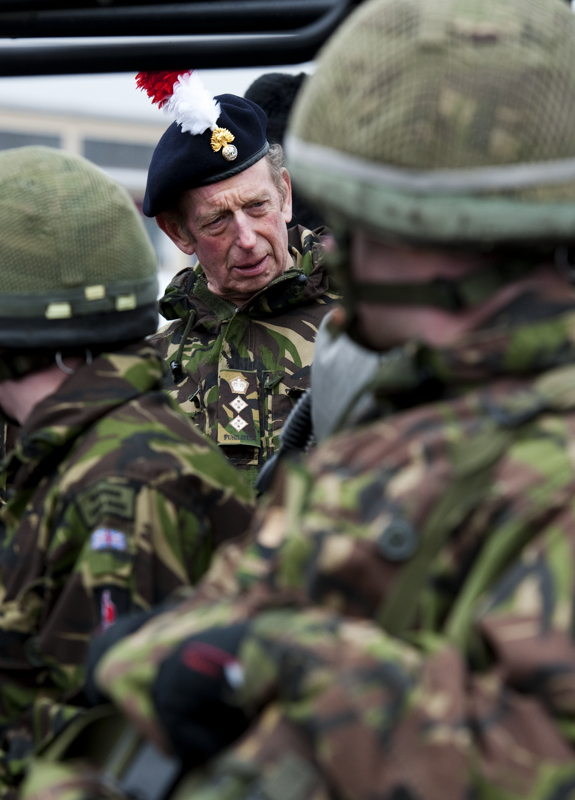
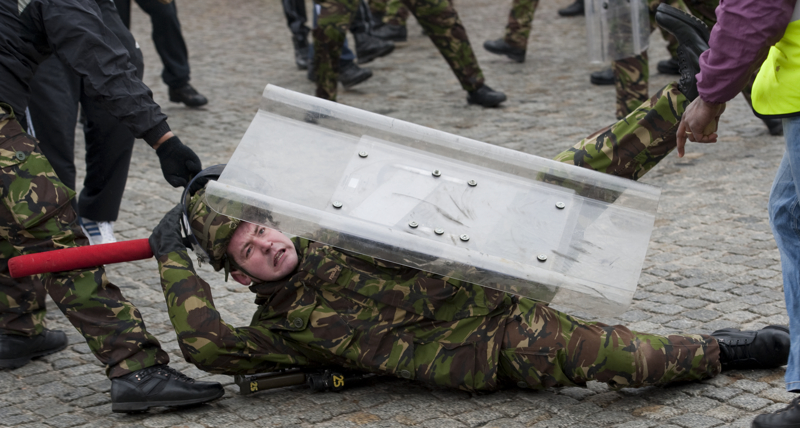
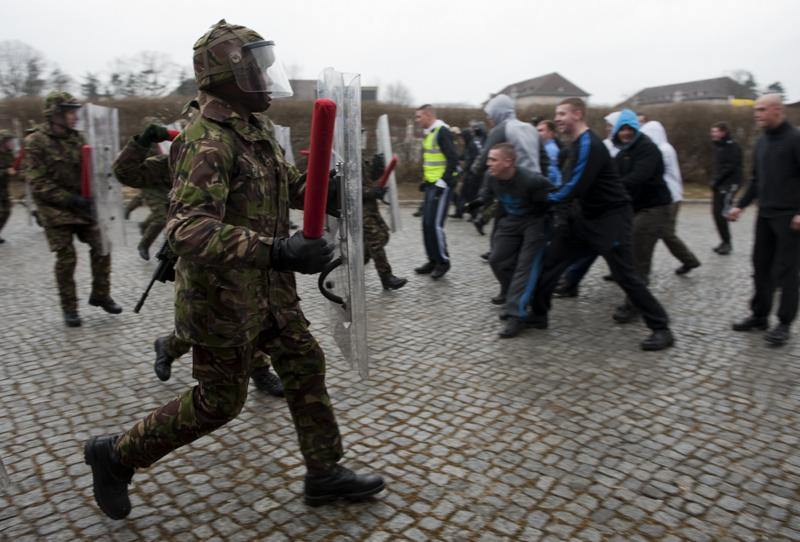
As a working Army photographer we do from time to time get the opportunity to cover royalty visits etc.  Some more than others.  Royalty covers quite a range from some of the more high-profile to the more discrete.  It has been my good fortune to have the opportunity to photograph Prince Charles and his sons William and Harry.  I have also now had the opportunity to photograph His Royal Highness the Duke of Kent on three different occasions, once he even made the trip out to Iraq to visit the Scots Guards.Now if I am honest, photographing royalty at these kind of formal affairs is not what I would call great photography as I can’t avoid the barriers.  The Royal family has in recent years been a target for the media which I feel has resulted in many of them being much more guarded as they have been in the past.  I suppose the goal for a photographer in these circumstances is to try to capture real emotion from an unguarded moment which sounds easy but the reality is much harder.Even when a photographer is dressed in military uniform you just can’t avoid the feeling of suspicion from the royal family and there is rarely any kind of connection with the photographer.  I do feel this is a shame as I ultimately believe their personality is never truly portrayed.  But then when we record these type of events although we can offer images to media outlets, they are primarily used by the hosting units and for historical archives.  I do need to explain though that I really value the archival importance of these events and they do need to be exhaustively covered, no matter just how dull it may seem at the time.This occasion was a visit to 2nd Regiment of Royal Fusiliers, who are currently based in Celle, Northern Germany.  Any Royal visit is always taken very seriously by the hosting unit and in this case the Duke is their Colonel in Chief.  The Duke is (from my experience) always respectful and will pay a lot of attention to the soldiers he meets and is keen to ask any relevant questions.  I will always try to catch eye contact with a view to “make contact”, but invariably to no avail, as frustrating as this is I completely understand.These visits can often be a good opportunity to record some of the stands and demonstrations.  In this case the unit put on a public order display, which although was only a demonstration, it was quite a realistic scenario meaning the drills needed to be up to scratch.Non the less these opportunities are great for practising your photography, you will often have to think fast to focus compose and get your exposure settings right.  Yes I know it’s not real, but by using training to try some options adds ideas to the memory banks, so if you were ever to cover this kind of environment for real, you at least have some idea of what does and doesnt work.  Photographers can stagnate and the only real solution is to keep playing.Sometimes you have to bear in mind that you never know what kind of photographic opportunities will present themselves.  You can usually find a couple of decent images around you even if they are not related to the story.

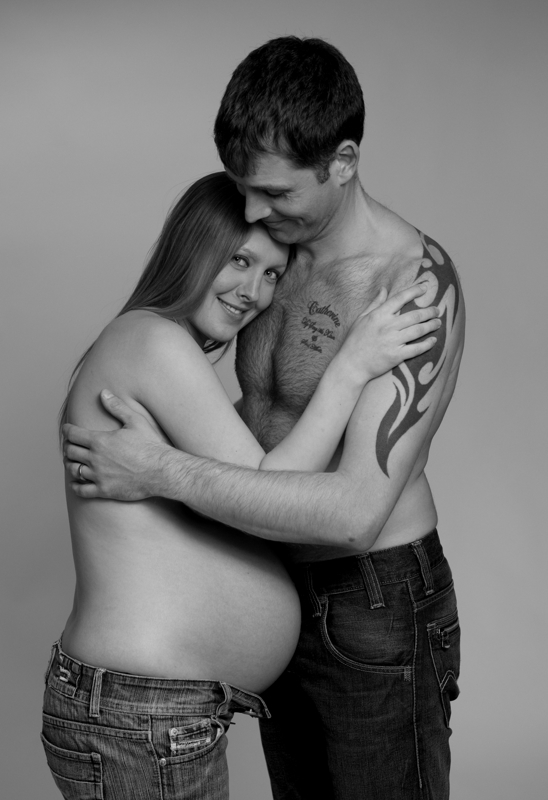
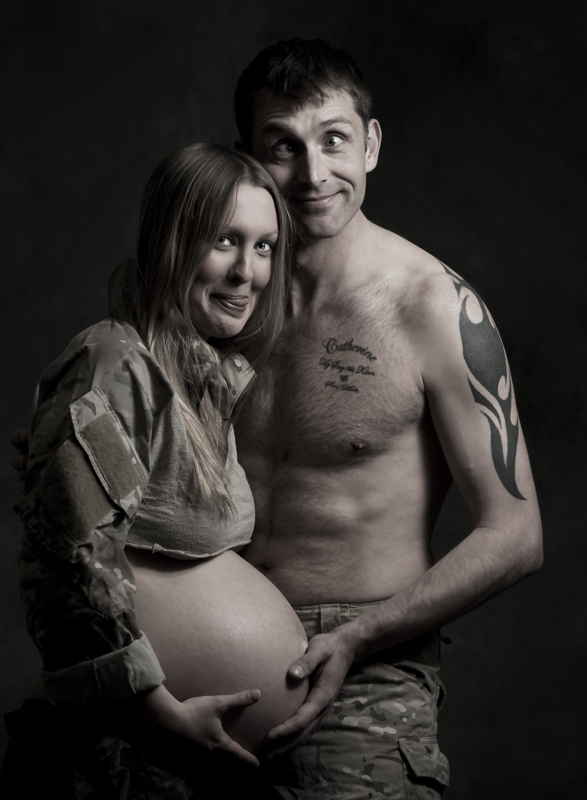
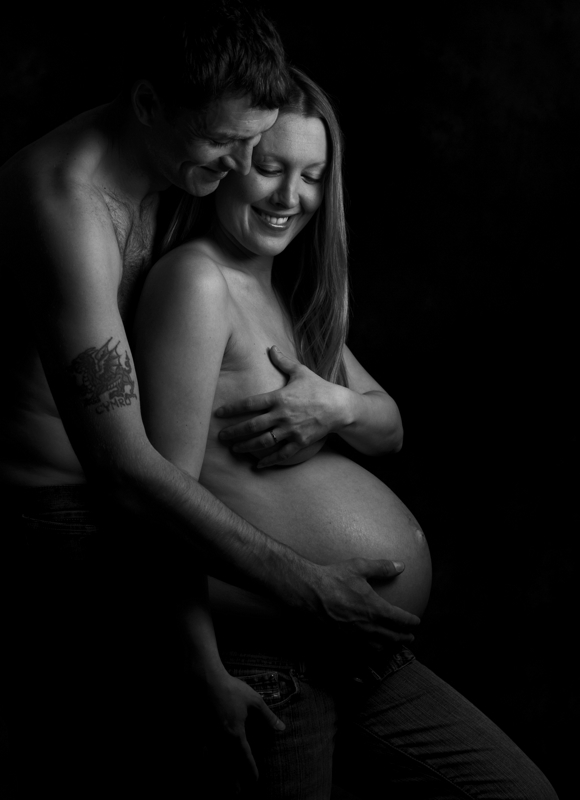
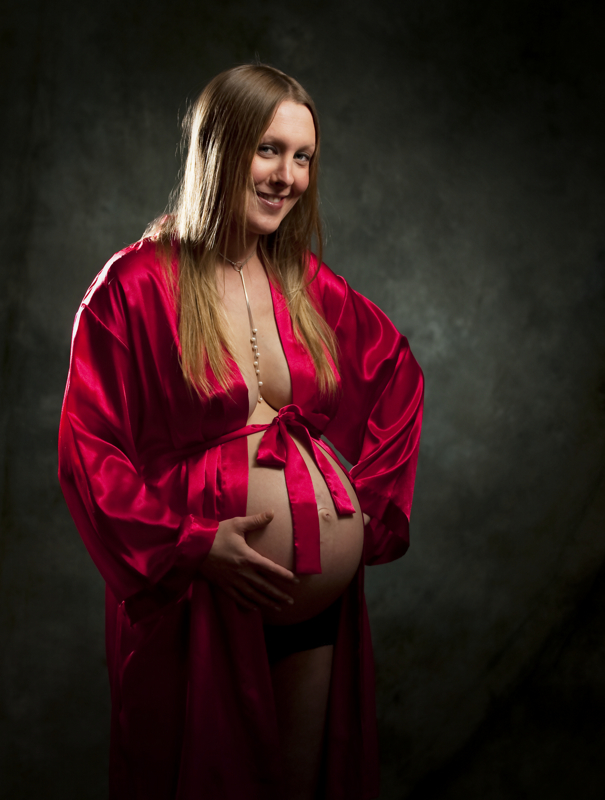
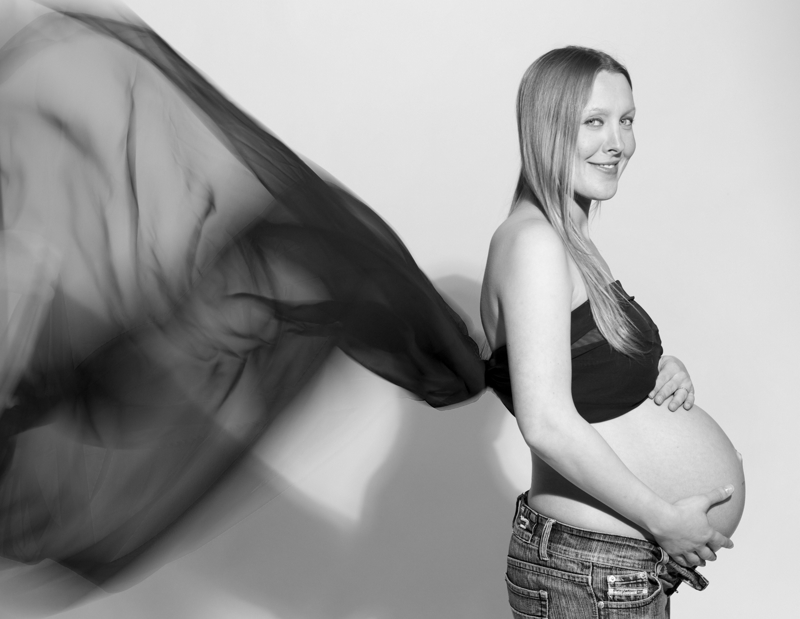
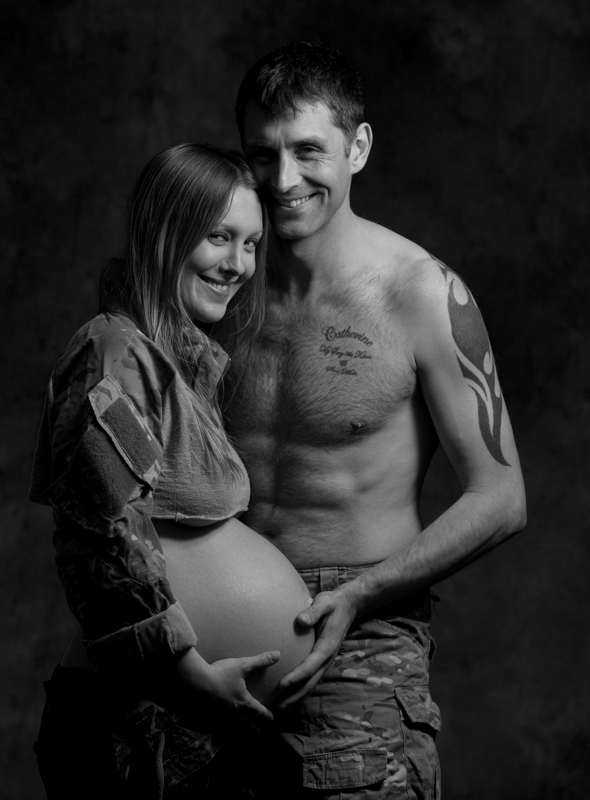
Having never done a pregnancy shoot before, I jumped at the opportunity to assist a friend in a shoot he had arranged.  Now I have done a number of studio shoots before so I felt quite comfortable to begin with.  I was obviously a little nervous never having met the couple before so had no real idea what the client was looking for.  Now I obviously had a few things I wanted to try, but there were two things that would affect this, one would be a misunderstanding on the type of shoot expected by the client and two the fact that I was assisting.  I have not assisted before and have so far been happy working on my own.  I was concerned that I may try to take over the shoot.  I hope this did not happen but you will need to ask my friend that one!  Now as probably most photographers will tell you, when it comes to a pre arranged shoot, you can tend to have too many ideas to realistically complete in a single shoot.  But I suppose that it is better to have too many ideas before hand just in case the client is unhappy with something you are proposing.  Now this hasn’t happened yet but there is always the possibility.  As always we ran out of time rather than ideas.

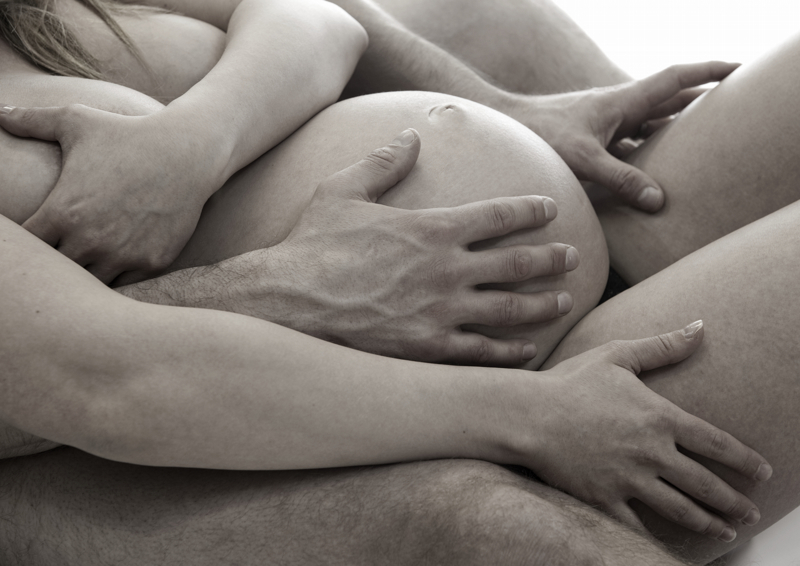
After meeting the couple, Mark & Catherine, we found the couple to be very relaxed which is always a bonus when there is an element of nudity involved in the shoot.  For some people this can be a problem as very few of us are entirely happy with our bodies.  There has to be an element of trust that you will try to do everything in your power to make the subject look at their best.  The beauty of digital is that you have the opportunity to show the client early on what you are getting which can put them at ease, especially as they won’t necessarily have any idea what an image will look like from the lighting in the studio at the time.Now I will be honest that when it comes to lighting in the studio I don’t describe myself as an expert, I like simple lighting, I think it can be so easy to over complicate lighting and the simple fact of simple, is that in most cases the simplest lighting is the most realistic.  By this I mean we are used to things being predominantly lit by a single source (the sun), so a single main light is important.That said now, I do have some other lighting tricks I am happy that once introduced will enhance an image without compromising its overall simplicity.  A rim or hair light can be effective and then a backdrop light will help to give some more interest and even quickly offer a variety of shots from a single set.I prefer to work in the studio with Bowens, however I agreed with Wes (the other photographer) to try to do a complete shoot with some Nikon SB 900’s.  Between us we had 8 lights (until one of mine appeared broken), and we set them up before the shoot as three banks that we could use when we needed them.  Overall I was very happy with the quality of light we had achieved however the hardest thing I found to get my head round was the lack of a modelling light.  This turns out not to be a big problem as simple lighting is simple to adjust.At one point I wanted to have some ambient light in the shot so using what I had to hand I brought in an old “red-head” video light (no control over intensity), so had to temper the exposure to begin with based on the light available.  As a result we used the colour correction filters that came with the flash units to match the best we could to balance.  I was very pleased with the results.Finally as with any shoot, it is always important to keep an eye out with whats happening as sometimes shots are there that you don’t expect.  Wes was working on a pose as he was working in I noticed a lovely abstract in the midst, and not wanting to interrupt him in his flow, I left him to it and when he finished I jumped in and got one of my own favorites of the shoot showing a close up of the bump with four natural and relaxed hands in the shot too.  As all photographers will no doubt agree, getting hands right and natural is very difficult especially with non professional models.

The shoot was a great opportunity to try something new, work with someone I have not worked with before and come away with some images I am very happy with.  Now I just have to convince the client.

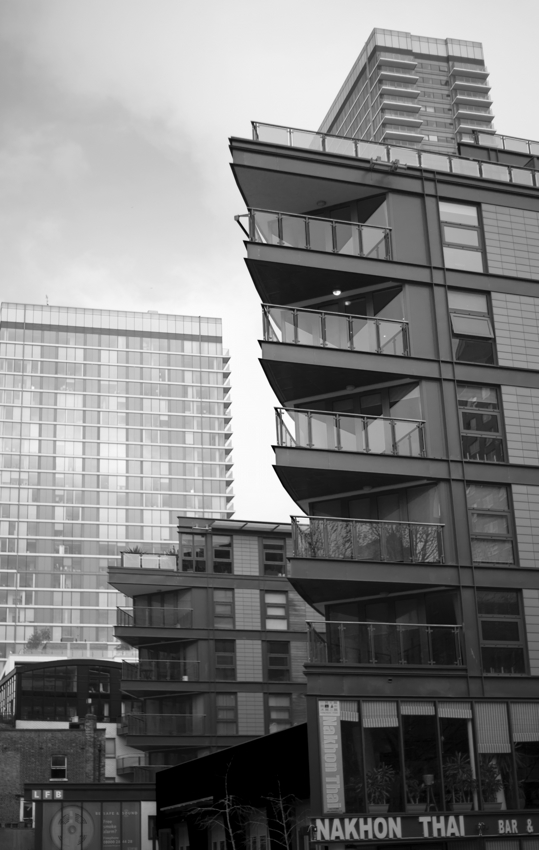
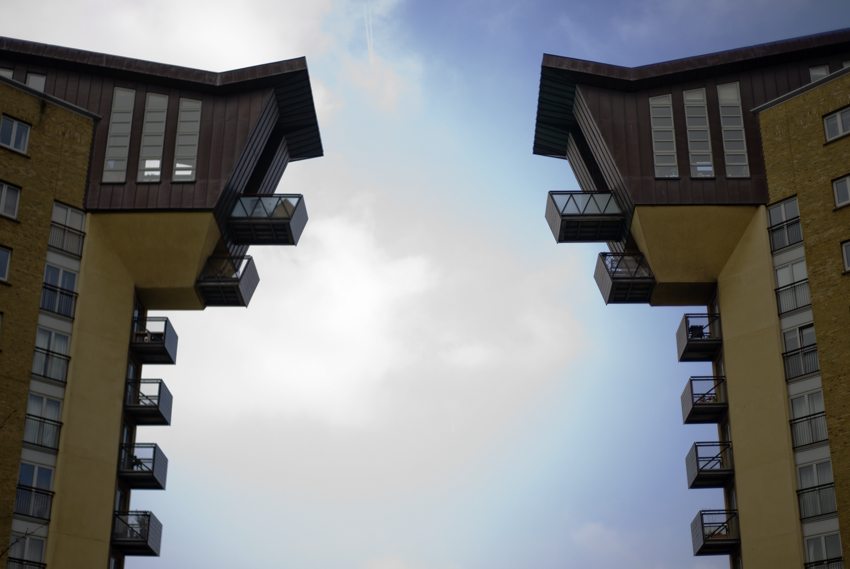
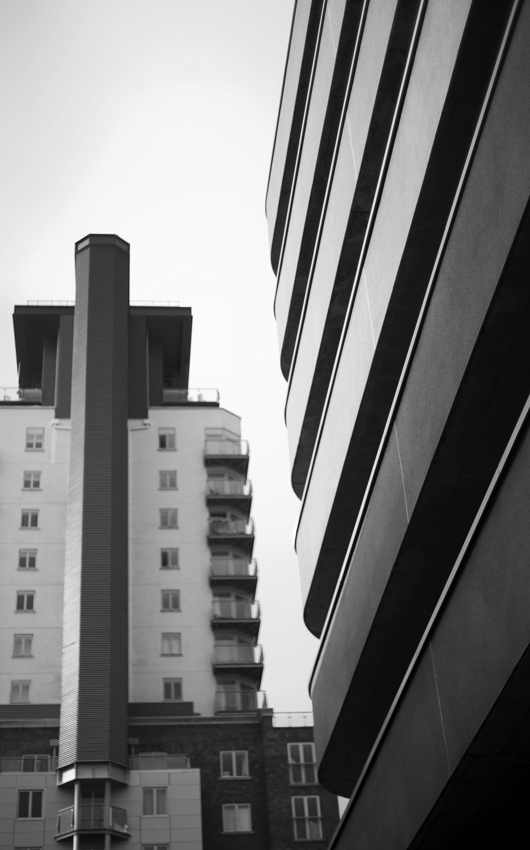
Now then, if I am honest I am not a big fan of our nations capital.  Architecture aside, it is a sad and lonely place.  It never fails to surprise me how so many people can live in such a close proximity to each other and never connect.  I see so many people in a rush to get where they need to go and they just never seem to see outside of their bubble.  One thing London is very good for is opportunity and diversity.  There are an unlimited amount of photo opportunities and if it was just for photography I would spend a fortnight walking the streets just looking.

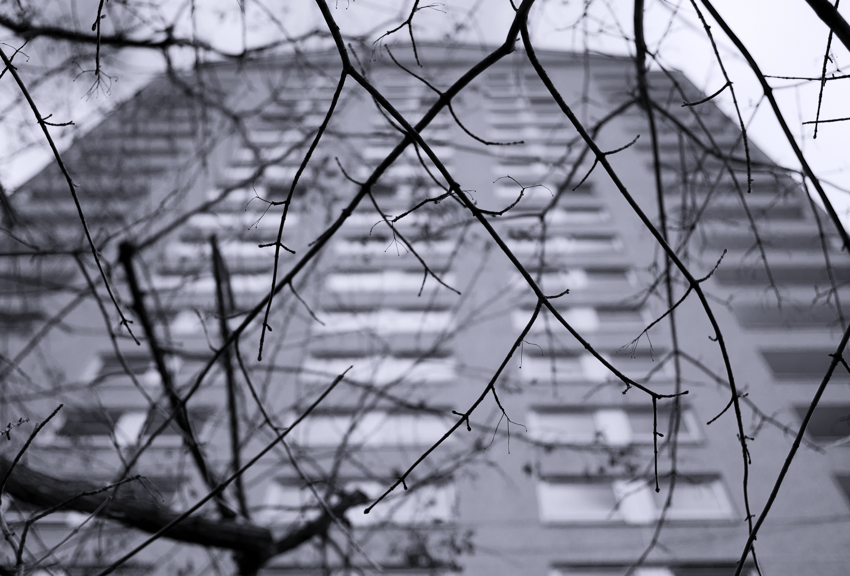
Looking up through the winter canopy

I have been playing around with an old manual focus f1.8 prime lens recently and decided to just walk about with this on a D3.  I like the depth of field you get although on manual focus sometimes it bites you.  Mostly I am convinced that this is due to laziness and auto focus, but I think at the wider apertures now on new lenses, it is virtually impossible to focus manually.  It’s fair to say though it is satisfying to do as much with the camera on manual!

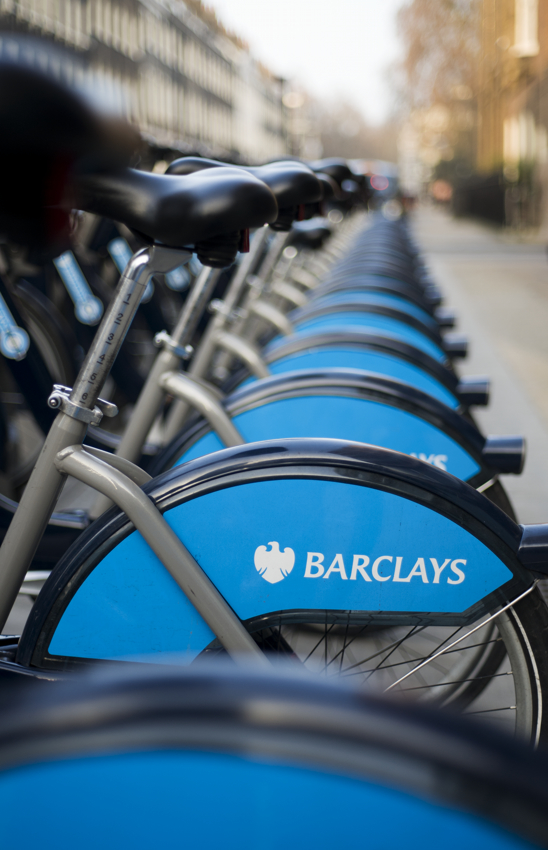
City Bank sponsorship

One of the best things about this lens though is its size, I have got so used to shooting with the big bulky, imposing glass, that it just feels good to shoot with the innocuous pimple on the front of the camera.  I felt that I could be invisible (sort of), people were less inclined to duck and dive for cover at the sight of a huge lens.  This allowed for more possibilities.

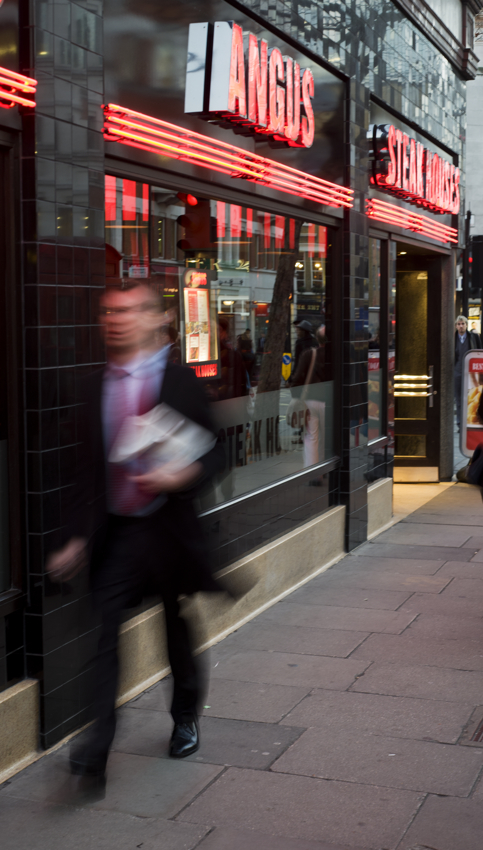
The Steak house

This weekend I dug out an old lens, a 50mm prime lens at f1.8.  Now this is a manual focus lens and having been a long time away from manual focus, this was particularly tough.  The modern lenses just do not help out when switching to manual.  Now although this was difficult especially with f1.8 close up shots trying to focus on the eyes of a two year old who just will not sit still, I really love the results and will do a lot more with this lens.  Prime lenses themselves are a challenge when you have gotten used to working with telephoto’s and there are some considerations that most of the time you just do not have like your position in relation to the subject.  The number of times I needed to move or move the subject is something that will take a little getting used to, but it does make you think a little harded about composition, angle etc.  All in all quite happy so far and I will be posting a few more images later this week.

Hello everyone.  Let me start by introducing myself.  My name is Mark Nesbit, I am a serving British soldier.  I am a photographer and right now am lucky enough to get paid for doing what I love to do.  LIMEfotographic is a venture a wanted to get up and running ready for the time I leave the forces.  I have done quite a bit of research and the prospect of starting another photography business is daunting.  It seems that in these days ability is quite simply not enough.  The internet together with digital developments has made the industry ultra competetive and you now have to promote, promote and then promote yourself.  This in itself is still no guarantee of success.

So here I am, supported by my wife, looking at ways to raise awareness for my business.  I am in no rush and I want to achieve a reputation for all the right reasons.

This initial entry is the beginning of what I hope will be a long and satisfying journey.  Thakyou for joining me.


Mark