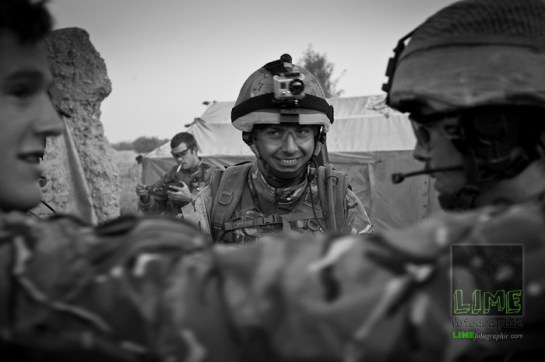
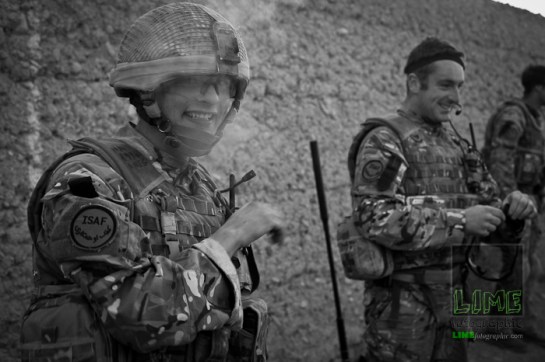
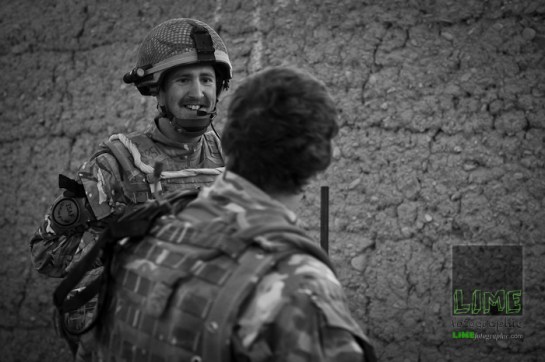
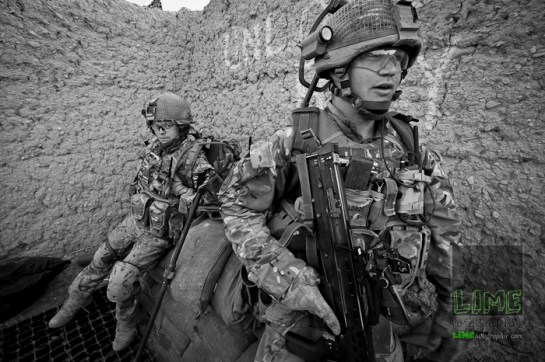
This Steven Spielberg film “Saving Private Ryan”, is widely regarded as one of the best ‘war’ films ever made.  Visually stunning and emotionally gripping it is a modern take on an event that is now sadly beyond most of our memories.  One of the most memorable scenes for me is the opening, the assault on beach.  The mood felt tangible.  Was this what it was like?  The scared to death soldiers vomiting through fear as they head towards a heavily entrenched enemy.  I imagine there were plenty of instances of this.
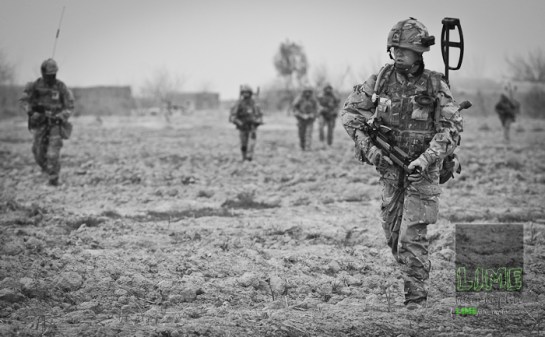
Of course you cannot draw too many similarities between WW2 and what is in comparison almost a skirmish in Afghanistan (not to belittle the threats on the ground of our our soldiers).  That said, for our guys on the ground it is immaterial as we all live our own experiences which don’t really ever draw reference from other’s experiences.
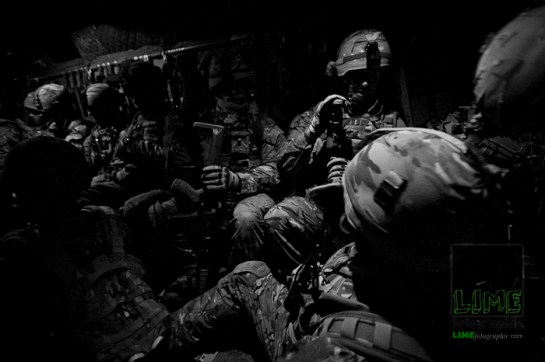
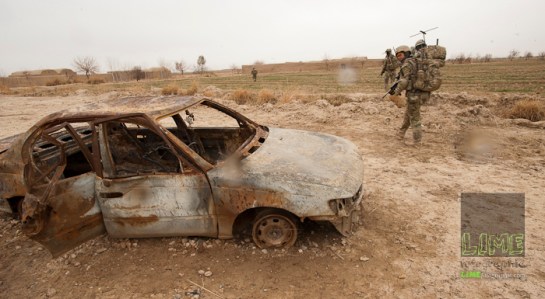
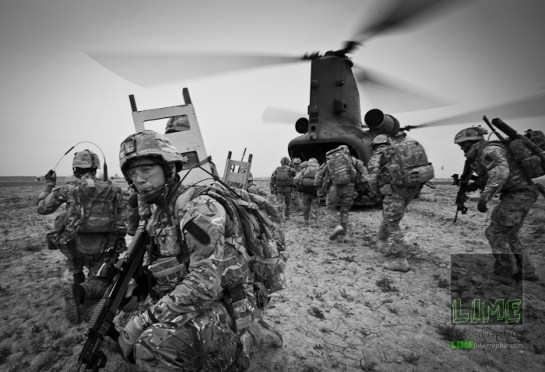
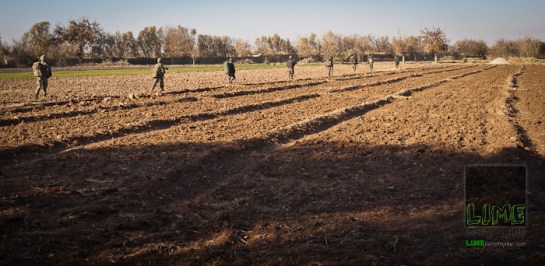
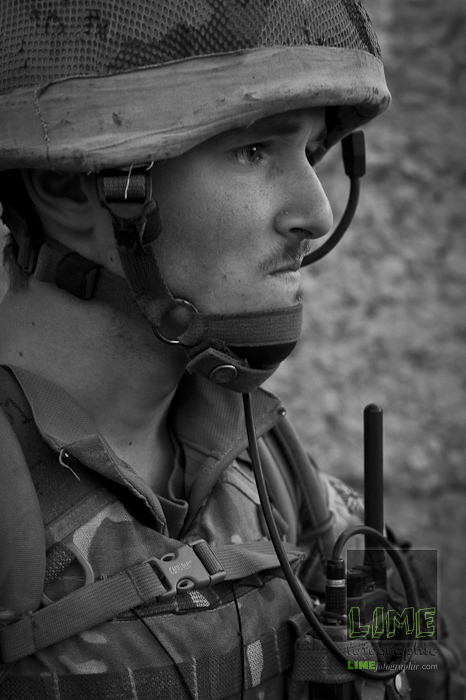
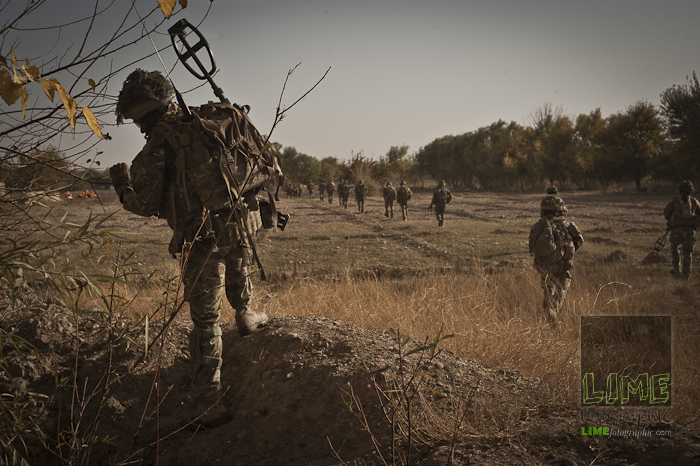
I recently went out to photograph a ‘HAF’, a Helicopter Assault Force with the Brigade Recce Force.  I am not what you would call a fighter, not battle hardened, I do, however, go out on patrol with many of the guys and consider myself to have been  very ‘lucky’ so far.  This was the first time on this operation (I have done similar things in Iraq) that I moved into what is perceived as a hostile area by helicopter, to be dropped off in the middle of a field to then watch our transport quickly vacate.
What were the feelings like?  Although only a couple of weeks have past now, those feelings are fading fast.  The night before was a night without much (or any) sleep.  I won’t lie, I was, you could say, a ‘tad’ apprehensive to say the least.  These are normal feelings that I have felt on quite a few occasions.  Adrenalin is good for you and keeps you alert.
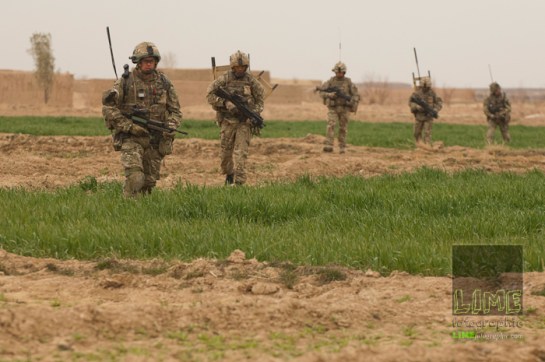
We met up at early o’clock for tea (the staple drink) and a ‘bacon butty’, which we forced down.  The operation was planned to enter an area believed to be an insurgent held area by helicopter, together with elements of the Afghan National Army, clear suspected enemy compounds and then extract all in time for lunch.
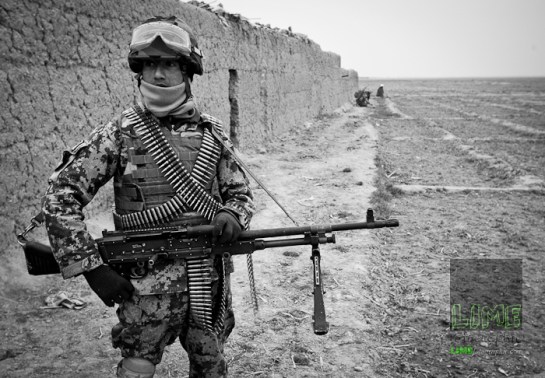
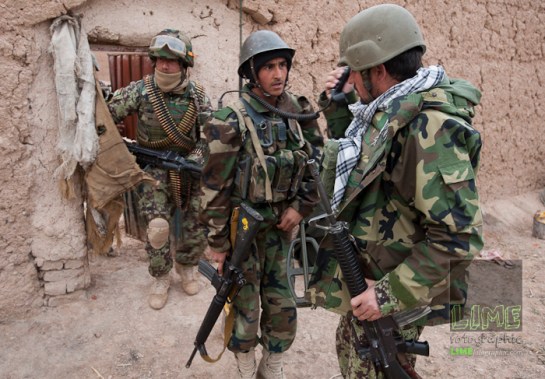
There was an atmosphere over the butties, one I have experienced before and no doubt will again.  It was one of focus, bravado, morale, humour.  The old ‘squaddie’ humour, though unique is very welcome.  The coaches laid on to get us all to the helicopter were a squeeze as we were laden like donkeys with all we would need for the operation.  The nervous laughter as each soldier tries and almost fails to find passage through the narrow aisle.
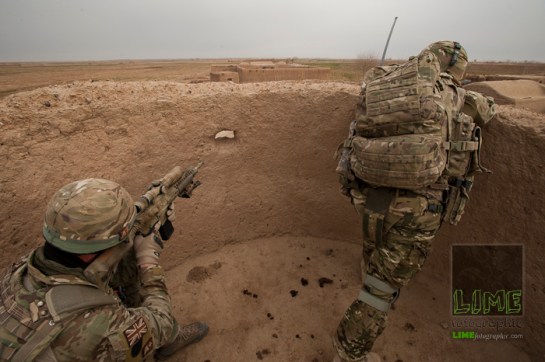
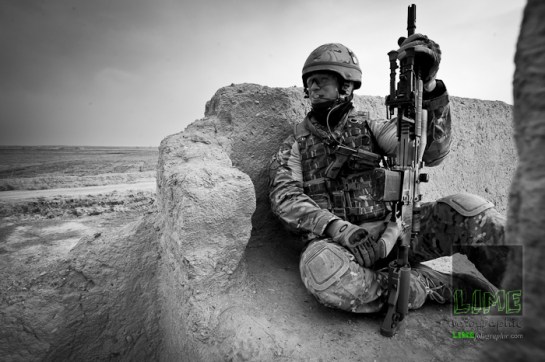
Waiting in the dark for our charriots, three Chinook helicopters with their distinct audio signature, line up ready to load.  We wait in our order to cram in.  On the order to move we all get in and sit.  There is no strapping in here.  Just sit, wherever you can, lucky if you get a seat.  As a photographer I push the camera towards its limits to get an image, any image.
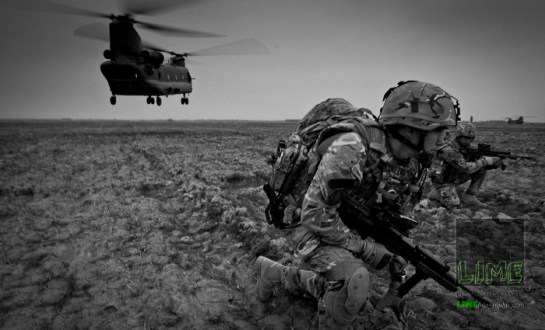
As we fly, the lights inside the cab are extinguished, the noise stops vocal communication and briefings come in the form of simple hand signals.  10 minutes, 5 minutes, 3, 2, 1!  We land in the early morning dull light, GO!  Quickly the helicopter spews its cargo into the middle of a mud field.  ‘Fan out’, I know the shot I need, so move as quickly as I can to get into position before the helicopter takes off again.

Its still pretty dark, so I have to think quickly about exposure.  It keeps my mind occupied.  I still want to give some sense to how dull it is.

All too soon our transport has gone and all that remains is silence exacerbated by our ear defence.   Then we wait………………………..in another bloody ditch!
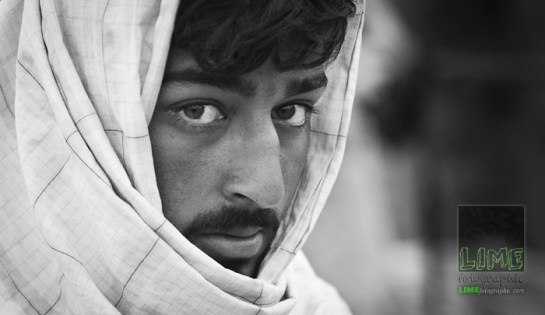
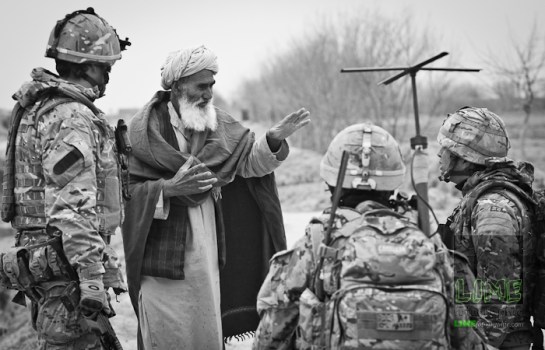
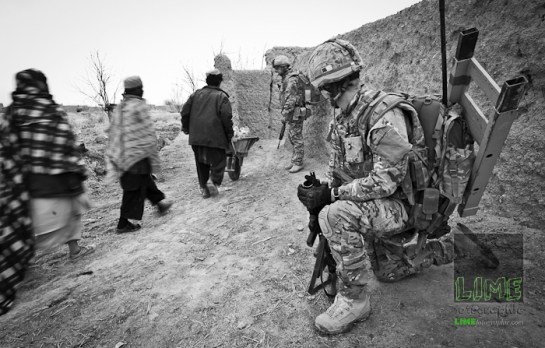
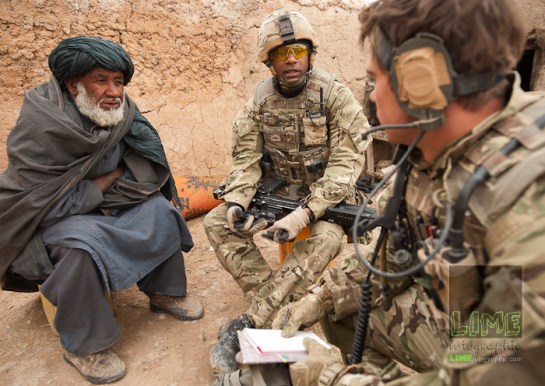
Before long we move from compound to compound, we meet locals, chat, drink chai (Afghan tea), move again, more chat, more chai.  All the time alert.
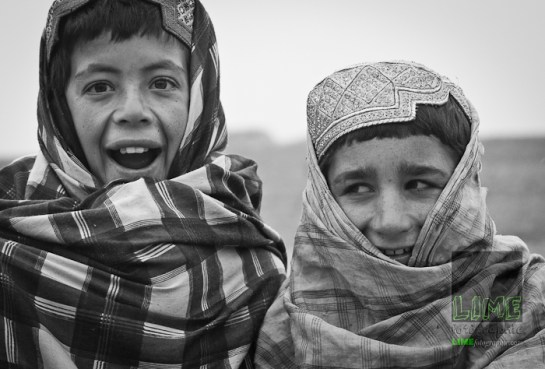
Exploring a compound looking for vantage points over the neighbours and there is always an opportunity for a photograph.  Some of these places are so dark it is a constant battle with exposures.  Challenging but rewarding.
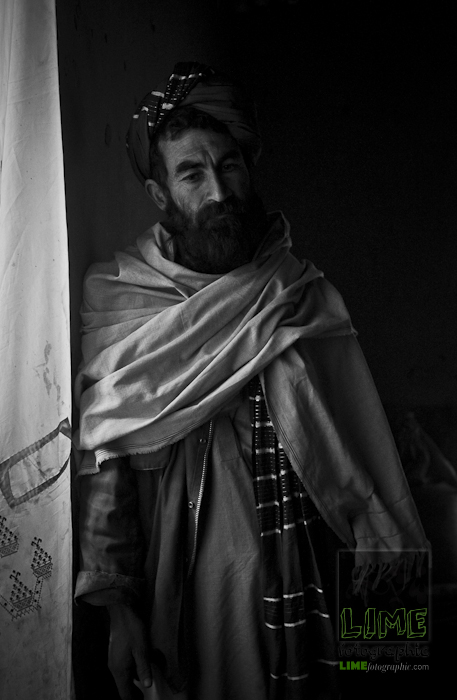
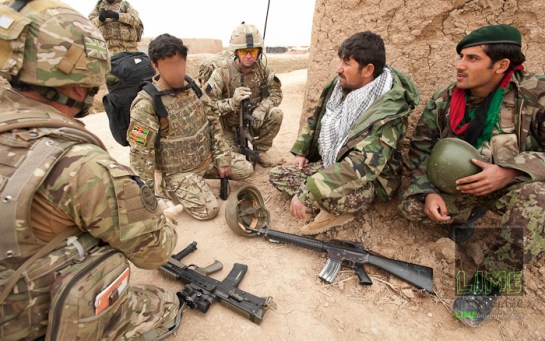
After meeting up with our Afghan colleagues it soon becomes apparent that by turning up in such numbers and prepared to fight a common enemy, the insurgents have employed their only real tactic in these situations and have melted into the community.  There is obvious frustration in this but there have been finds of weapons and no lives lost.
Before long its time to make our way to the pick up point and all the soldiers involved in this operation gather in their groups in the middle of a field awaiting once again our chariots.
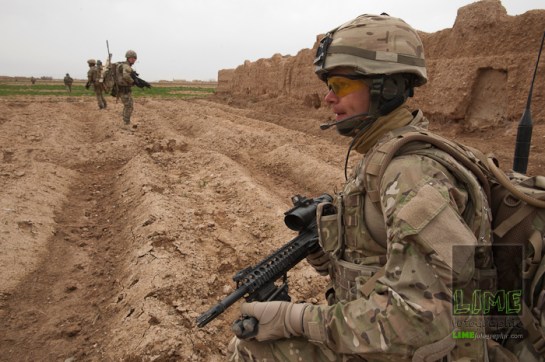
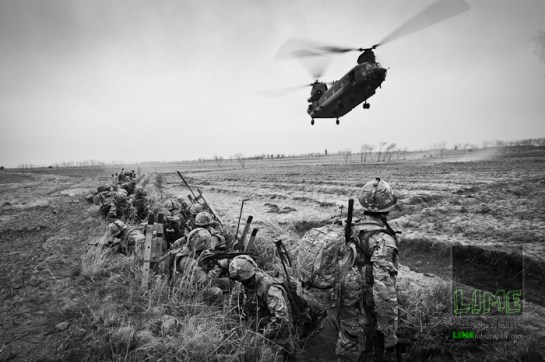
As quickly as the disembark, we are all back in the Chinook and soon back to our temporary home, as we say in the military, back in time for tea and medals.  As I look back, I don’t really think I can say I enjoyed the operation but I certainly cannot say I hated it either.  I am glad I went, saw these guys operate and I am certainly glad that this time at least we all came back.

These images were all taken during the operation, some under quite difficult lighting conditions.  This is what I enjoy doing so much that I feel so fortunate to be able to.  I know how lucky I am to have these opportunities even though they come with a huge sacrifice to my family, I know I have their support, which means so much to me.  I hope you like the images.
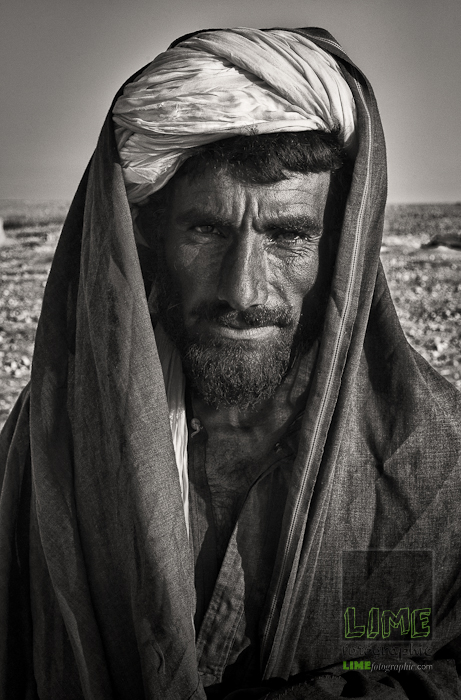
Afghanistan is a country with a long and difficult history, like many other nations, including our own (the United Kingdom).  Freedom comes at a cost and sacrifices unfortunately need to be made. On a basic level its just that people desire a simple life, they have few needs, but they crave a safe place to live to let their children grow up.

The Afghans are no different to us in this respect, but they are of course different culturally.  Yes this is a Muslim country but yet the culture is very different to that of Iraq which is also Muslim. There is almost always a pride in any nation or culture and this place is no different.  People are people wherever you go.  They sleep, eat (although diets vary), socialise, crap, laugh, cry and dream  Fundamentally they are the same as you or I.

Afghanistan will manage itself, it has to and it is naive to think that they don’t already, but their cultural make up is very different to ours.  They manage themselves on a much more intimate level, where each village is an entity separate from other villages around them. Here in Helmand, the people don’t really care what is going on in Kabul, they have no desire to own a 50 inch plasma TV, almost all of them don’t even own a TV, few have radios or a car.

This is not a wealthy place in our terms yet is described as the bread basket of Afghanistan for its mineral rich soil. They will grow what they can sell here, poppy or wheat, what ever will help them feed their families.  We would be no different I am sure.  Should they really care what the west thinks they should grow? Existence here is tough, unbearably hot in the summer and freezing and wet in the winter.

This is a country of extremes. ISAF can not be here for ever, the government knows that, the people do too and the transition is moving on full speed towards a comprehensive security cover by its own forces.  When the security forces are left to deal with any problems themselves which I am sure they will do, I have no doubt that they will manage.  There will be hardships, but transition is a necessary step to grasp their own future. Only Afghanistan can ultimately choose its own path.

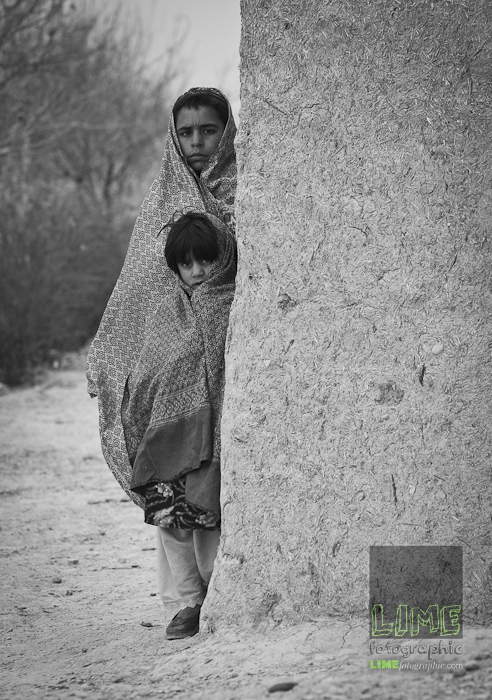
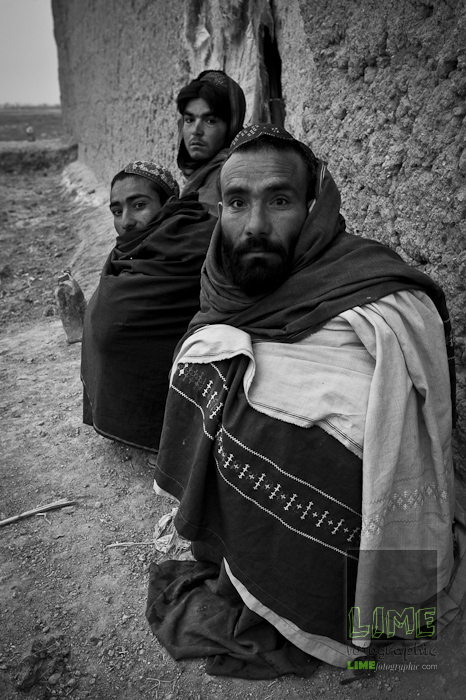
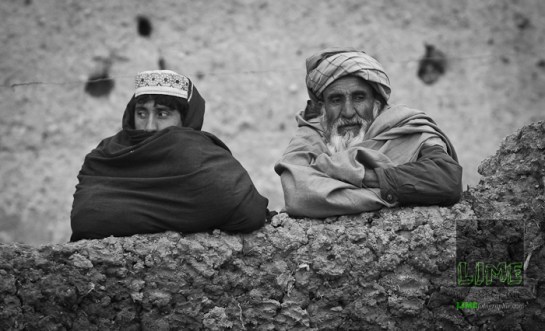
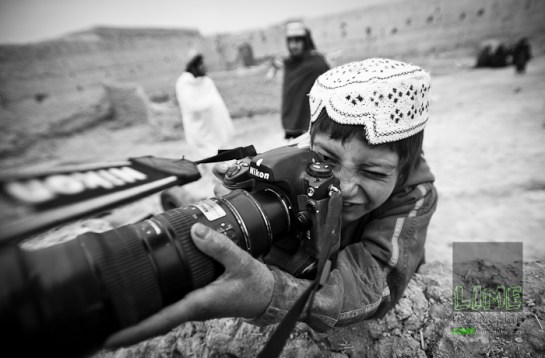
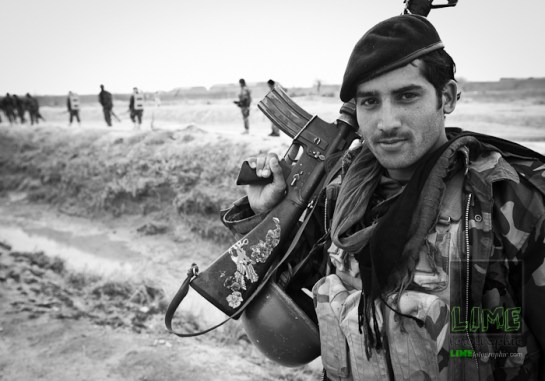
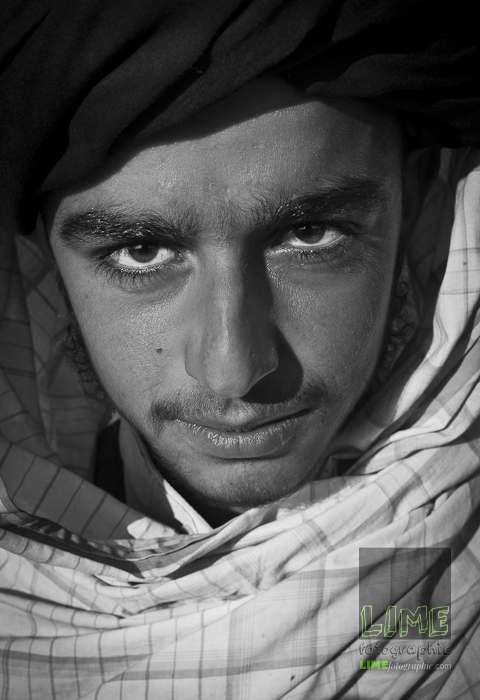
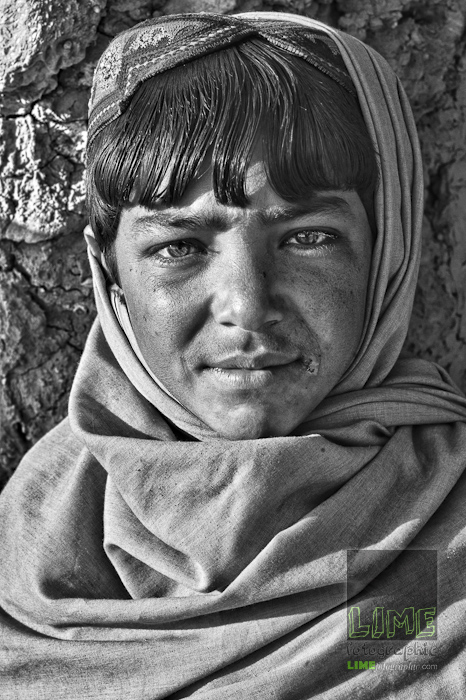
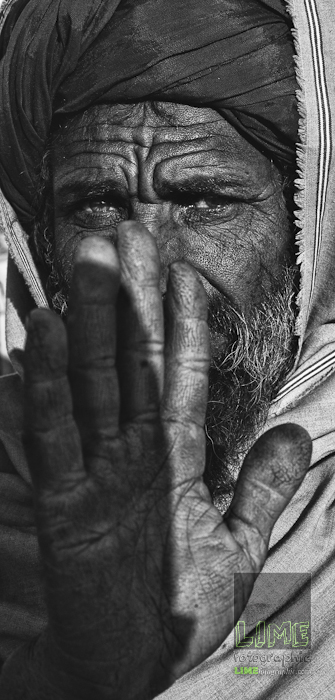
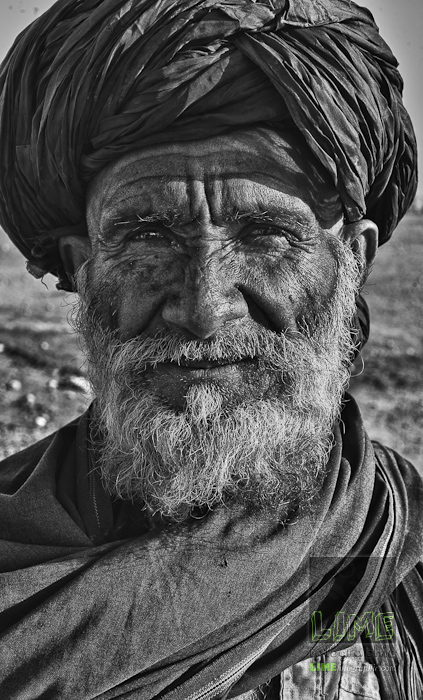
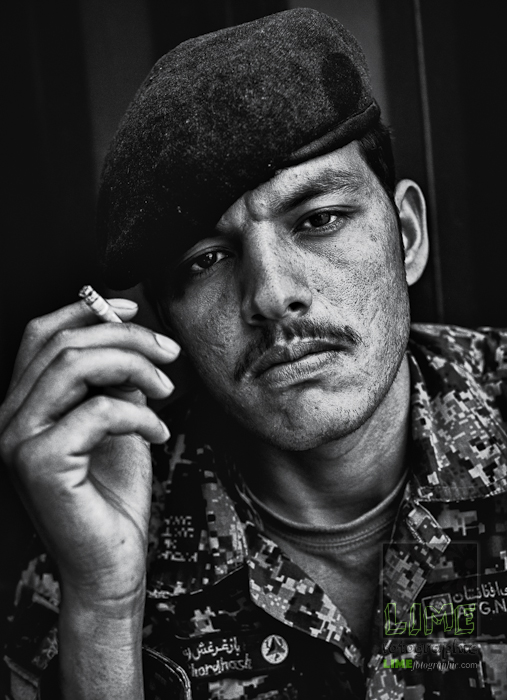
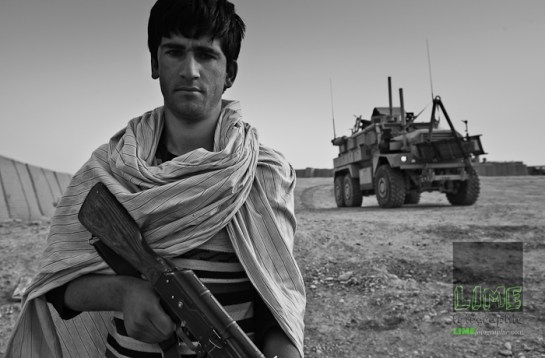
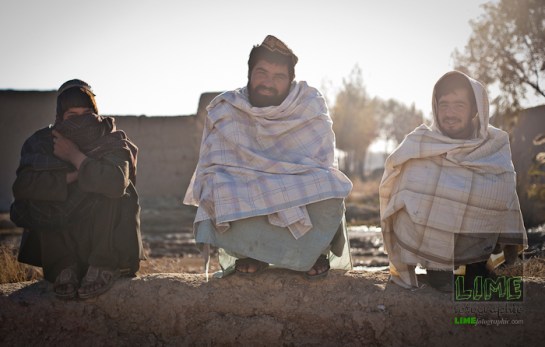
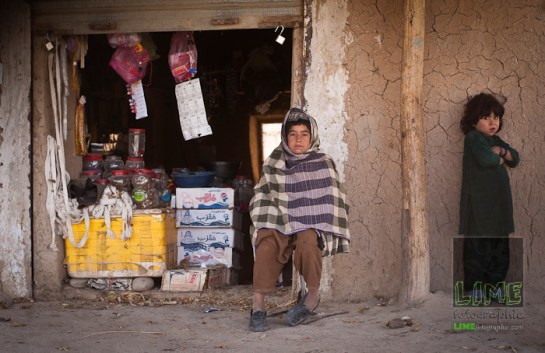
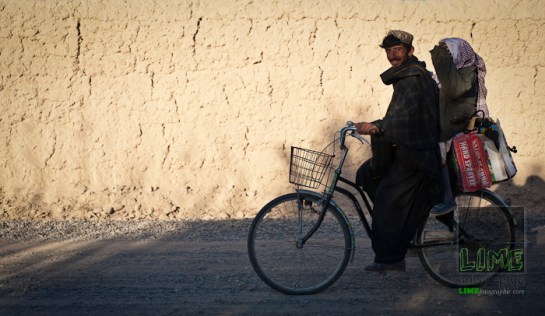
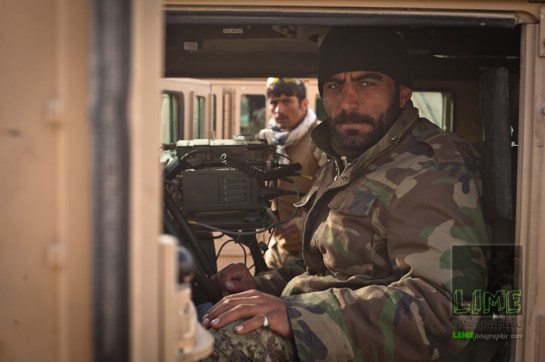
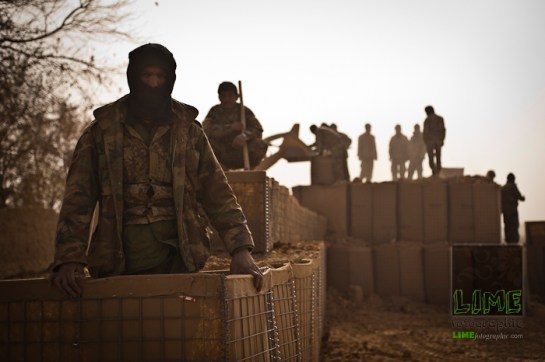
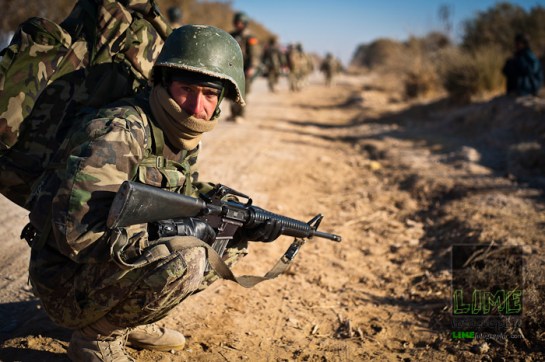
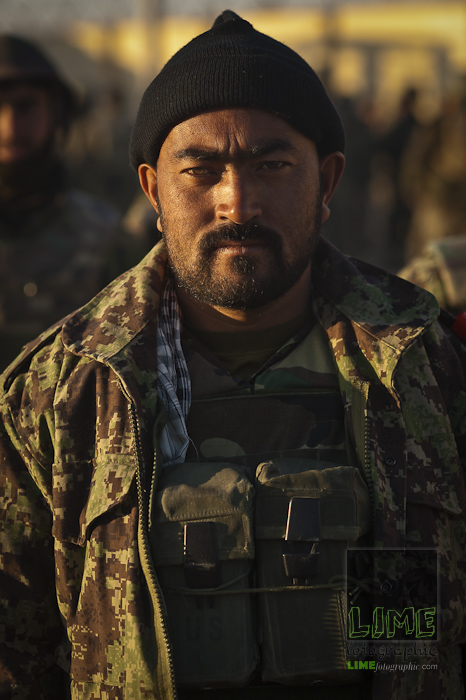
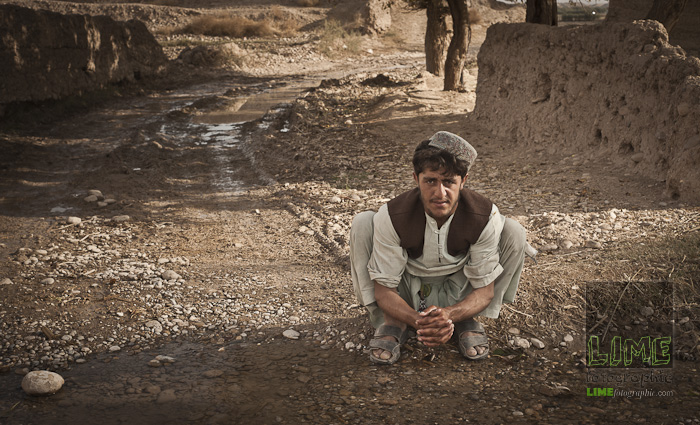
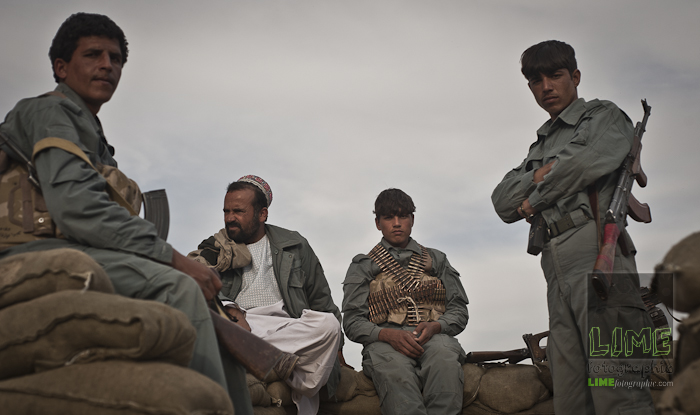
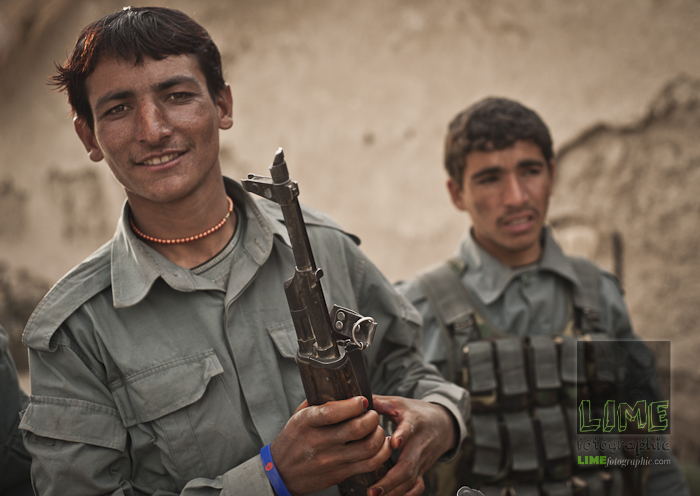
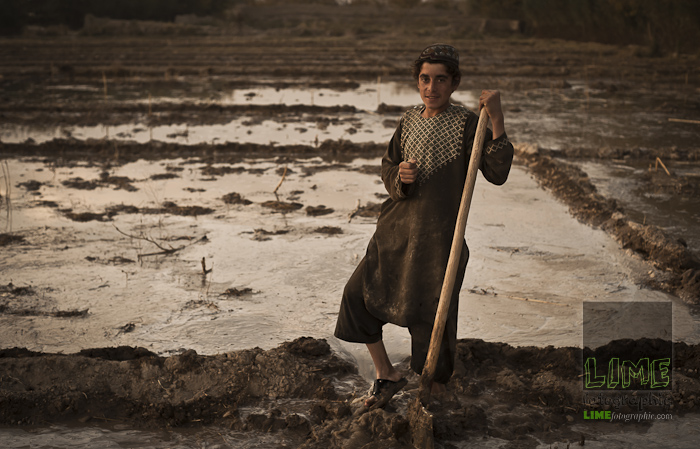
I wanted these images to show humanity, mood, character and highlight that upbringing notwithstanding we are the same.  I don’t speak any Pashtun or Dari (the two main languages spoken here in Helmand), and as a photographer I like to communicate with people, to direct a little for light and composition (at times), this was quite hard initially and to be honest I found the Afghans play up to the camera a bit and pose with ridiculous expressions.  I have over the weeks developed a basic sign language to try to direct them a tiny bit at least. A funny thing happened the other day when I was out photographing some local Afghans during an operation, I had been out a while and was tired and saw this young guy who I wanted to photograph, he was back lit (a look I really don’t mind), so I got the shot.  After I showed him the image he gestured to me to take another, he pointed at the sun and changed his position relative to the sun.  This was not something I thought I would have been able to get across in my basic sign language.  I did prefer the second shot though!

I am a professional photographer, that simply means I get paid to take photographs. This is my livelihood and not just a fun pass time (I know how lucky I am to enjoy what I do for a living). I am aware of the things that are said and done on the internet and the speed with which this industry is changing.

As anyone in this industry its hard to be truly objective about its development as anything I will say could be seen as sour grapes. On a positive note, digital photography has made photography accessible to anyone, which is a good thing, right? This means that the numbers of people with a ‘decent’ camera, clicking away has gone exponential. Even IPhone’s are regarded as excellent at gathering the image. You even have Pro’s shooting weddings with one!

Now I am not a photography snob (at least I don’t think I am), photography is not about your kit or equipment, its all about seeing the potential of an image before you take it and using your skill to capture it, however I do worry about perception with the public (clients) and more and more with people within the industry. Weddings are now being shot by Pro’s with the iphone 4, which is great for iphone and I am sure that a skilled operator does it justice. The problem is that every man and his dog has an iphone though and the perception ‘could’ be that anyone can now do a professional job with one. Not true. There will however be an issue with costs as you can get one of these cameras free on a contract and other photographers have over ten thousand pounds worth of kit, both pitching for the same wedding, there will be a massive range of costs, so where will this lead. Not having an iphone (for now), I really don’t know just how adept they are, my understanding is that you get app’s to re-work the images. This to me is like using a filter in Photoshop to give your images a ‘look’. In essence you use a filter to make ‘ordinary’ images stand out. This is only my opinion.
Where does that leave the industry? Well only time will tell, but one thing that gives me a degree of hope is that more and more clients are beginning to seek references from a photographer prior to booking, could this be down to the client now understanding that its the person that makes the image and not the camera? Is this knowledge borne from the experience of having a ‘good’ camera and wondering why they can not get the quality of image they expected by pointing it and shooting? Could this finally be the bubble of an over saturated market about to burst and the beginning of the rediscovery and homage to the skill of the photographer?

This is not intended to be an elitist subject, because these developments have brought some very talented people into an industry that was largely inaccessible before, but a statement about how an unregulated industry is seen by many as being in the dying twitches. Could we be seeing the dawn of a new era? Discuss. 

As I sit here getting ever closer to the end of my latest tour of duty, I contemplate the mind set of the British soldier.  This may or may not be one of the most dangerous places on the planet, probably not but it is still dangerous.  It makes me wonder exactly what bravery is.

Is it simply brave to just be here?  Is it brave to step outside the wire?  Is it brave to fly those flying chariots that are our primary mode of transport here?  Is it brave to don all of your PPE (Personal protective equipment)?  Is it brave to poke your head up over a wall in the middle of Helmand?


I am not sure.  These are the day to day experiences of some of the soldiers out here in Afghanistan.  Although you feel trepidation prior to any of the above, when you get there, you just go, do your business and the training takes over.  You are so busy looking, thinking, observing, watching, you don’t really have the time to be worried.  We don’t constantly worry about every step, or that it could be your last.


I certainly don’t feel brave when in the relative safety of Camp Bastion.  I don’t feel ‘brave’ when I go out on patrol, I don’t feel ‘brave’ when I fly in the Merlin or Chinook and I certainly don’t feel brave wrapped up in my PPE (only bloody heavy).

So what is brave?

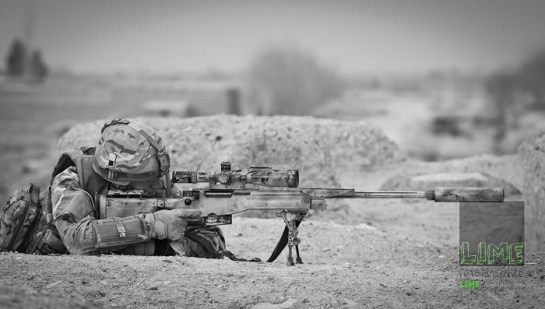
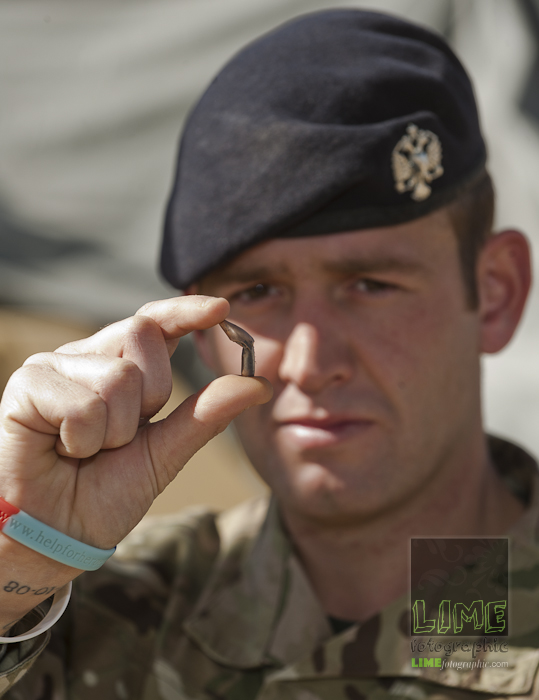
I had the good fortune this week to photograph a soldier who had been lucky.  He had been shot by an insurgent, whilst on patrol in Helmand.  Luckily for him he was saved by his body armour, the round embedding into his back plate.

Armed with what remains of the round, we were tasked to get some photographs of Trooper Dan Griffiths for the UK press, I asked him how he felt.  He told me that he ‘worried’ now.  During the incident he was knocked down with such force that he truly believed he was seriously injured.  He admitted to screaming in pain, clambering for cover.  Only when checked over by his comrade was he then aware he had escaped injury and just how lucky he was.  Dan is now one of the few who knows what it feels like to be shot and I am sure it is not an experience he would like to repeat, yet he still has to endure, he still has patrols to go on, operations to take part in, be part of a team.

Simply put, in light of his experiences, in my eyes, Trooper Griffiths is brave.

http://www.thesun.co.uk/sol/homepage/news/campaigns/our_boys/4156468/Squaddie-shot-in-the-back-but-battles-on.html

Any of you who know me on Facebook will no doubt have been made aware by my oh so generous colleagues that I was involved in a rather unfortunate incident.

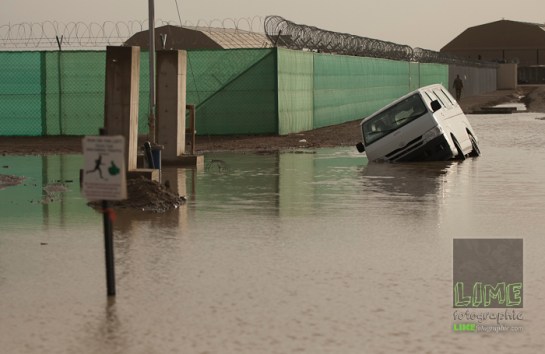
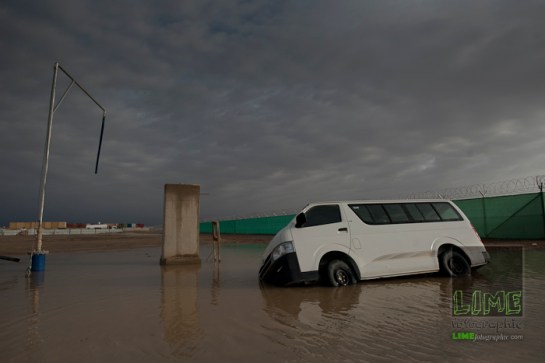
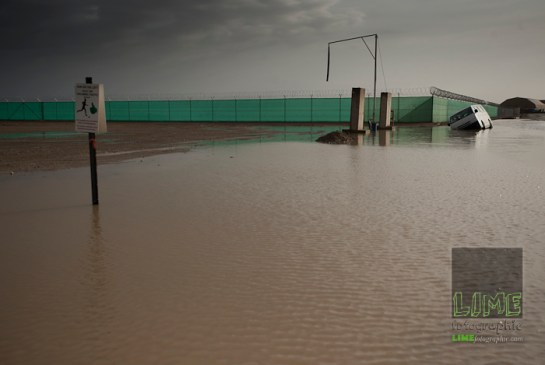
Those of you who may have been out here before will know that when it rains, it can rain hard.  Not that this happens too often, but when it does, this place (Bastion) can flood, and flood fast.  After being here for several years there has been quite a bit of development with a decent (relatively speaking) road network and huge drainage ditches.

Sounds great, but the problem is that when the big rain comes, it can quickly fill the ditches, and when it does in places the road disappears.

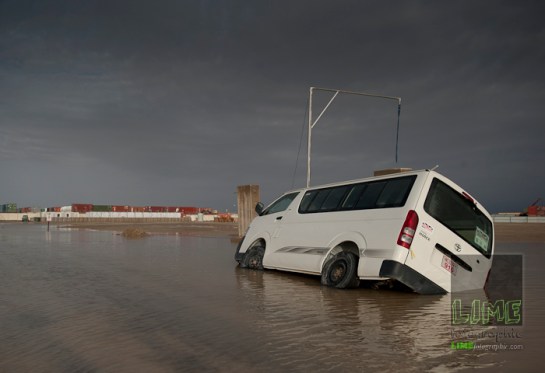
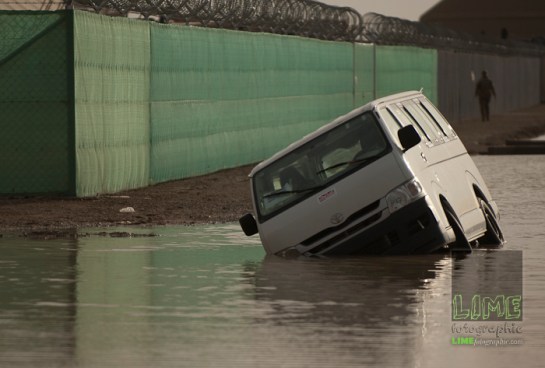
So driving through Bastion at night, in the rain claimed another victim……….me!

Laden with kit, driving back to the office, one of the roads was swallowed by a flood.  Initially it just looked like a patch but once in, it just seemed to get deeper.  Probably only 3 inches deep,  I slowed down, dropped gear to keep the revs up and tried to pick the route, but with no visible markers for the drainage ditches, once the minibus found the edge, it had me.

Evacuating the vehicle was interesting.  Pretty soon we were all up to our groins in the water.  And from there the good old military banter begins.

One thing I have learnt is that the ‘taking the piss’ is never not going to happen, so you have no choice but to laugh along.

So there we have it, I am a little red faced, I have added that little bit of morale to the team but the reality for me is that at least no-one was hurt and if this is the worst that happens to me on this tour, I will be happy.

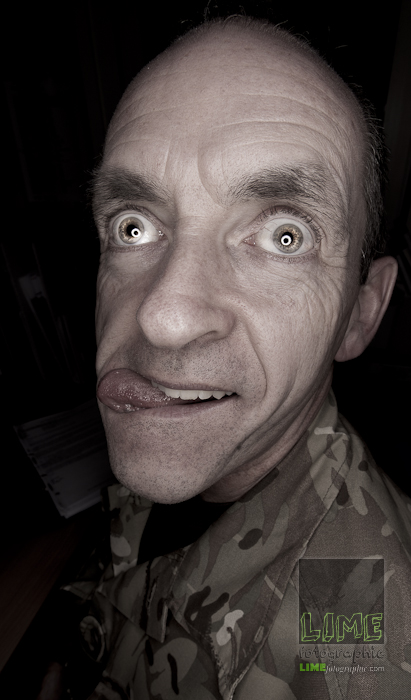
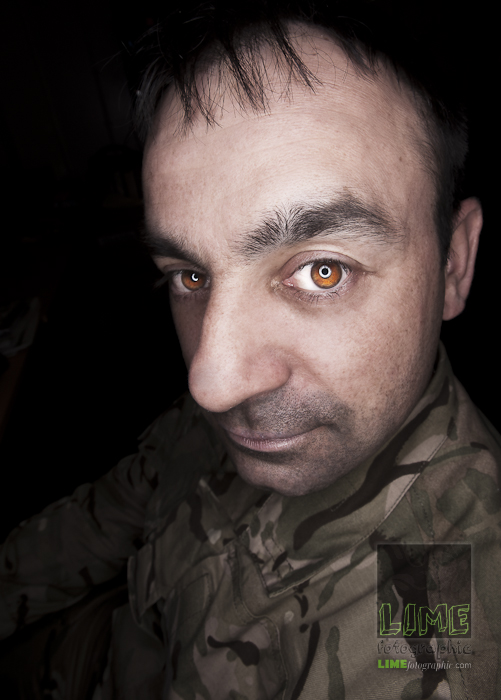
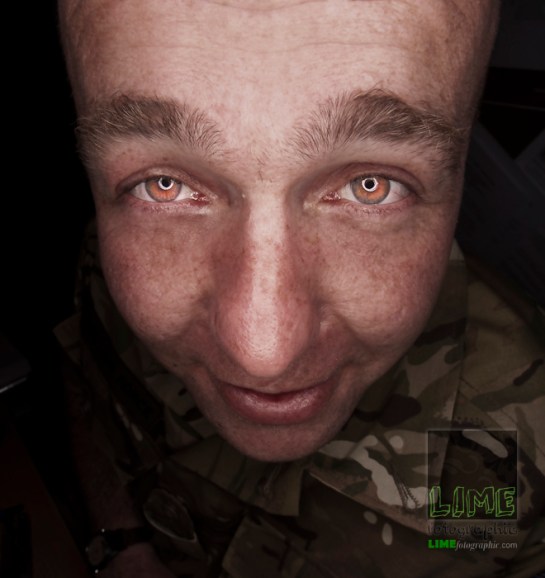
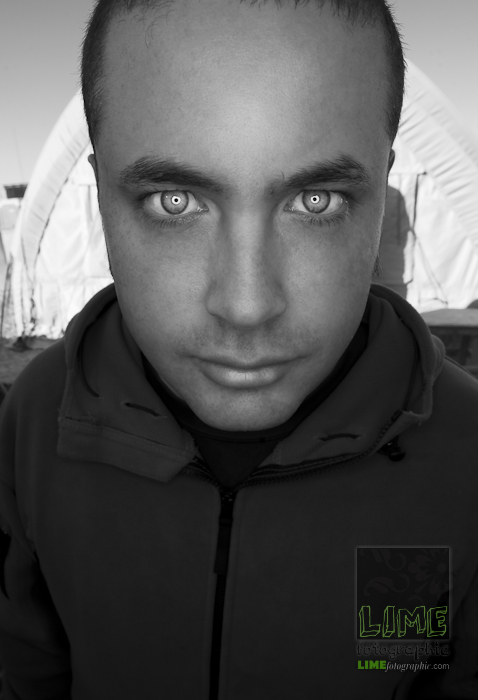
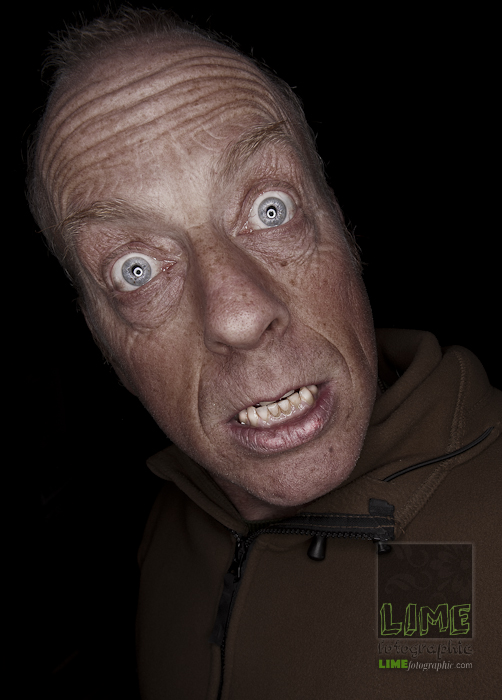
Playing with a ring flash, the opportunity arose to take some wide angle portraits which is not something I usually do.  By going extreme, the portraits became a caricature especially with this motley crew.

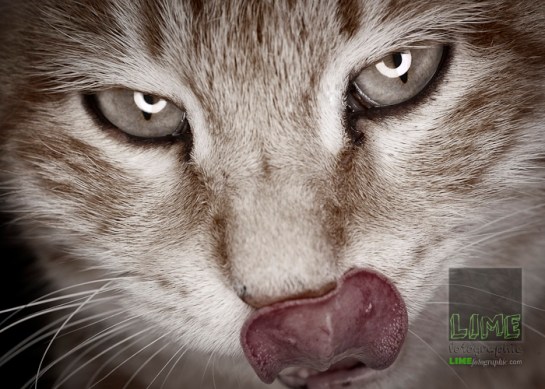
Also took the opportunity to photograph the cat, only because it is too fat to run away.

My main goal for this tour aside from my primary video role has been to put together a selection of portrait images, in the hope that I could arrange a small exhibition of portraits at a local art fayre.  I will be adding another blog entry near the end of the tour displaying some of my own personal favourites.  In the meantime I wanted to share this one.

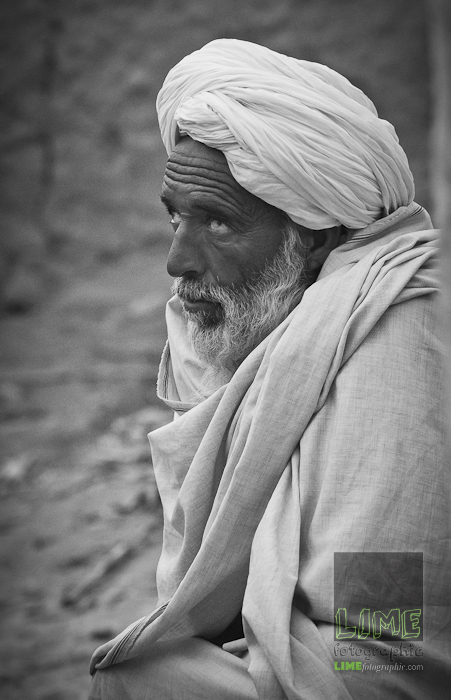
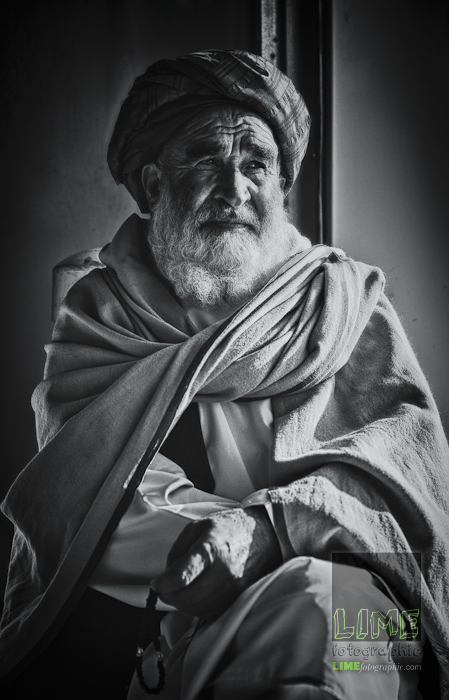
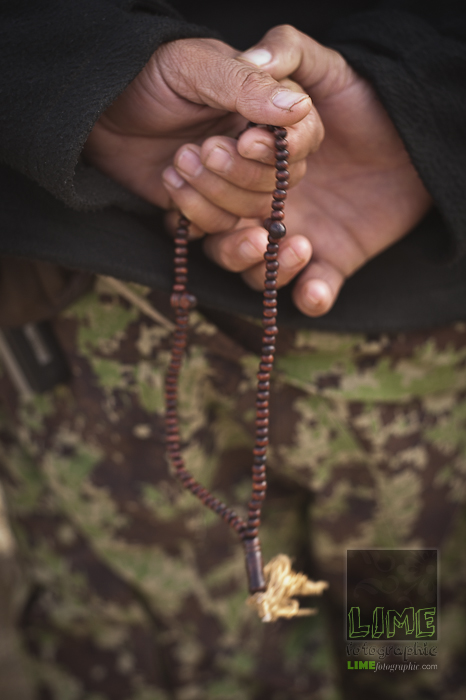
An Afghan elder and the pace of life

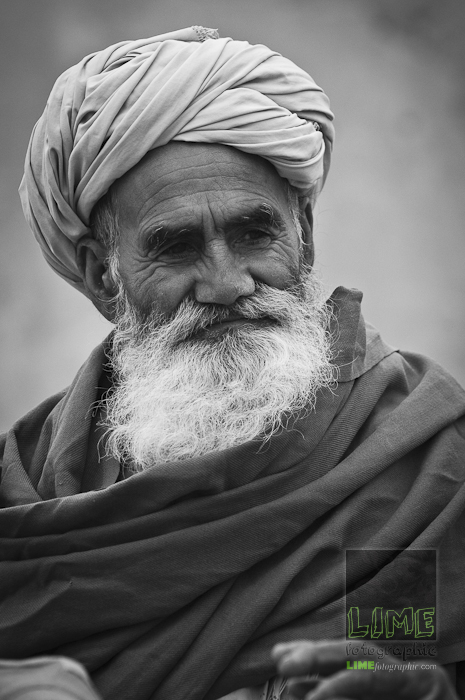
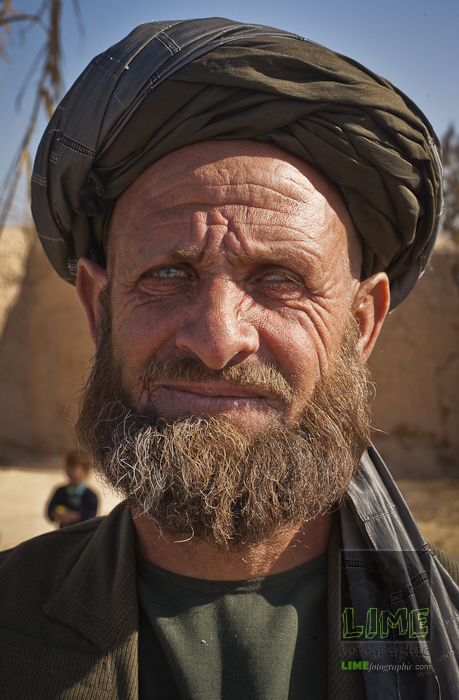
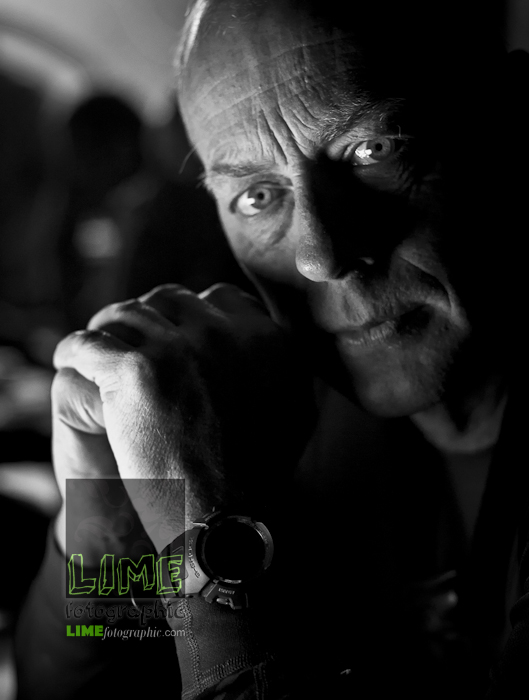
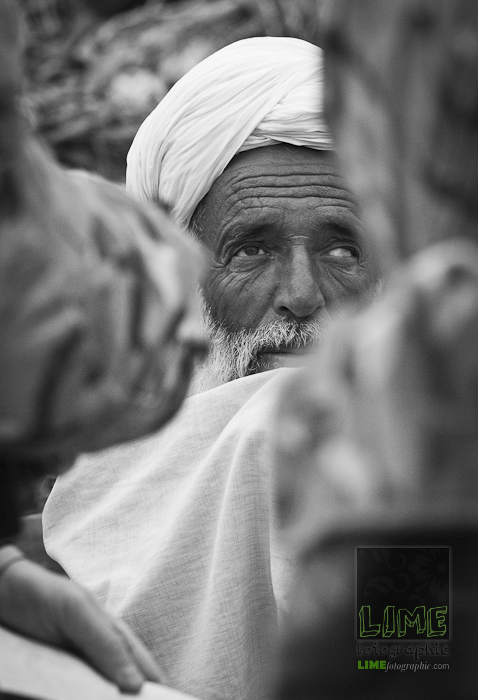
Whilst working on some footage for an Afghan Air Force open day at Kandahar, I saw this elder, who had arrived early with some young children.  He promptly sat in a hangar doorway waiting with his worry beads.  He was just waiting patiently when I got this picture.  Taken on the trusty old manual 50mm lens (some people are getting bored hearing about), I wanted to concentrate on his face.  The lines are like a text, telling his life story and similar in many ways to so many other locals.  There people have endured so much in their lifetime and their lives are tough by our standards.

Simply processed in Lightroom, it does not need much more.

Please follow this blog to receive updates on the latest entries or visit our website at www.LIMEfotographic.com

As we wait for our next assignment, I get the chance to look through some of my old archives (I only have a small portion of them out here).  The reason I brought these out was to look at creating a private coffee table book from the Iraq tour.

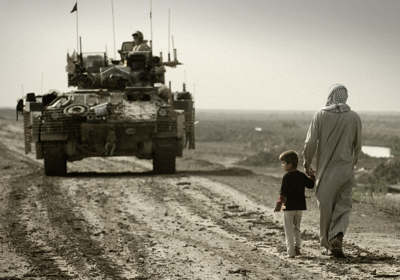
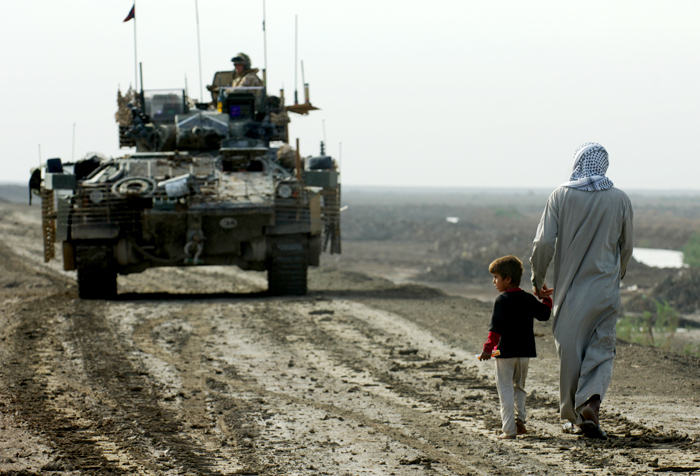
Some of you will have seen this on the home page of my website http://www.LIMEfotographic.com and the reason for that is that this image is personally my favourite image taken on my Iraq tour.  It was taken on an operation with the Scots Guards north of Basrah, where we went to assist on some Civic assistance providing some infrastructure maintenance in preparation for the winter months.  These marsh people were persecuted by the Hussain government and were openly friendly towards us, they were not threatened by our presence and in fact seemed to feel comfortable around us.  This image is an illustration of this with a father and son simply walking at ease towards one of our Warrior tanks.  When you consider what hardships these people had to endure at the hands of Saddam, the fact that they could differentiate between the army of that regime and ours was outstanding.  To see the way these people lived so close to a major city like Basrah which before the war was fairly modern, was indeed a contrast.

This image probably means more to me than it will anyone else, but like many images, the personal connection is what identifies the narrative.  I don’t know if this is a great image or not and a part of me does not care, this image means something to me and really that is all that matters.

Like many of us Army photographers, we have been criticised for making pictures that are too clean, well composed, too perfect and somehow missing the shot.  I think this may be true because if you look at some of the most well known press images, the ones that have become totally iconic are usually little more than snaps, however they capture something, usually raw emotive content, that compositional quantity overlooked by many photographers.  Sometimes this can be a harsh commentary as when trained to look for composition and create images you generally get to a point where you can not take a photo without slipping into one composition guide or another.  The composing of an image just becomes automatic.


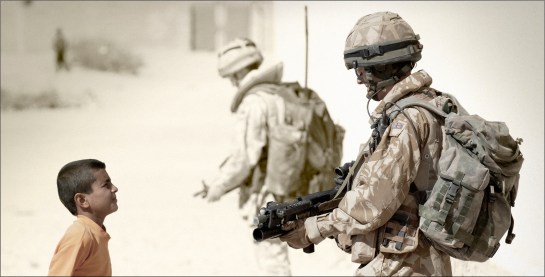
This is one of my personal favourite shots from my tour of Iraq in 2007-2008.  I know the colour popping is not to everyone’s taste and is not something I tend to do much of, but this moment was one of intensity and connection that I felt I had to do something to separate them from the background, from everything that was going on around them.  This situation was played out in a small village just outside of Basra and it was usual for numerous kids to come right up to you, into your personal space and beg for sweets or water, or even just grab at anything hanging off your body armour.  In this instance this boy just stopped and looked up at the young soldier.  For a moment they just looked at each other and connected in some way.

This image sat in my portfolio submission for Operational photography in the 2008 Army photographic competition and is still an image that I enjoy.

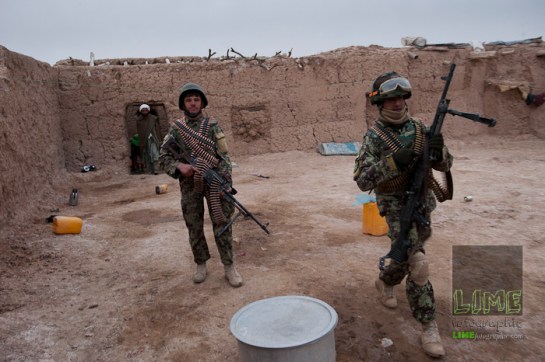
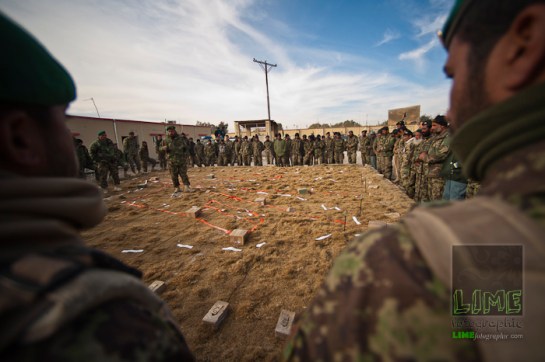
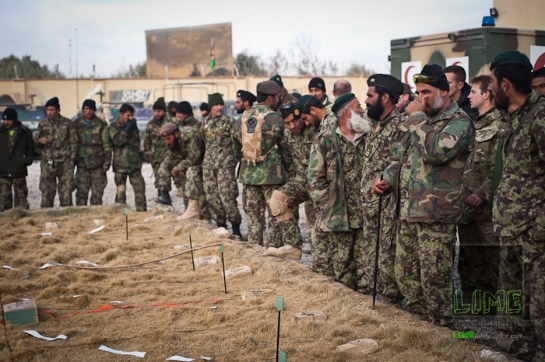
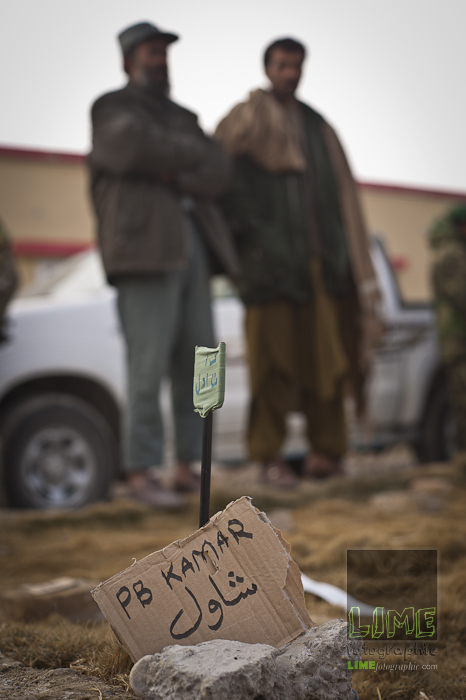
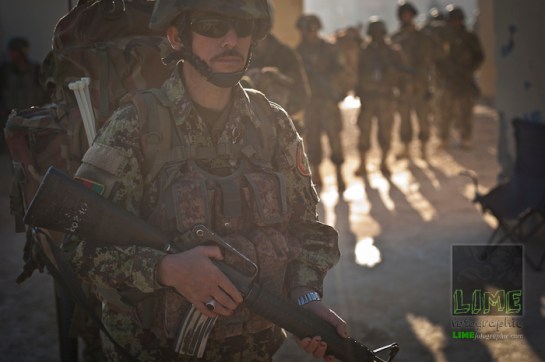
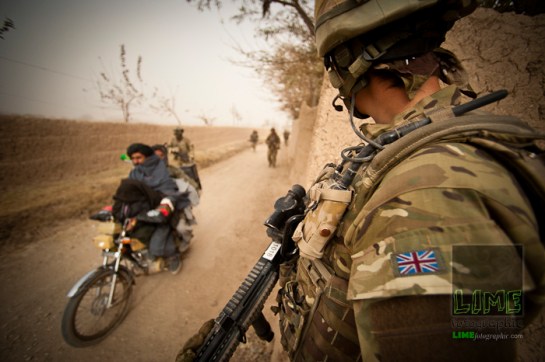
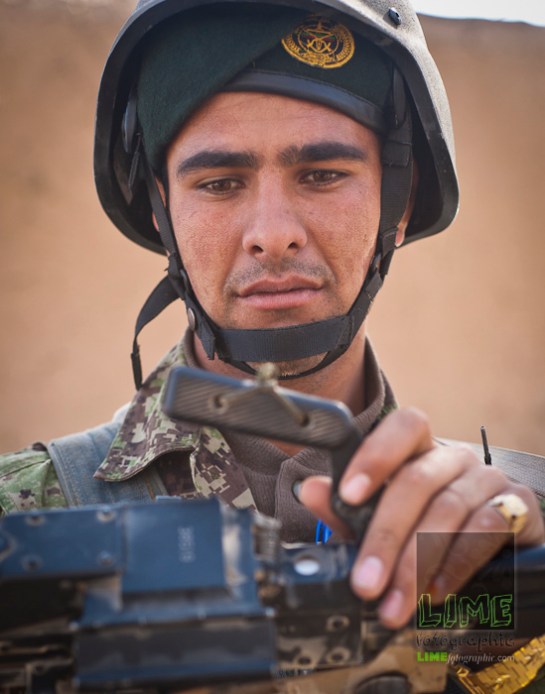
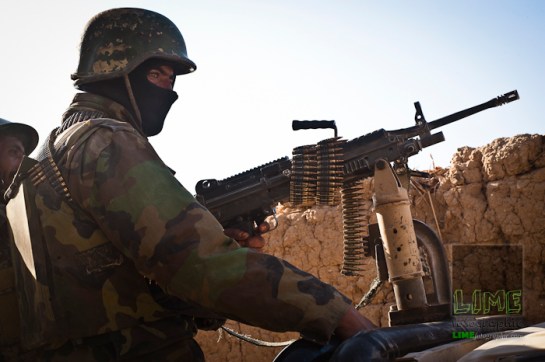
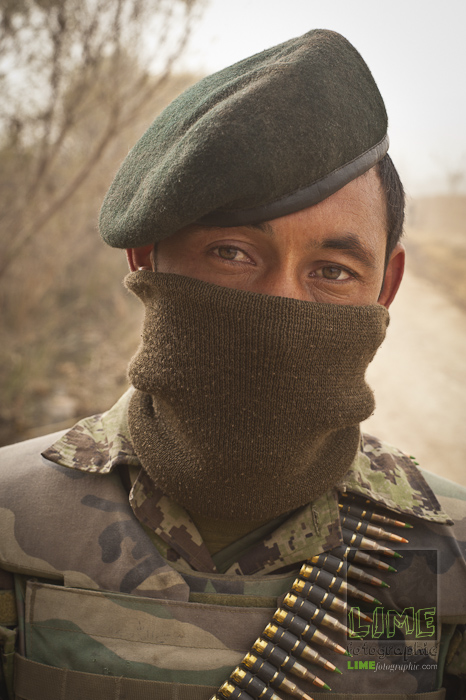
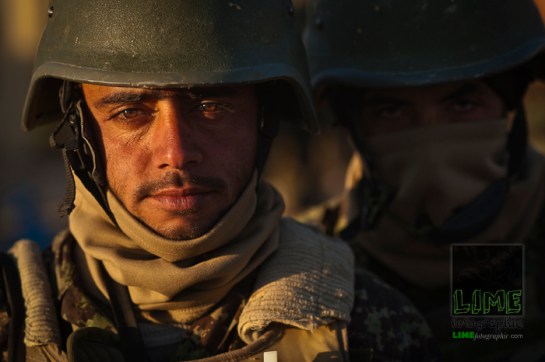
Our latest mission has been to go out with the Afghan National Army (ANA), to film and photograph them, as the ‘defining moment of operation Herrick 15’ would be their first major operation planned and executed by themselves to clear an area of Helmand from the influences of the insurgents.

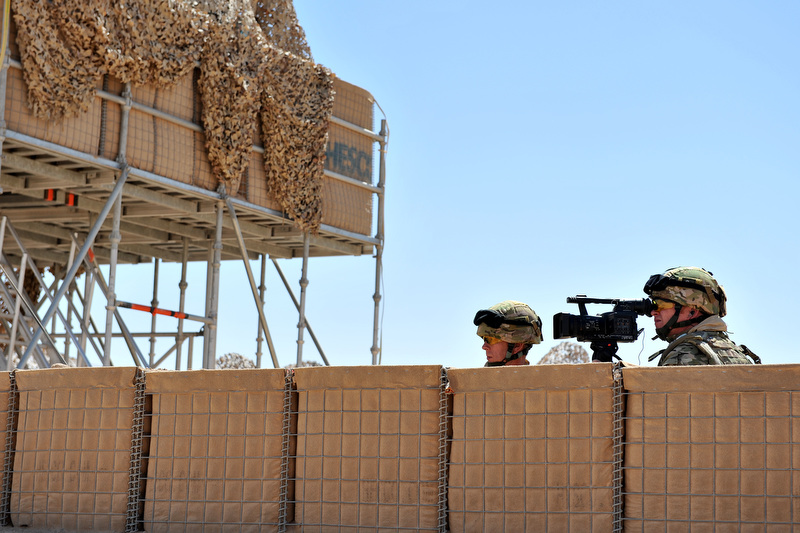
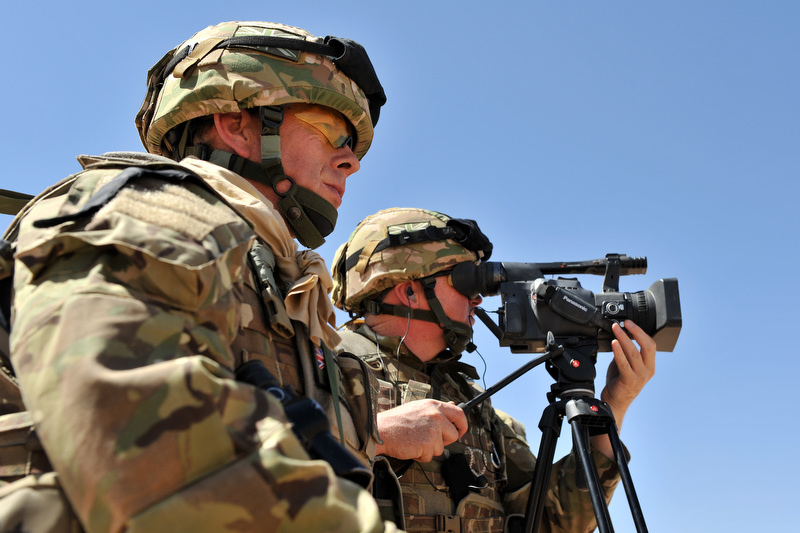
Being the video guy, my job was to film them from the orders through the patrol phase, to watch them as they took over compounds and created, from scratch, their Check points in an area that insurgents had been deeply embedded in.

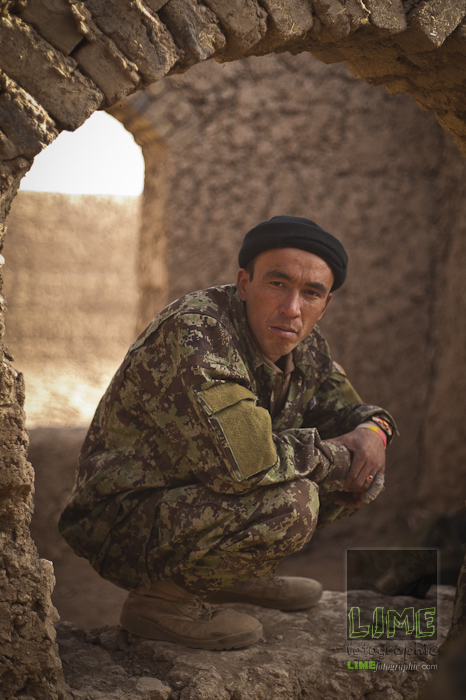
Say what you will about the ANA, they may lack an element of our professionalism, skill or ability, but when you consider that they are poorly paid, receive only a fraction of the training we get, are nowhere near equipped (by our standards), they do a fantastic job and in light of all this they are beyond doubt very brave indeed.

During this operation, they moved with all they needed to sleep rough across difficult terrain in freezing temperatures, which was tough indeed.  They don’t get issued the warm or wet kit that we all get issued, and yet they just continue to work. The Afghans seem to work without complaint, they know what they need to do and they have a resolve to do what they need to, in order to rid their country of the enemy.

The ANA is a fledgling army, already growing to the required numbers, they know they have a tough job and continue to do their best to get it done, and they are proud.

Regardless of any shortcomings, I tip my hat to the Afghan braves and only hope that they gain the popular support of their countrymen because they above all deserve it and with it can begin to make the giant step towards peace, the likes of which has not been seen in this part of the world for decades.

These soldiers are going to be a big part of this countries future and every journey of a thousand miles begins with the first step.

Good luck.

This gallery contains 13 photos.

A small selection of images taken from the wedding of Les & Natalie Simmons, who married in Bournemouth, UK. A blustery start to the day on the British south coast. As with all weddings, opportunities always present themselves for the cute shots. The dress detail is a must do shot. Loads of natural light and …

Read More

This post is really just a selection of images from a recent trip out which will hopefully give you an idea of what a soldier is.  They are random images that I hope will show we are human and they do have a sense of humor.

Soldiers will have a laugh whenever they can and will make light of anything even the bad.  On a recent trip one of the officers was shot in the leg during an operation and all the guys could talk about was how he had only been out here a few days and was already on his way home again, ‘lucky bastard!’

Of course this was what we term banter and like most things said out here is not to be taken seriously.  It is designed to lighten the load and of course everyone was glad he was not more seriously injured.

Mascots, the soldier will name their vehicle, stick mascots on it or personalise anything including their bed spaces.

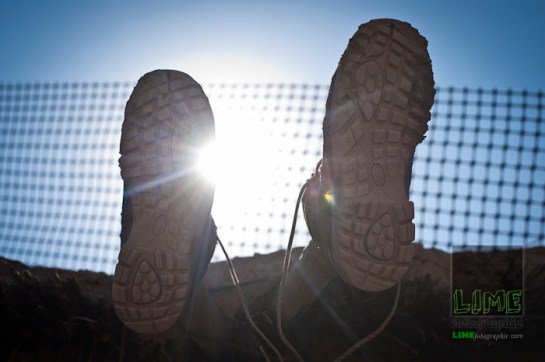
Even when it gets cold, and boy does it get cold,

there are ways and means to feel the heat.

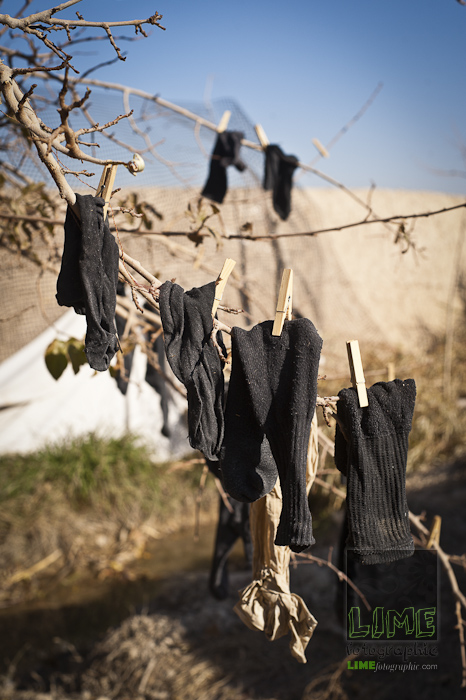
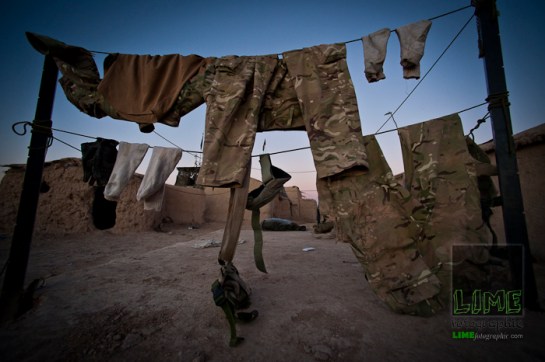
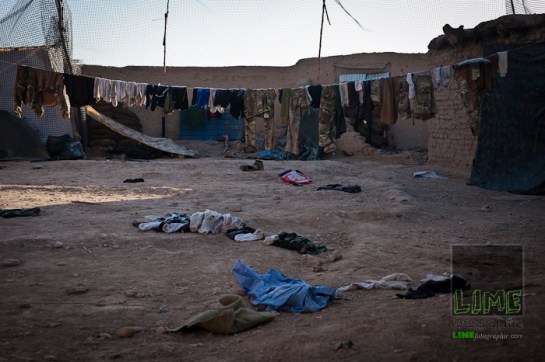
In confined spaces anywhere you can dry your kit, you use.

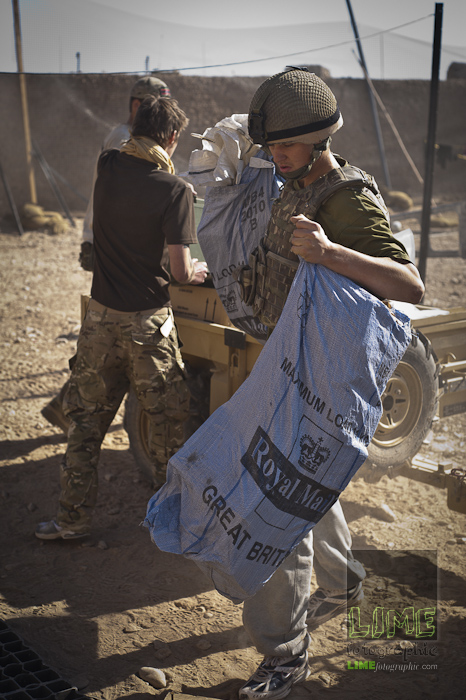
We love getting our mail and when it comes in so infrequently it can mean lots arriving at once.

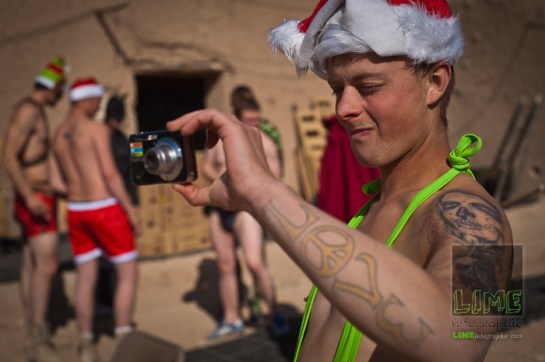
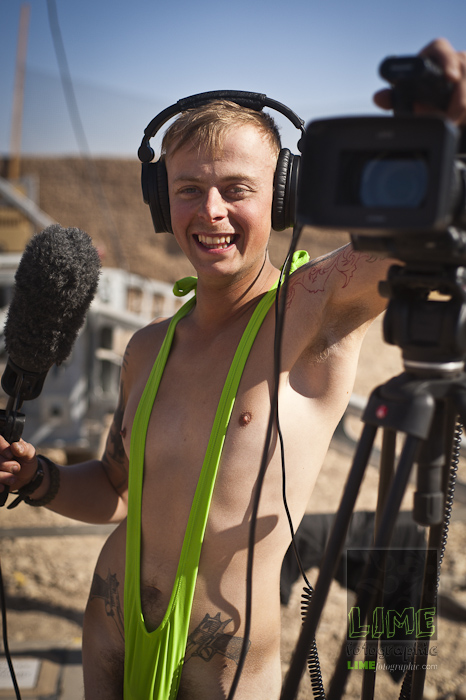
There is always an opportunity to get into the party spirit, and sometimes you get the impression that fancy dress is code for hardly any dress at all.

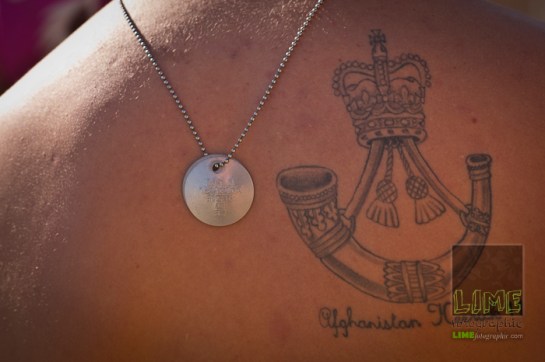
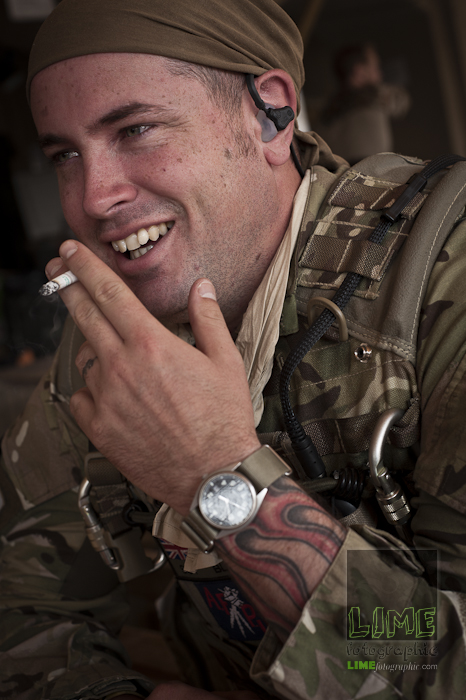
Soldiers like getting tattoo’s and many of them have meaning, many of us have been here before and will come again.

Food HAS to be so hot you no longer taste it!

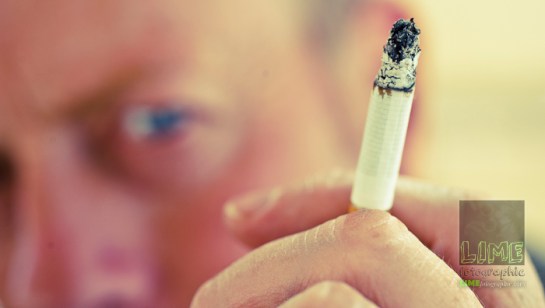
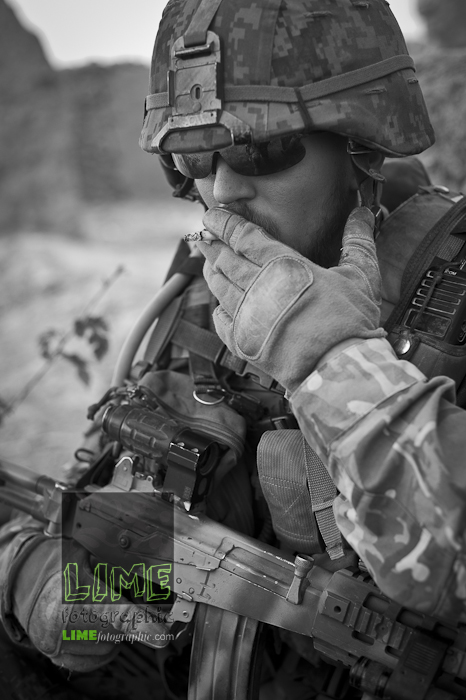
It does seem that out here most soldiers smoke.

It is difficult to keep your hair short or do Jedward have a lot to answer for?

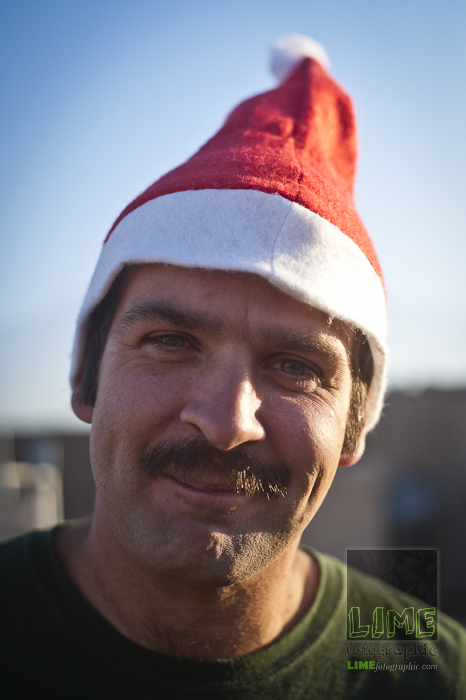
Mustaches and Christmas hats should be worn at any and every opportunity.

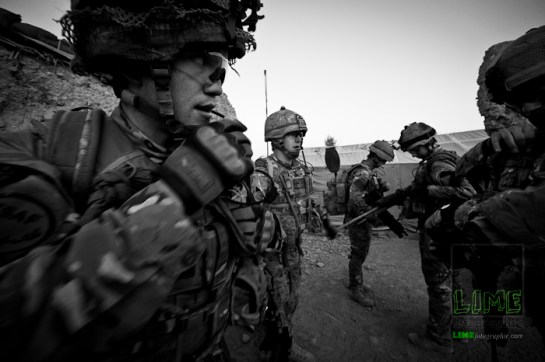
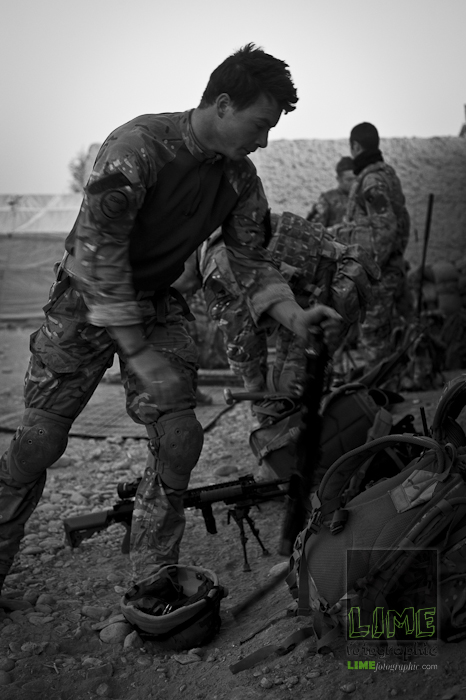
Preparations to go out on an operation are a ritual, everyone has their own.  Nothing is ever taken for granted.

Although there is always time for a smile no matter how tense.

It is better to be ready early and then wait than wait til the last minute, it pays to be organised.

We are just regular people, just like anyone else but we adapt to circumstance and adversity, we just find a way to deal with things we would have no cause for otherwise.

If only!

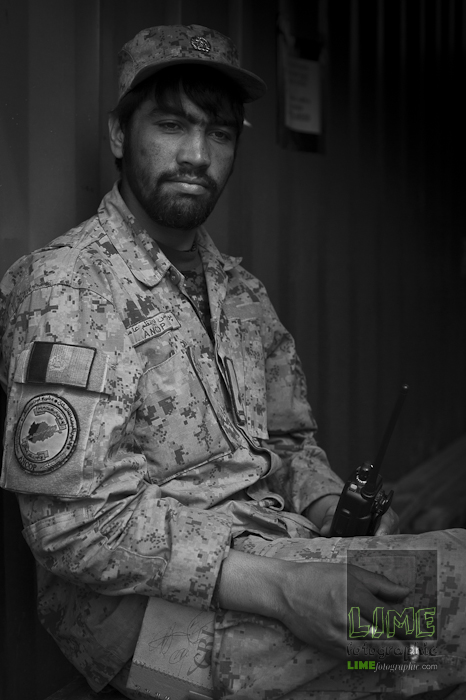
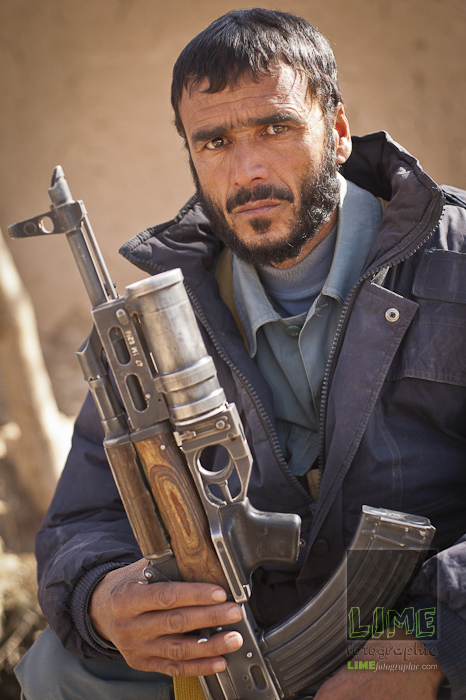
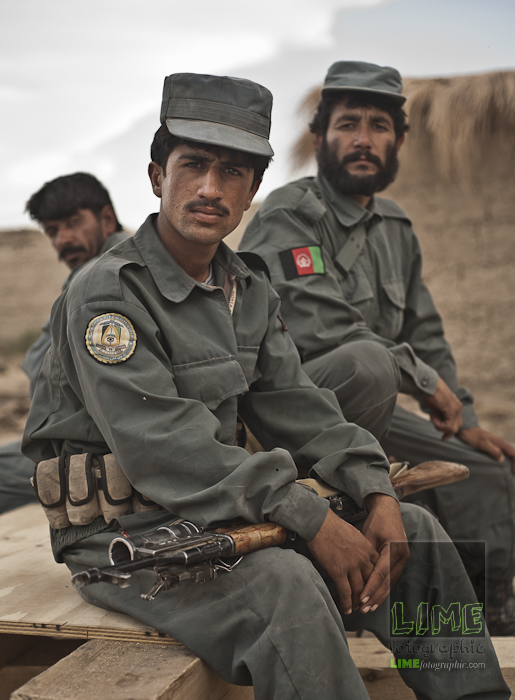
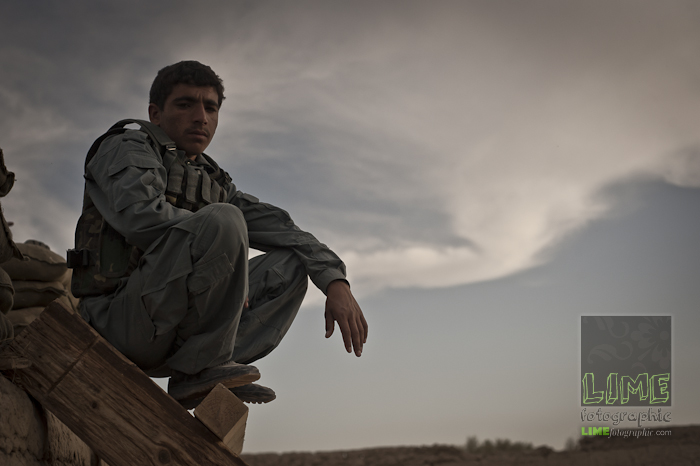
One of our recent excursions was to visit a newly established Afghan National Police (ANP) Patrol base.  The ANP are part of the relatively newly formed Afghan National Security Forces (ANSF) and are really another armed facet designed to assist in the regional control for the elected national government.  In reality they are nothing like the Bobby on our streets back home, but then this country is culturally and historically much different to our own.

A patrol base is exactly as it sounds, a compound that the ANP will base themselves from as they patrol the local area and attempt to provide comfort and security to the locals and assist in the forcing out of the remaining Taliban and criminal elements who manipulate the lawlessness to their advantage.  It is a slow progress that will take time but it is slowly working.

Any force that speaks the local language and understands the cultural sensitivities will inevitably be more successful than any force that requires translators.

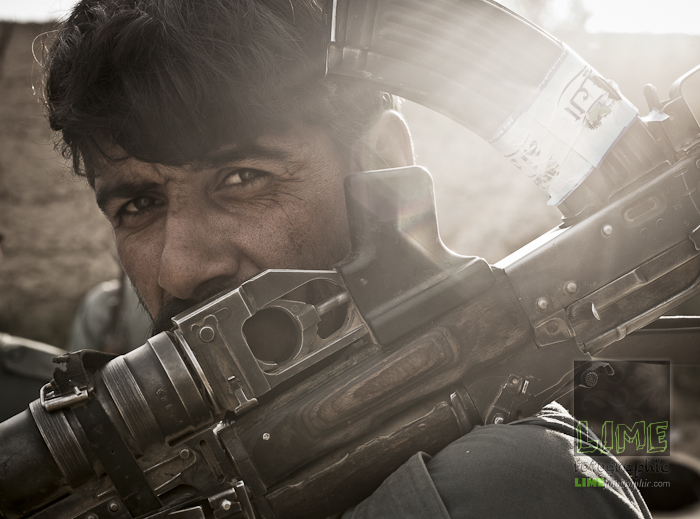
These members of the Police have closer links to the Army than our own police and are armed ready to protect themselves when necessary.  Lets not beat around the bush, these are battle hardened men, who are under no illusions as to the day to day threats they face.  They live rough (by our standards), and carry little kit and equipment beyond the essentials.

These guys are committed to the task and have a camaraderie evident in abundance.  They have seen and endured things that perhaps no-one their age should really have had to experience.  They don’t see that I suspect, life out here is tough and you just have to get on with it.

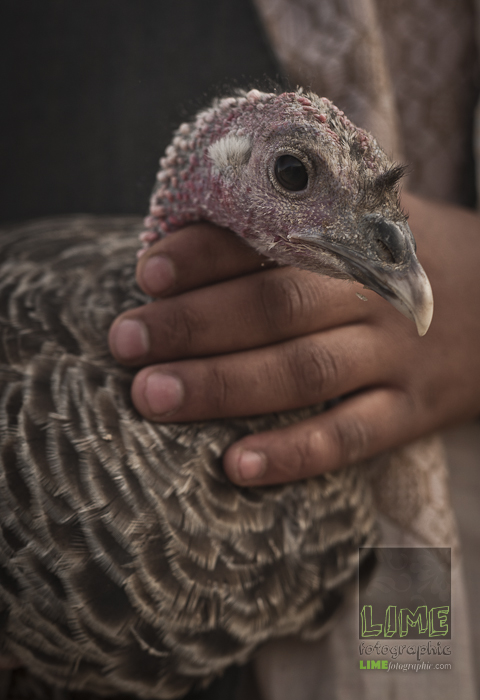
They fend for themselves by killing and cooking their dinner which tonight means that the bird gets it.

They are a presence for the government, and a presentation that the people are not being forgotten.  They are an authority which will have greater credibility than any insurgent or criminal organisation, certainly in time.

They are a part of the future of Afghanistan, although the chicken’s hours are numbered.

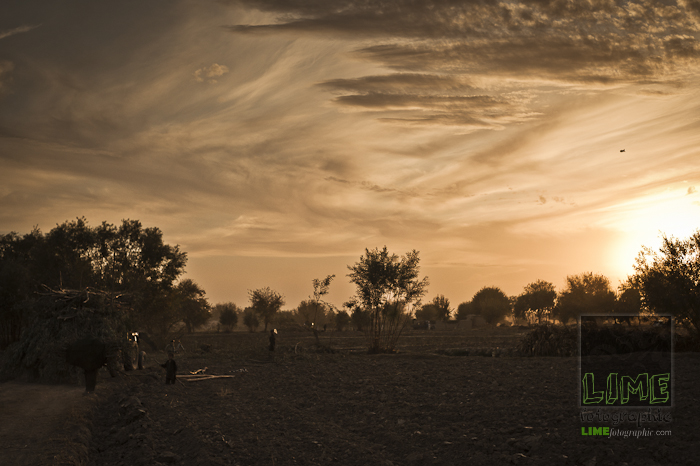
The Green zone in Helmand is a stunning region, that is unique within Afganistan.  Called the ‘bread basket’ of the country because of its fertile soils and density of farming lands, it is an amazing place to visit and walk through, although the potential risk of doing so should not be played down.  Many of the locals appear friendly and smiles are plenty but as you patrol you are acutely aware of the threat as you scan the surroundings.

There can be little doubt that Afghanistan is a developing country.  Forty years ago it was considered an extremely forward thinking Muslim nation and quite liberal with it.  Not that you would believe that if you saw it today.  Prolonged conflict will do that to a country.

Are things changing?  Well things are always changing, so that is a given, the question is though, is it changing for the better?  The only people that can answer that are the Afghans themselves, so I won’t start.  However they are certainly taking charge in their own security.  If you measure ‘better’ by improving civil rights and education, then yes it is improving but it is still a dangerous place to grow up.

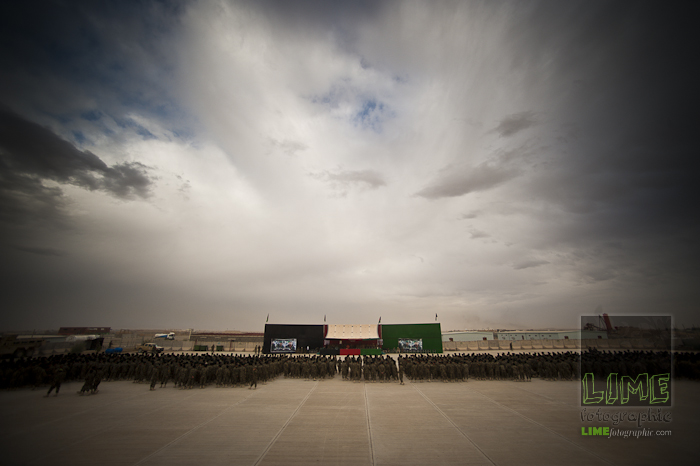
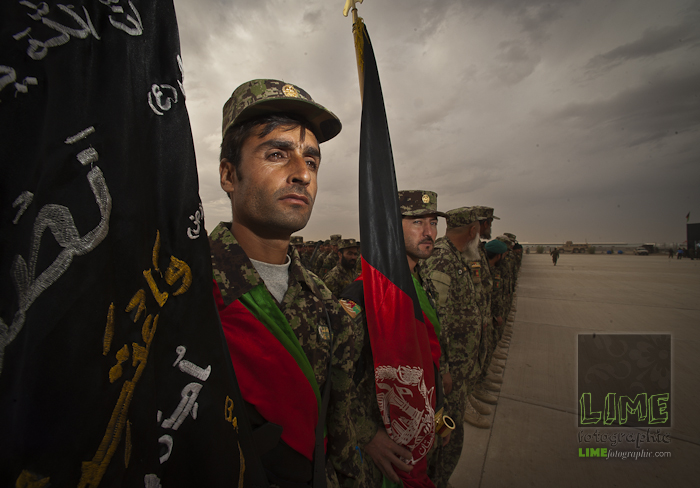
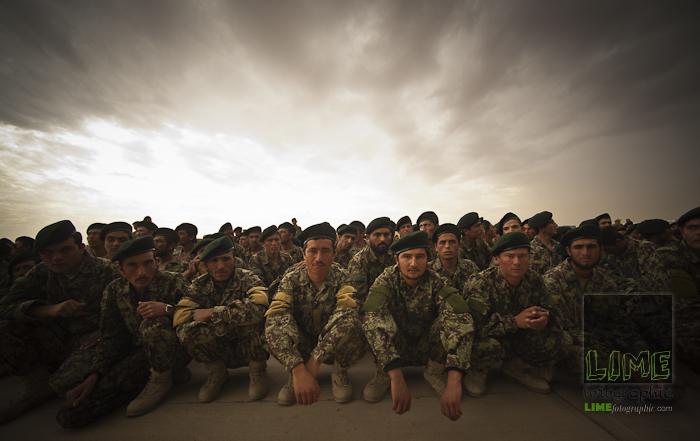
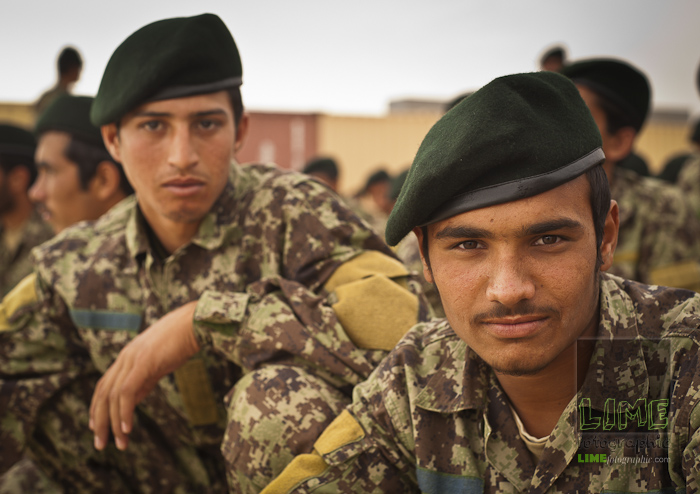
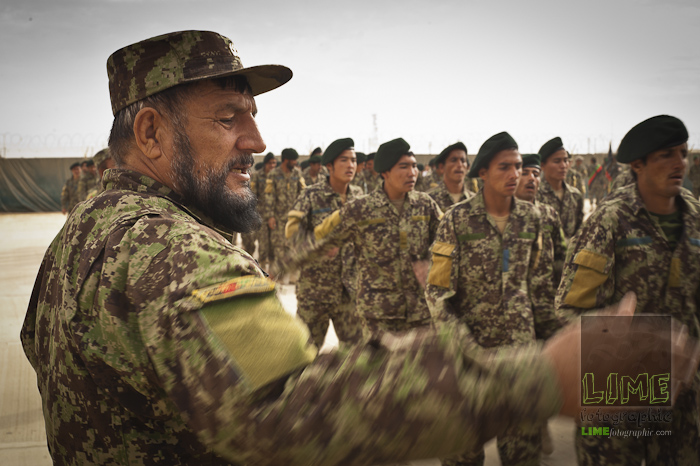
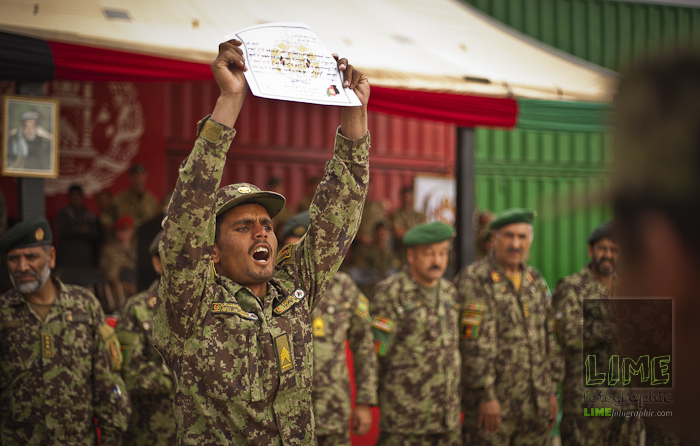
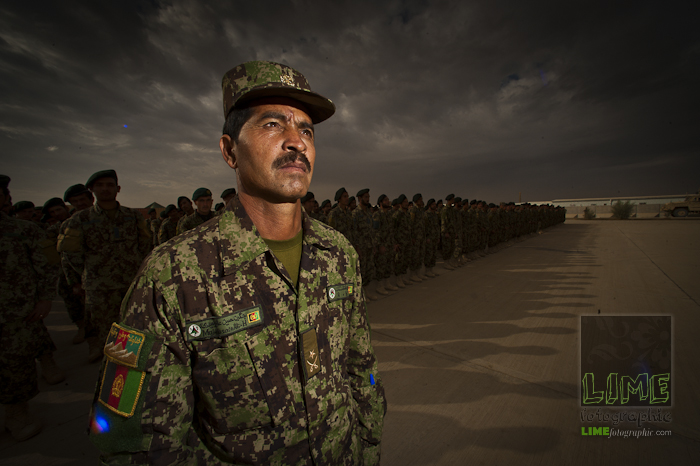
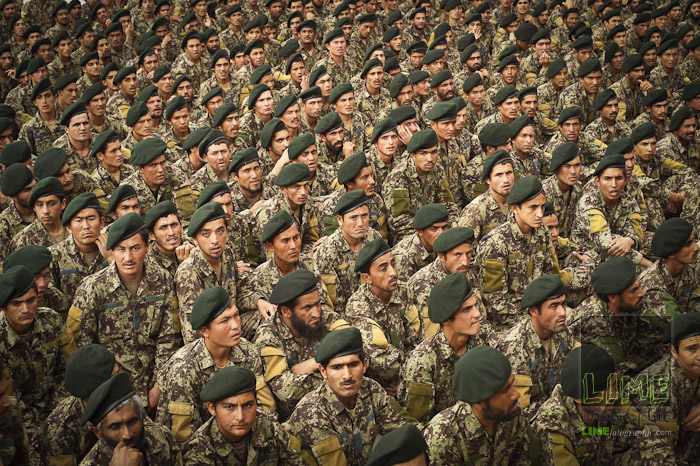
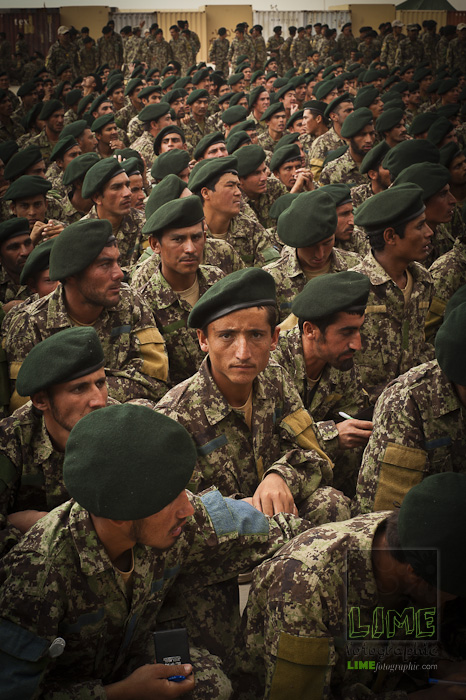
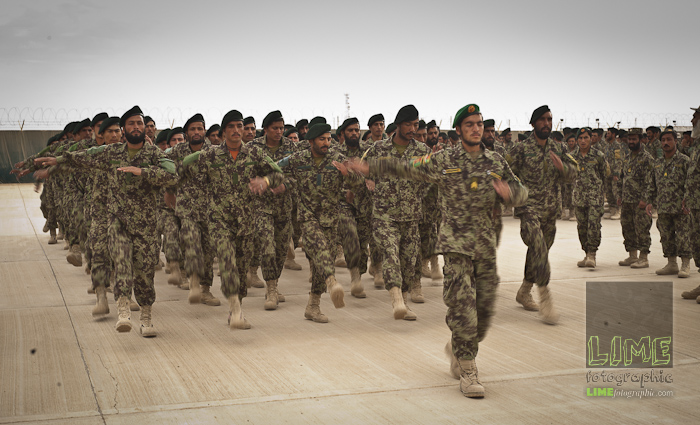
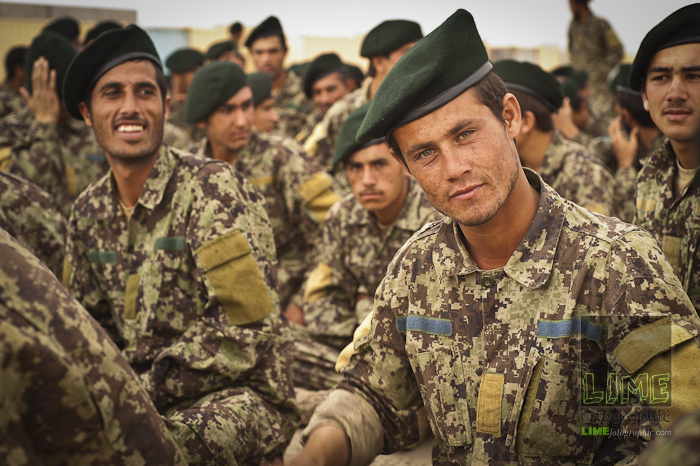
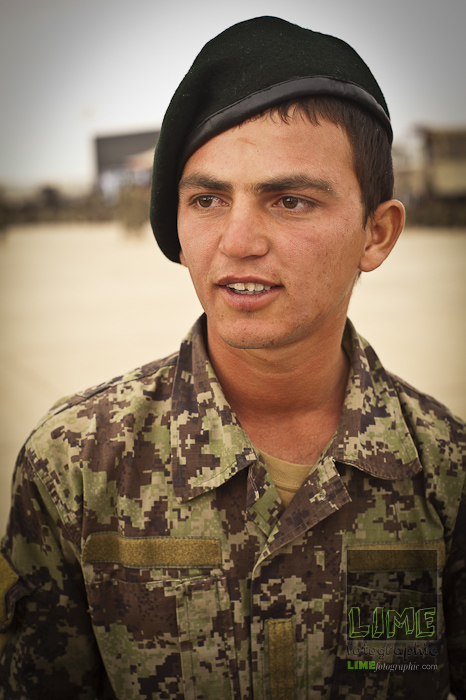
Having had the opportunity to observe a pass off parade in Helmand where 1400 newly trained soldiers formed up, I was not surprised to recognise many aspects.  Being a serving soldier I still remember what I felt like on the day I passed off the square.  You have been thrust together with strangers into an environment that tests you, trains you and as best it can prepares you for what comes next.  Yes there is a lot to learn, yes it is physically hard at times, yes at times you wonder how much of it is really necessary, but on this day, it all pails to insignificance as the pride of your achievement takes control.

Being a soldier in the Afghanistan Army, is nothing like being a British soldier, the equipment is different, the circumstances are different, the opportunities are different, but effectively the job is the same.  They are charged with the responsibility to protect and defend a nation.  Their nation.

In the case of Afghanistan, this is no easy task, but it not been easy for forty years, and it won’t get any easier over night.  A fledgling Army has to get up to strength, meet the challenges ahead and gain popular support, which it is doing.  They are gradually beginning to take over areas from ISAF (International Security Assistance Force).  They may not be able to operate the same way as their ISAF counterparts, but as they can communicate with the local population in a way ISAF cannot, you could argue that they will have greater effect.  The local population will, after all, be the ones to decide where the nation is going.

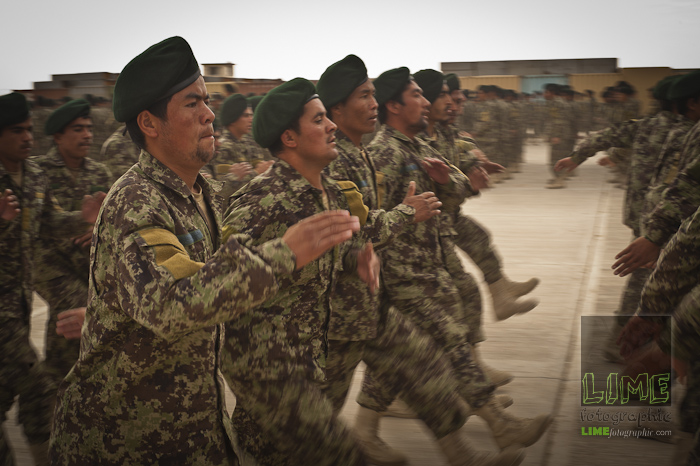
Afghanistan is a large multicultural nation which has had a past with the Soviets, so it is unsurprising that elements of the Soviet drill are practiced.  The Soviet drill that was witnessed all over the world beamed from Red Square during the height of the ‘Cold War’, was nothing if not impressive and imposing.  Stamping feet, swinging arms, heads help high, this is definitely not a simple march and at times timing was lost, but in the scheme of things, an ability to march in step all the time is possibly not of primary importance.

As a soldier over here, we try to find humour in that around us and I had a chuckle to myself with the marching.  When it was good, it was impressive (as is the intent), but at times as I photographed it I found myself thinking that it looked like a rehearsal for a Michael Jackson music video.  The the influence of the self appointed ‘King of Pop’, has reached far indeed.

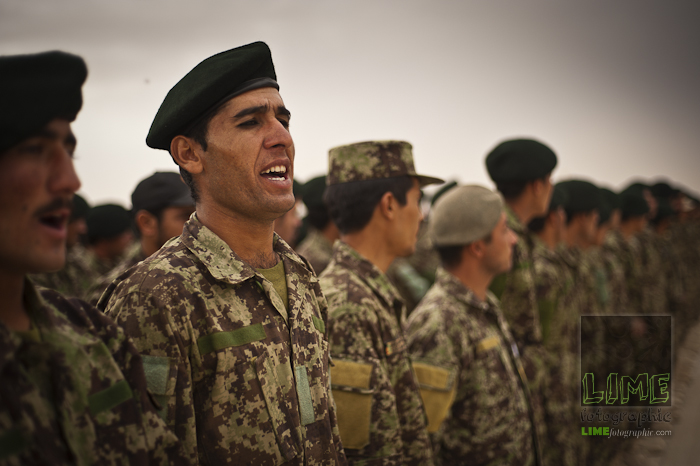
An Afghan parade holds very little similarities with a British one, this is not intended as a criticism as the Afghans are not British, nor I am sure, do they wish to be.  They follow their own cultural paths and do their best too.  There were times during the parade where the soldiers sang, and not just to their national anthem.  When they sing, they sing with passion, even if the National anthem is played over the PA system from a mobile phone.

My overall impression from witnessing this spectacle was they are a proud people that really love their country and they believe in themselves.  When they have all that what can stop them?

It will be a long journey but a journey that Afghanistan has to take for its own future and now there are an additional 1400 soldiers to help.

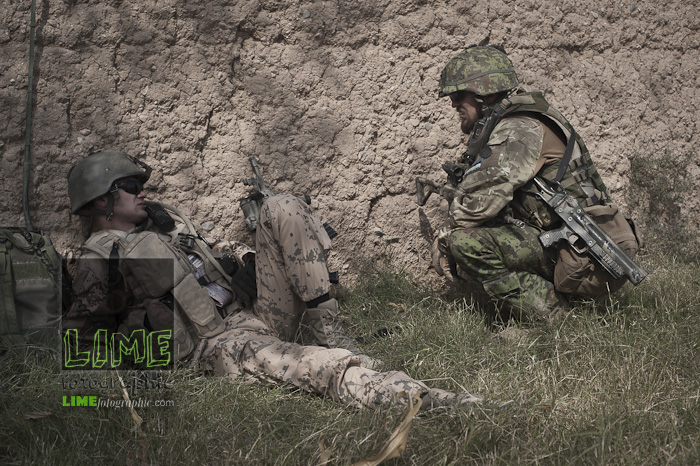
The Combat Camera Teams  latest task has been to visit patrol base Wahid, in the green zone of Helmand province to record the contribution to the campaign by the Estonian force.

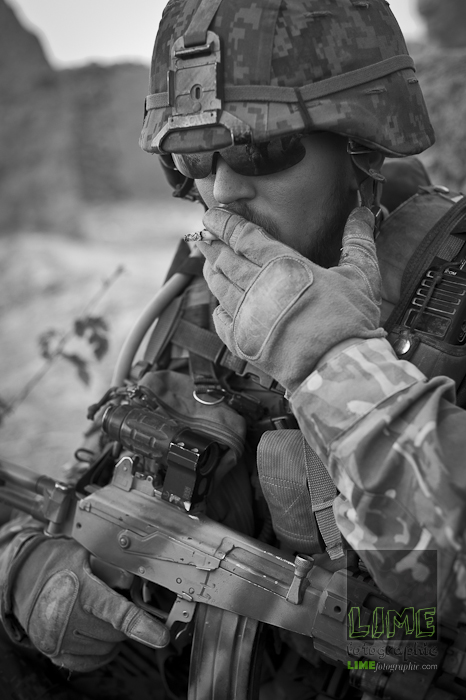
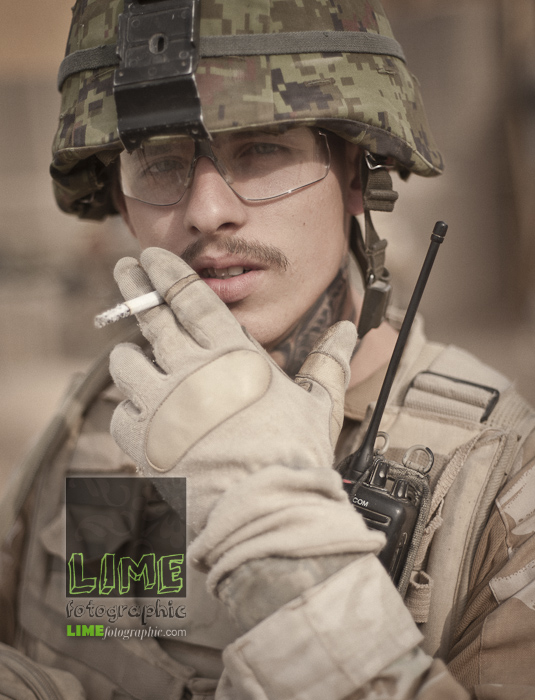
Smoking is common pass time amongst all soldiers

Two Estonian soldiers ease the burden off their weary feet

I have to admit my naivety about Estonia, other than their geographical location and the fact that they were part of the Soviet Union, I knew little else.

The final cigarette before leaving the safety of their compound

Where is Estonia?  Well it is situated to the east of the Baltic Sea nestled between Finland to the North, Latvia to the south and a small country called Russia to the East.  One of three small independent nations huddled together that used to be part of the old Soviet Union Estonia,Latvia and Lithuania, were important players in the breaking up of the Soviet Union.  Consisting of about only 1.3 million people, it is one of the least populated countries in Europe.

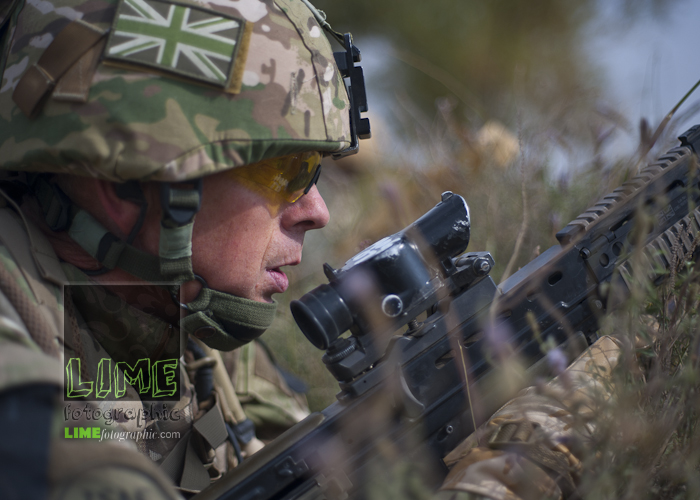
Under threat, a keen lookout

The country contributes about 160 soldiers for a rolling six month deployment on a par with the British troops however considering their population; they are actually one of the largest contributors to the operation (per capita).  They work as part of the multi-national task force within the British are of operations.

Culturally closer to Scandinavia than Russia, they are a friendly bunch and have a mental toughness that is obvious.  Most of its soldiers are physical giants.

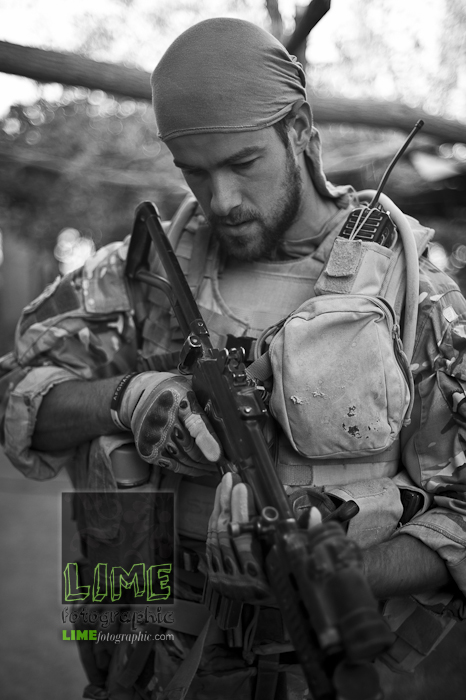
Mental preparation before leaving the safety of base

Being a smaller nation they do at times seem to be a little less equipped than the other nations, their vehicles look like cold war throwbacks, but here is the thing, it all works and works well.  They are an example of the emphasis on manpower over technology.  That said they are still sufficiently equipped for this theatre. They have suffered losses and like all the nations involved are constantly adapting their tactics to suit the enemy threat.

Photograph donated by photojournalist Martin Middlebrook of Op massive in progress

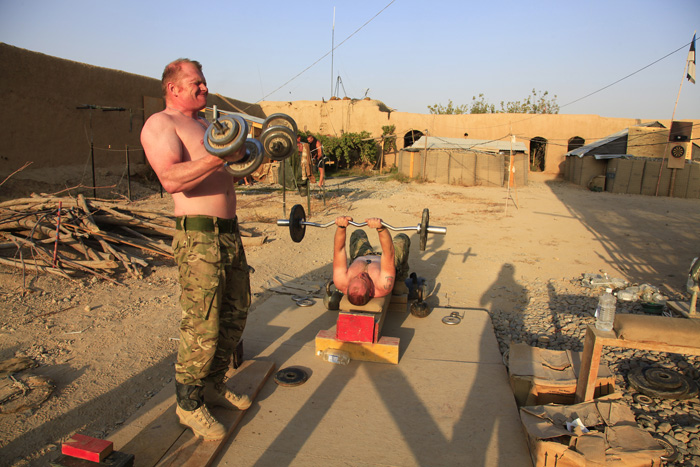
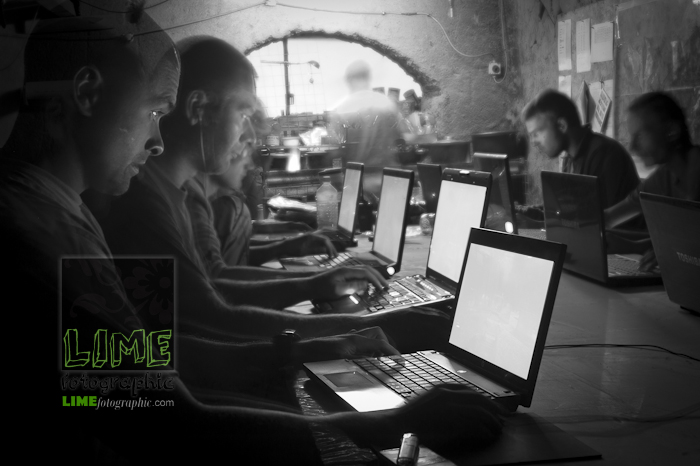
Life in any Patrol Base can at times be slow and efforts need to be made to help pass the time.  This can be using the gym (in military terms, known as Op Massive), watch DVD’s, read or pretty much find anything you can to pass the time.  The Estonian platoon in Patrol Base ‘Brekna’ had another, I had not seen before.  For nearly three hours, these battle hardened soldiers dragged out their laptops, sat around the communal dining table, wirelessly linked up and in teams and preceded to kill each other over and over and over again……….tirelessly.

The band of brothers, games style

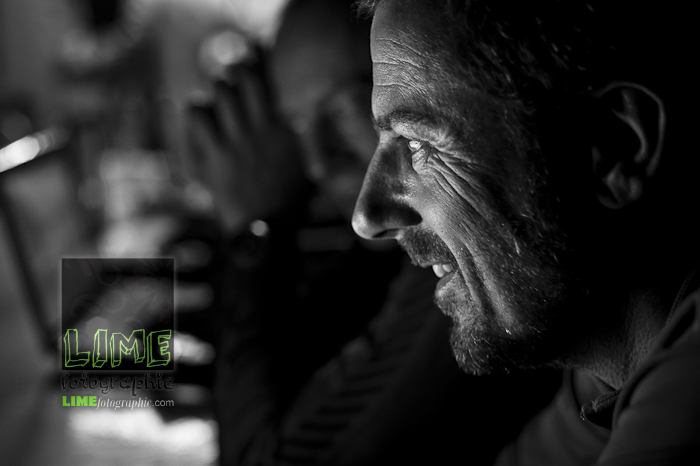
Illumination from the screen

Focus and concentration

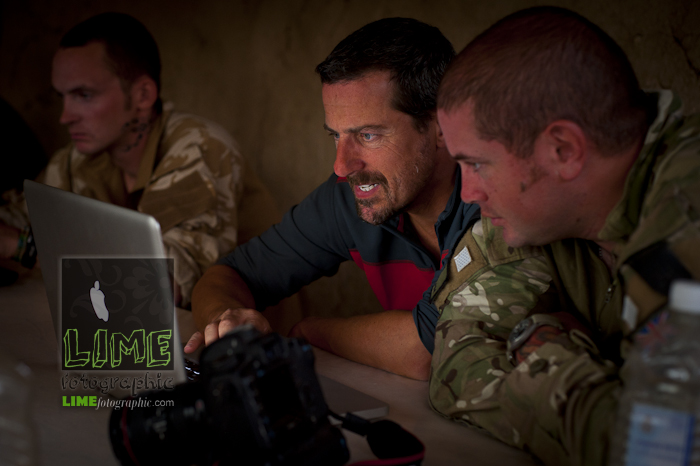
The apple portrait

The focus and concentration was astounding but good natured.  These guys just didn’t move more than their fingertips for ages.  It made for some interesting images.

Stunning natural light in the pitch of night

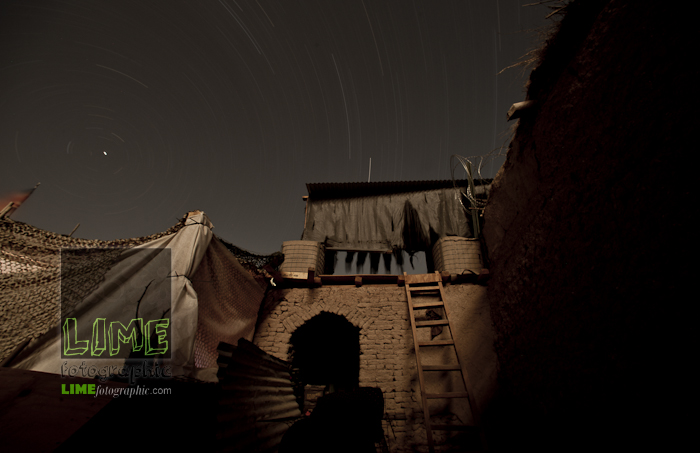
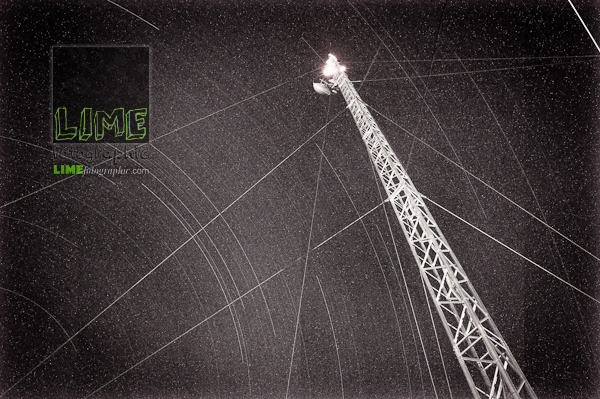
As the light departed and faded to black (a little video pun), the opportunity was too good to miss in an attempt for another long exposure star trail shot, this time getting the North star too for a bit of visual interest.  It was a shame that the moon was so prominent so although it gave some awesome light for the compound, it did mean there was a lot of light pollution in the sky.

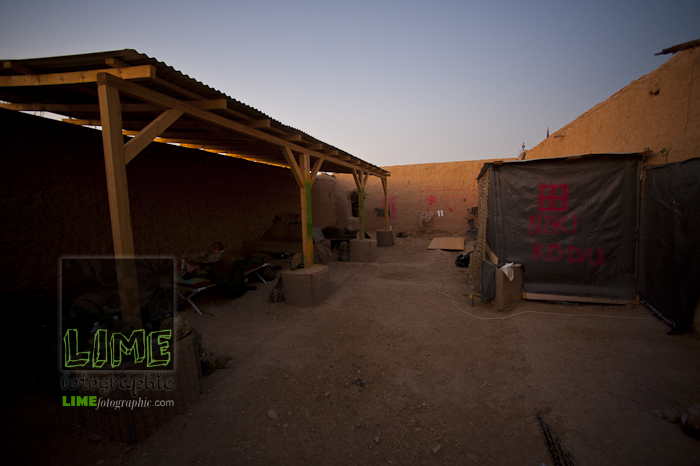
The home from home in a patrol base

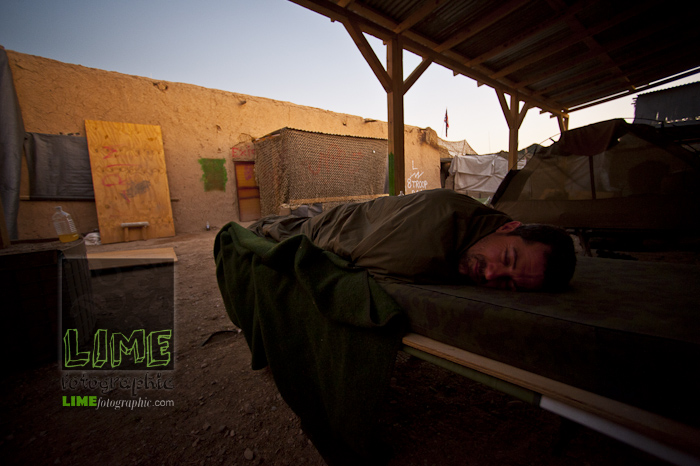
Refusal to accept its time to get up

So what about the Sauna?

As we all sat around in the evening waiting for their two chefs to rustle up a fine meal, we began to talk about the welfare facilities these guys had and the subject of saunas were raised.  It turns out that they have a mobile sauna on the Patrol base ‘Wahid’………….. No really an actual sauna.

Suspiciously we enquired more to discover that in Estonian military law, every soldier must sauna at least once a week, so that although this was not possible on ‘Brekna’, an ops sauna on ‘Wahid’ was a sight to behold.

“And so it came to pass that on the last night, hosted by the Estonians, the Combat Camera Team were all sat (naked) in a fully functioning Sauna on the front line of the Helmand campaign”.  A surreal experience you can be sure, but all I can say to end this entry is to say, be thankful there are no photos!

Estonian top gunner taking a moment inside the Armoured Personnel Carrier

A final wave on the journey back to Bastion

Until next time.

The worst thing about digital photography is I have to say the requirement to have power.  Yes batteries can last for days now, and they are quite small and light so you can carry a few with you, but there will always be the inevitable need to recharge.  “You just cannot forget about film” is a recurring message that I seem to be hearing over and over.  It still has its place.

One of the problems being out here as the Camera Operator is that I don’t get to shoot anywhere near as much as I would like. So when I do, it would be great if everything worked the way you think it should.

I have shot star trails on film before on a Hasselblad, and the results were great.  I have wanted to give it a go on digital for some time and managed something out in Canada once.  It didn’t work as the battery died before I closed the shutter meaning that the camera couldn’t do its post exposure clean up!  The resulting image was dreadful with all kinds of noise overly distracting from the general image.

Now with the D3, and finally in a location with no light pollution (not even any flashes from incoming rockets and mortars), I decided to give it another shot.  To get a decent trail of light I decided on a six hour exposure with some interest added as a reference.

So working out my aperture and ISO, I set the camera on my tripod, pre-focused and away it went.  Leave the camera in the middle of a compound full of squadies and hope six hours later not to have pictures of genitals.

Alarm set, getting up at ‘stupid O’Clock’ on a cold (by Afghanistan standards) morning, I was again disappointed as the battery had gone dead before I got there and the exposure had ended.  CRAP!  Clear nights are not all that common out here with dust light pollution and a bright moon.  Never mind I will get another shot.

Anyway here is the shot, it has taken some creative post production to get an image that I am happy to display but it is not the shot I wanted.

Not another bloody school day!


As I told you last time, I am working in Afghanistan with the ‘Combat Camera Team’, a three man team who are responsible for gathering footage, stills and stories to send back for the UK and international press to use (if they so wish).  Now I am the ‘Video guy’, so I am the one who films the footage, packages it up and sends it back to the UK for distribution via our internet, which is a bit like internet at home, just a damn site slower, in fact at times it is soooooo slow (try to remember the old dial up speeds from the 90’s and then quarter it), it might be quicker to jump onto the nearest bicycle (the main local form of transport) and take it home like that.

These are just the kind of limitations you have to endure out here at times, although not pleasant they are frustrating enough when an editor is desperately waiting for your footage, but that is just the way it is.

My background is not working with video, I am a stills photographer for the Army, however one of our roles is to supply a camera operator from within the trade, which at the time of writing consist of just 43 people, to fulfil the role (internally referred as turning to the dark side).  I did a camera operators course once, but now due to my age and possibly assisted by my rapidly thinning ginger hair (we like to focus on this fact in the Army), I had pretty much forgotten it all and even working out where the tape cassette went was proving challenging until it was pointed out to me that the ‘NEW’ cameras didn’t use tape anymore.  Oooops.

In the patrol we are organised so that we fit in with minimal fuss

So with three months due until the deployment, off I went to re-learn the skills of video, sound, editing and packaging my footage, shot sequences, overlapping action, crossing the line, terminology like Cut Away’s, close up’s, General Views.  Sounds easy………………………but its not!  I am an experienced stills photographer, who may, at times, be a little set in his ways. I have over time developed my style of photography and now tend to work towards what I am looking for…………a single shot to tell a story when possible.  Now with video I have to take 25 frames a second.  I have to wear big headphones or protective earphones to keep on top of the sound, carry a big tripod as ‘shakey’ cam is ‘just amateurish’.  So as I look through the viewfinder concentrating on all this I may well have to bear in mind where I am walking because there are a few people out here who like to hide unpleasant things for us to find in the ground.  Its not all bad news though because I get my own officer to look after me (a  bit of a turn around from old the Blackadder days hey?).  He even carries the sticks (tripod) and with some pride calls himself my ‘sticks bitch’.  You gotta love Army humour.

Putting our heads above the parapet 

After being out here for a few weeks now I am starting to get the hang of it but it is still quite difficult and not at all what you would call natural, you have to zoom right in to focus and then zoom back out to compose, set the white balance, check your sound, check for background noise, listen to what is being said, will that bit edit?  Can I edit this into a piece that says all it needs to?  Can I edit it?  Can I edit?  No really, can I edit?  As if the taking of the footage was not hard enough, I also need to edit basic packages for use on the web.  Now much of this is work self taught on the hop.  A few pointers here or there and a way you go, just make sure you don’t go longer than 60 secs because the average web user loses interest then.  Editing software is never an easy task to get your head around and ‘Avid’ is perhaps the most confusing of the lot, but you have to learn it and pretty quickly.  The manual may as well be written in Japanese too with all the Video terminology that makes little or no sense to the uninitiated.

The Team leader provides support as I become tunnel visioned looking through the viewfinder

In the end you just have to jump in and try your best to keep all the information in your head while concentrating on all the elements of the camera handling………………………Damn, I forgot the white balance again!

Every day is a school day.

Until next time.

All images in this post are British Crown Copyright and taken by Sergeant Steve Blake RLC, the stills photographer from the Combat Camera Team on Operation Herrick 15

For those of you (few) who may read this, I am doing my time in Afghanistan at the moment and thought it may be a good opportunity to tell you about what it is like out here, hopefully away from the pretence and ego centric bluff that you may have heard before.

Let me start by saying I do NOT consider myself a ‘WAR’ photographer, but rather a Military photographer that from time to time may be expected to go and photograph or film in places some may call a war zone.  While this is in no way meant as a disrespectful piece on those that are ‘WAR’ photographers, I just think I should differentiate between us and them and I certainly don’t wish to belittle what I do either.

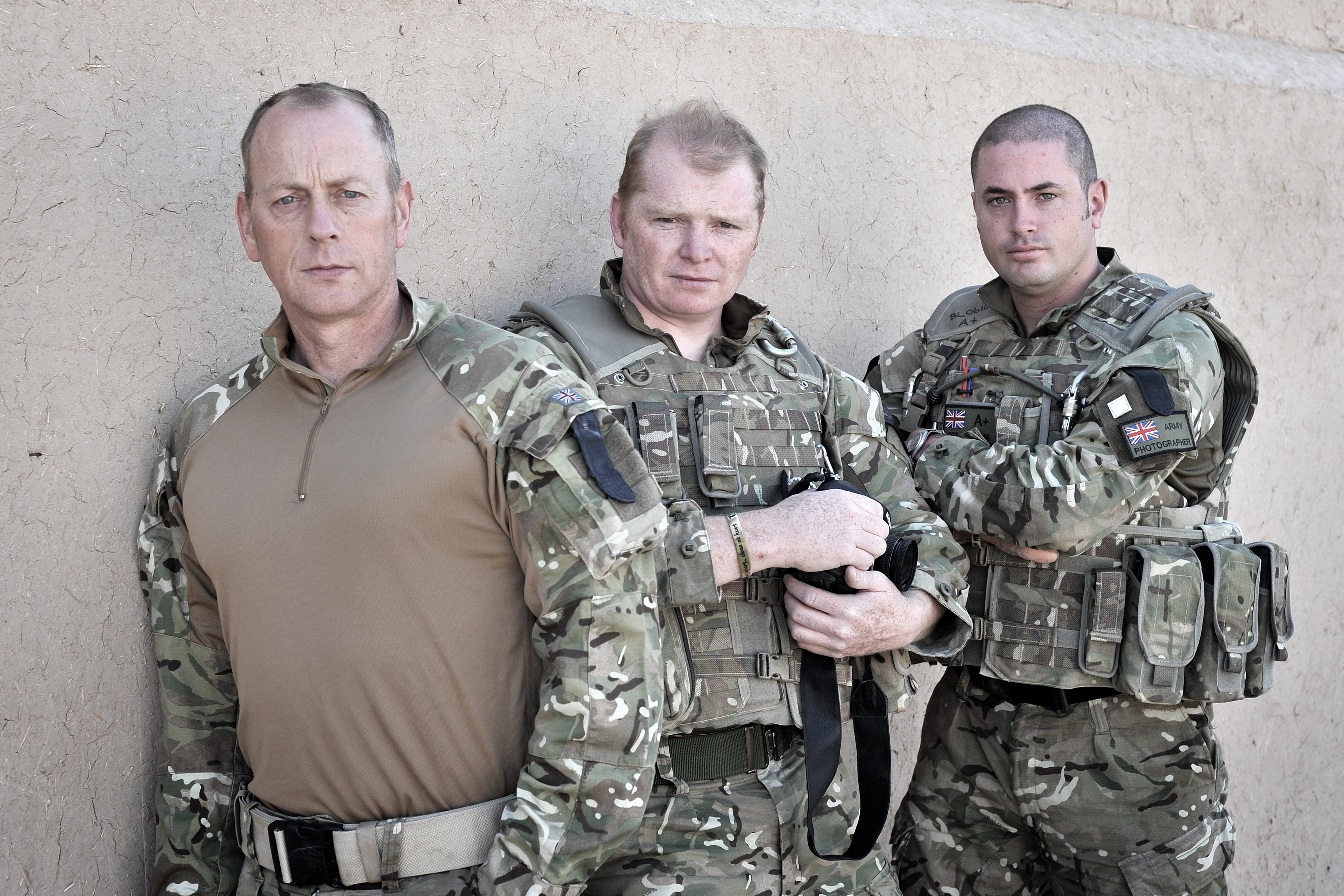
Let me start by explaining our role as I see it.  I am currently serving as part of a three man team that includes a stills photographer (Steve), and Team Leader (Mark) and myself the ENG (Electronic News Gathering) Camera operator, or Video guy, we are the ‘Combat Camera Team’.  We will spend six months of our lives out here based in Afghanistan as part of a larger organisation, ‘Media Operations’ gathering and distributing images, footage and stories to the UK, and international press.

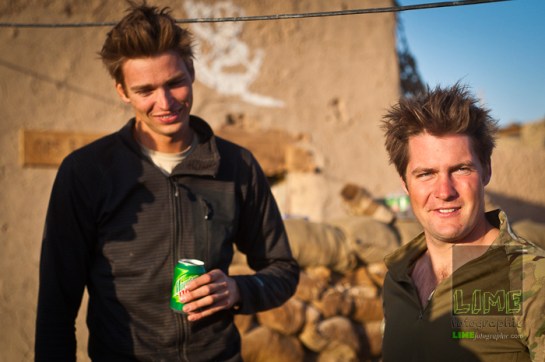
These happy people are Mark and Steve.

Now six months can be a long time to be away from family and friends but there is also the fact that we are all in the same boat, so we just have to get on with it.  We are consenting adults who signed the contract so have to accept the possibility of these tours and take it on the chin.  For those of you that know the British Army, this does not mean that we cannot moan and whine about things.  That’s the way we role baby!  Don’t take it seriously.

Now then life out here is at times not all about bombs and bullets, at times it can get very boring, very very boring, very very very boring.  Am I making my point?

At other times the tempo can be the complete opposite and we can be zipping all over the place shooting this and that (usually with a camera).  Now I believe that we always try to be subjective in our coverage, but we do work for the Ministry of Defence, so we are limited with what we can and can’t release.  We are after all a public relations asset and as such you would not expect a PR department of any corporation to volunteer to focus on the things that maybe unpopular.

I should add that sometimes we can get bored, have I mentioned that yet?

So why don’t I consider myself a ‘WAR’ photographer then?  Do I make a living from photographing ‘WAR’?  No!  Am I an impartial observer? No!  Do I have the freedom to photograph and film what I want to?  No.  Do not read that as a negative point.  Do I wish to don a dish dash, leave the security provided by my comrades armed with only a camera and a few US dollars, to track down a local ‘Taliban’ commander and ask him how his day is?  No!  It is this point that I believe means I am not a ‘WAR’ photographer.  I have operational limitations (which are as much for my personal safety than anything else), which limit what I can and can’t do.

You cannot compare what we do, to what a ‘WAR’ photographer does.  Look at the work of Don McCullin, James Nachtwey, Tim Hetherington, Robert Cappa and the many others who fit the role, look at their pictures, look at where they have been, imagine what conditions they have been working in.  I am a soldier, I carry a weapon (or two), I would like to think I am surrounded by other armed soldiers (and they should be friendly).  Yes I can be and have been found in some unpleasant places and conditions (by my own standards), but in the big scheme of things I remain in relative comfort.

To conclude, please don’t imagine me sitting at a computer in the baking hot sun getting depressed about my lot in life, as I am actually sat in an air conditioned port-a-cabin (although dusty), sat in a real chair, drinking a real coffee (non of that instant rubbish for me).  I am happy with my job, I like what I do, even if I don’t enjoy every little aspect. If that was not the case, what would I have to whine about?

By the way, did I tell you I was a bit bored?

Tune in next time while I tell you more about what we do.

Any opinions and views expressed in this article are the opinions and views of Mark Nesbit and should not be considered those of the Ministry of Defence.

I have now been a photographer for a few years now.  As with any vocation it has its highlights and lowlights (no pun intended), but its unlike that many vocations it can be as incredibly rewarding.  It is by its very nature a creative process in many cases, even in the documentary field.  It comes in many guises with to some extent a requirement to specialise in one field or another.  Now at the moment I am fortunate to be employed to do what I enjoy so much (even the bad days are not that bad), but being employed also has its down side.  It does restrict to a degree my own direction and personal ambition, or maybe place certain ideas and concepts on hold.

In this time of financial uncertainty, I guess it is better to be in employment than not (although no-one seems safe).  With employment I do also get the freedom an opportunity to expand and improve (an important concept for any creative type) with relative comfort.

I have recently been reworking my archive, looking for something to document a transition or a journey.  As any photographer will tell you, when you train in the fundamentals and technical aspects of an industry regarded by many as magical, you get to understand these but how do you take that knowledge and make it your own?  I hear much about having an eye for a photo, and whilst this is true, I also believe that to a degree this can be taught.  There is a skill in seeing something and making a conscious decision about what shutter speed will work best or how much depth of field is needed, or what exposure value do I want to use.

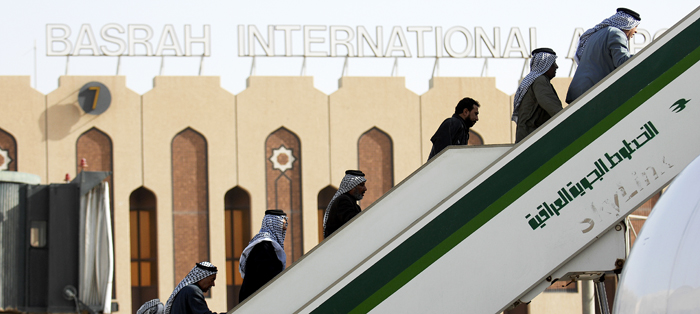
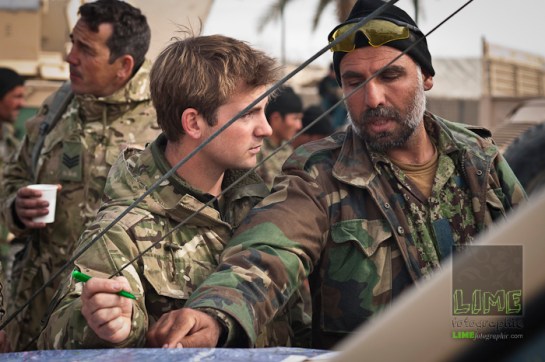
I used to really search for the justification to consider photography as an art form.  My thinking was that was it fair to snatch a frame in a tiny fraction of a second, trusting at least to some luck that if the subject was talking I wasn’t going to capture a blink or one of those awkward expressions from mid sentence.  How can the blink of an eye compare to a masterpiece painting or sculpture that takes months or even years?  I think now that the truth is they should not be compared in terms of time taken.  My time as a media or PR photographer taught me to look for context in an image but to try to keep the image as simple as possible.  I took the image above along side a fellow photographer to illustrate the reopening of the Basrah airport for the annual Haaj pilgrimage.  As I took this particular shot my colleague was stood beside me, and I remember thinking that we must both have captured the same or very similar image.  I remember thinking that the framing and context seemed obvious.  It was only when we got back to the office that I saw he had gathered a set of shots completely different to mine (no better or worse).  I then realised that there is really no such thing as an obvious shot.  Our minds are all wired differently.  In that sense I think that an image can represent graphically the thoughts and contexts of the photographers eye at the time it was taken.

This is not enough to make any image stand out, as there are precious few that do.  I talk of course of the iconic images like the shot of Marilyn Monroe holding down her skirt over the vent or the controversial image of the raising of the Stars and Stripes on Iwo Jima.  There is an inevitable element of luck in both of these images.  There is no doubt that both of these images are great but what if another photographer had been there?  Well I would imagine that both these images would have been different, and having that knowledge would they then be considered iconic?  Who knows?
Sorry I have jumped off track a bit.

As I look through my archive, I look uncomfortably at some of my early images, (but then a get uncomfortable about some of the recent work too) especially when I try to remember why I took them.  In truth I would probably admit that those early days like all photographers I was experimenting with ideas.  Most don’t work in the beginning but I find that as time goes on, I still experiment but now I experiment with experience (some at least) behind me and have a certain expectation of the results.As with digital photography there is much you can do now that would have been much harder with film, if possible at all.  Photoshop skills are part of the trade now and should not be ignored or marginalised, as these skills are now as much part of the image as ever before.  These imaging skills are now available to all with editing software cheap to acquire.
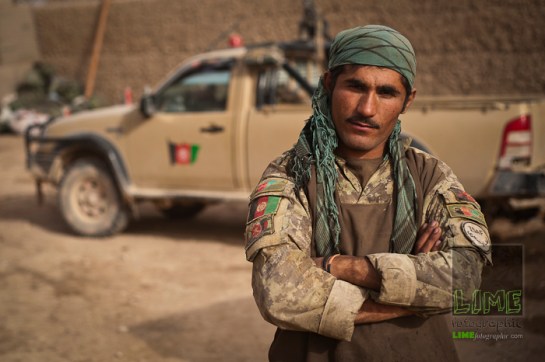
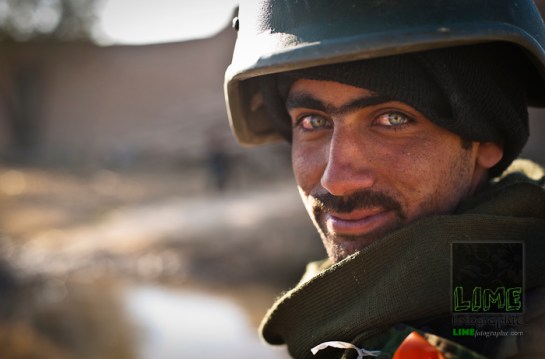
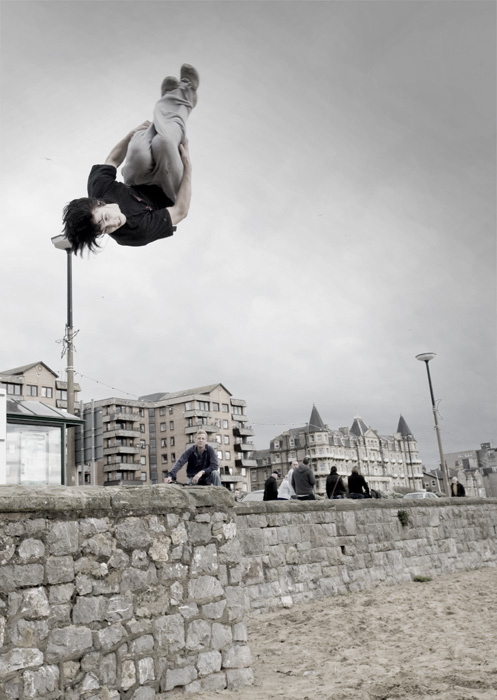
That said there is still plenty of opportunity to capture shots in camera, and utilise the dynamics of photography, Still photography can capture motion but not as the eye seem it.Over the recent couple of years I have experimented more with studio work and at times have found it can be so rewarding, a studio portrait can be dull, lighting can lift it but sometimes you still need an expression.

What I like the most with studio work especially when working with real people, not models, is the effort it takes at times to break into a person.  It is always a challenge, never easy but not always a success.  The more experience I get, the better I get, but I never expect the killer shots as I can’t help but feel that is the slippery slope to mediocrity, and then failure.
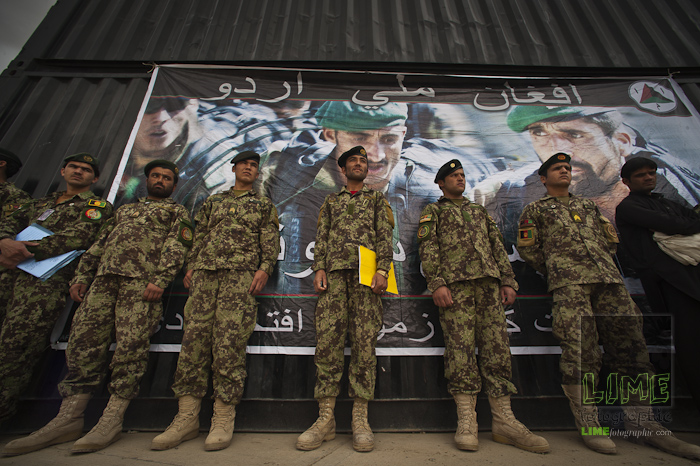
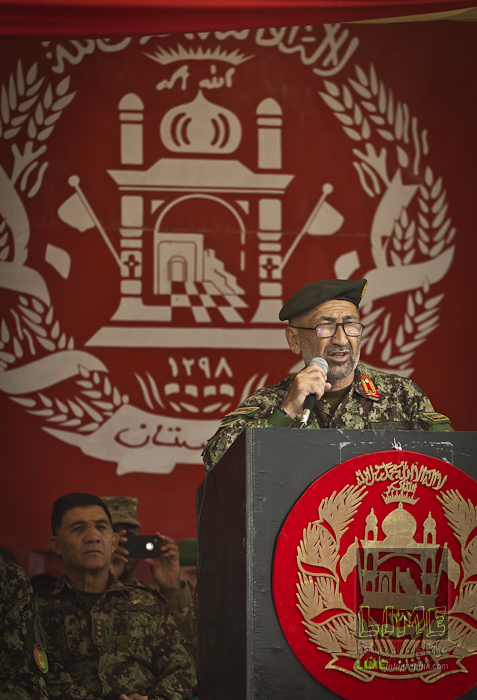
I am not naive enough to believe that my photography is ground breaking or innovative, but by continuing to work at the skills and not be afraid of failing (with a shot), I will continually grow and improve.In many ways I am no different to any other photographer but in that same way I will always be different from any other photographer too.  This is not to say I am a better photographer than the next man (or woman), only you the viewer can decide if you like, hate or are indifferent to my work.Don’t look at one image though and make a decision on me as a photographer, as I grow with experience I adapt my expectations from a shoot to what I have communicated with the subject, but on the flip side, the images I capture today are no more a snap shot in time, they are the result of all those years of experience, of the mistakes and successes, the cold mornings, the hot middays in the desert.  All these things have got me here and the journey goes on.


So maybe just maybe photography is Art after all?


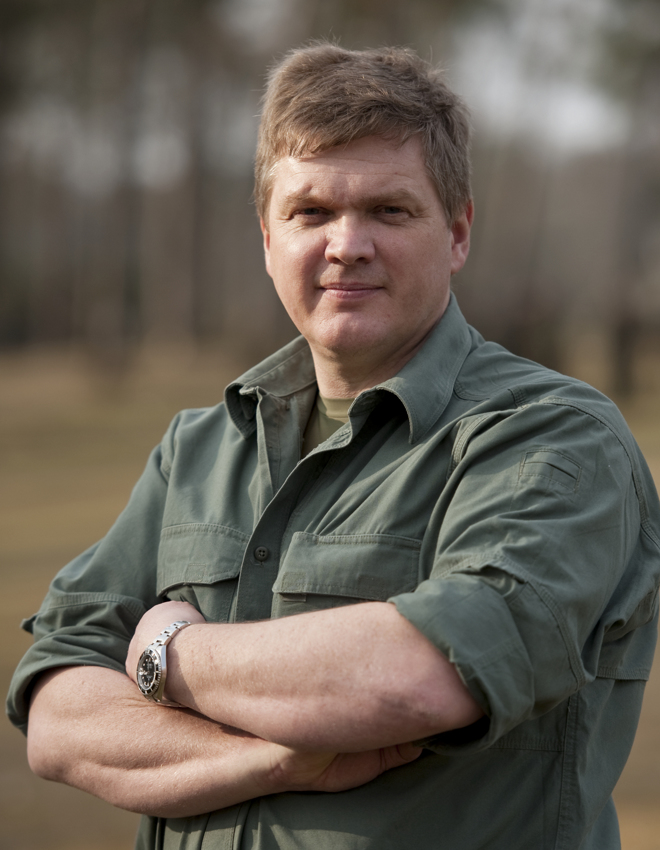
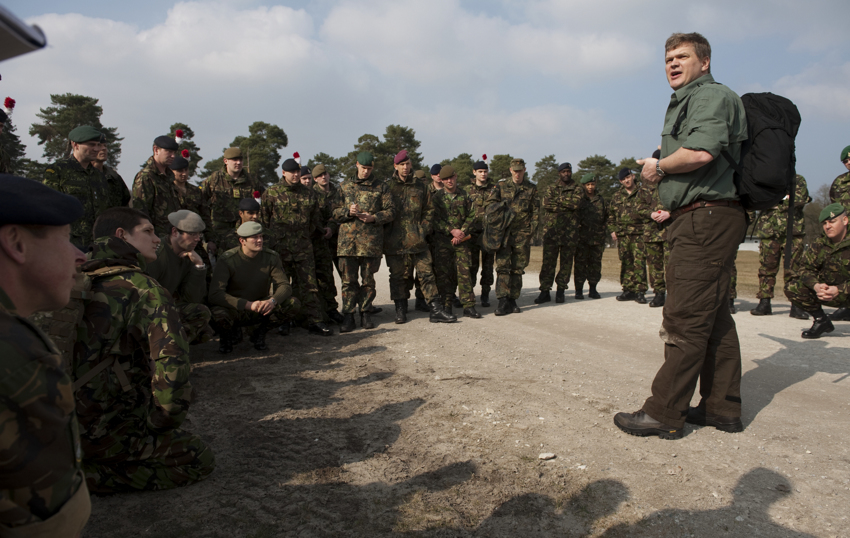
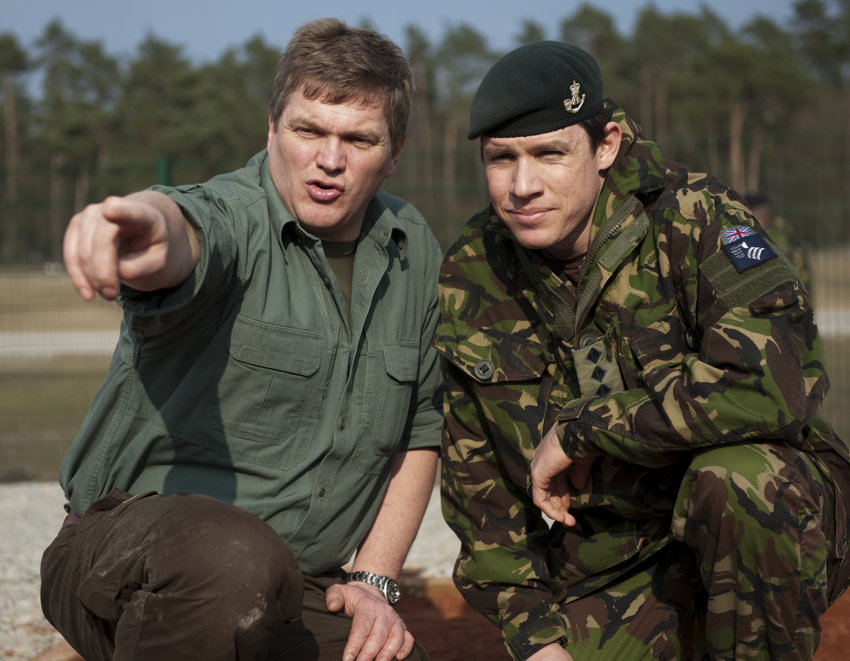
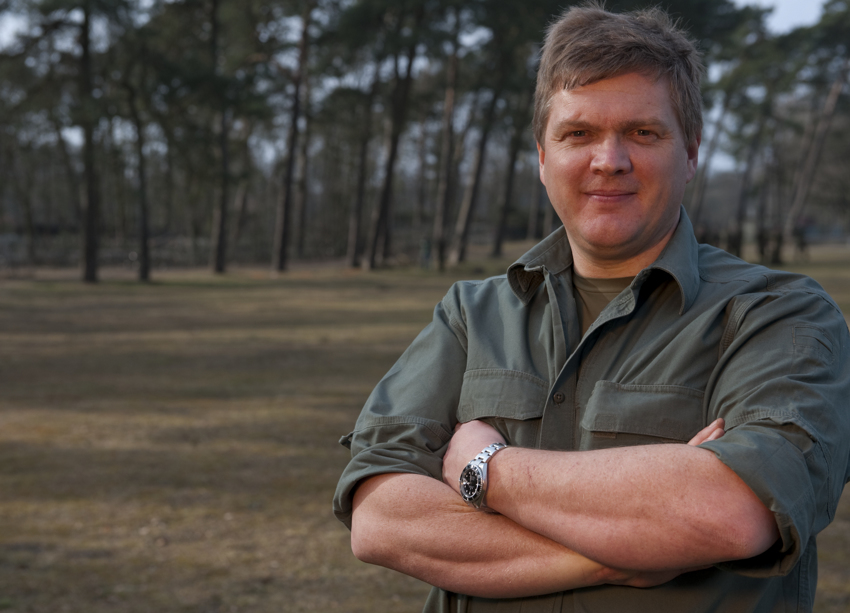
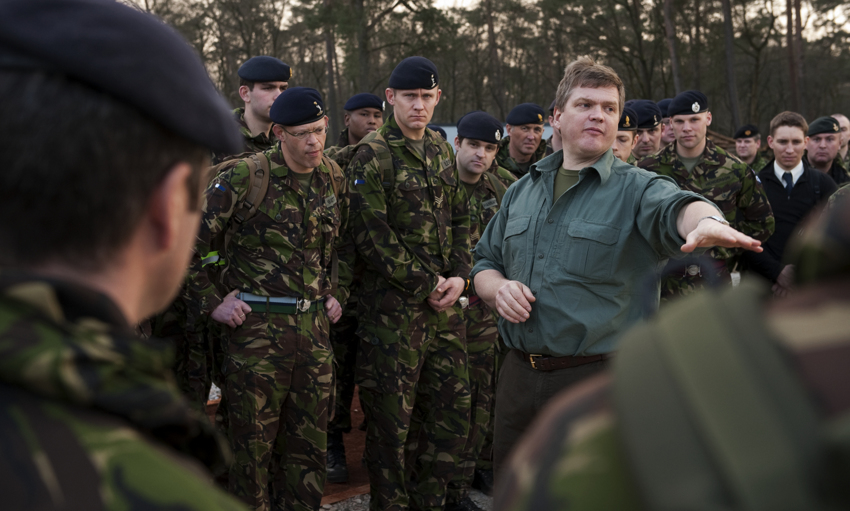
The job of an Army photographer can give you opportunities to meet people you would ordinarily never meet.  This week I was asked to cover a training day with Ray Mears an internationally respected…………. I don’t really know how to describe him with justice!  Now I have had the good fortune to work with Ray once in the past and was really keen to, this time, take the opportunity to take images that I had clearance to use.  He is the kind of guy who will demonstrate how to light a raging fire with nothing more than a twig and some positive thinking, and he is what I could only describe as a survival expert, and a really great bloke to boot.I turned up with a whole host of ideas about shots I wanted to achieve, as is usually the case, the reality turned out quite differently.  I think it is always a good idea to have a few shots in mind, just in case and you never want to be put on the spot and have a blank moment when you have to get the photo.  That said I much prefer to keep an open mind and at least try to create something at the time based on what is going on.So arriving early to get chance to look around the area was basically just an open area surrounded by trees, not much opportunity for an interesting background.  The story was simply the fact that Ray was giving his time voluntarily to teach some of the intricacies of tracking.  The obvious shots were of him surrounded by soldiers as he talked to them.  As I started shooting, I could see that he was wary of me and my camera and as a result I didn’t feel I was getting the shots I needed.Whenever you work with a celebrity (even if they are not typical), it can be quite difficult to introduce yourself and break down the barriers.  You have to be confident and forceful and at times edge in and get their attention.  You also need to be polite and respectful.  His name is Ray Mears, but he doesn’t know me from Adam, so a quick presentation of my hand for a polit handshake and an “excuse me Mr Mears”, good eye contact and you know immediately if you will get on.  A quick reference to our last meeting, he gave the old “thought I recognised you” (which I am sure was just him being polite), we were talking and I could visibly see the atmosphere relax, phew.It was at this point I requested time at some point in the proceedings (if time allowed) to get a couple of portraits to be attached to the press release as well as some posed shots with people we had identified to generate “Home town stories” for in support of the overall article.  This gave us a little time in the program to arrange a conveyor belt shoot to get a few shots (posed) to support the story (Ray training soldiers), we literally had a stolen minute to get seven guys through, so the set up had to be simple and quick.  In the area Ray was giving his talk, I asked each person to kneel down next to Ray and got Ray to point at something whilst looking like he was explaining some detail.  Although the shot is not the most imaginative, we had to get something fast and for me this was the easiest shot we could get under the circumstances and I also had to get something where I could throw the dull background out of focus as much as I could. When capturing supporting imagery for the media, it will pretty much always be a compromise, with some posed images if time or circumstance allows.  You also need to make sure you get the banker shot first and then, only then can you try to be a little bit more creative.  It is very embarrassing if you go straight for a wow shot, find it hasn’t worked and time runs out, resulting in your only shot being a failure.  As it happens, I never really got the chance to go beyond the simple other than a slight warming gel on the flash to give a late afternoon feel.  I felt disappointed I couldn’t get something better, but it was still a usable shot.

In this instance a came away with a few shots that I liked, unfortunately nothing I loved.  That is sometimes how it goes and as always you keep those missed opportunities for another day.