Archive

Tag Archives: Britain

This Steven Spielberg film “Saving Private Ryan”, is widely regarded as one of the best ‘war’ films ever made.  Visually stunning and emotionally gripping it is a modern take on an event that is now sadly beyond most of our memories.  One of the most memorable scenes for me is the opening, the assault on beach.  The mood felt tangible.  Was this what it was like?  The scared to death soldiers vomiting through fear as they head towards a heavily entrenched enemy.  I imagine there were plenty of instances of this.
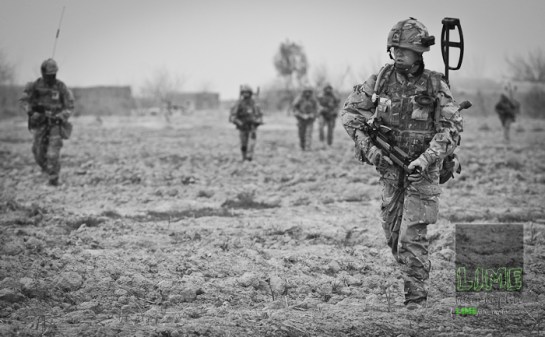
Of course you cannot draw too many similarities between WW2 and what is in comparison almost a skirmish in Afghanistan (not to belittle the threats on the ground of our our soldiers).  That said, for our guys on the ground it is immaterial as we all live our own experiences which don’t really ever draw reference from other’s experiences.
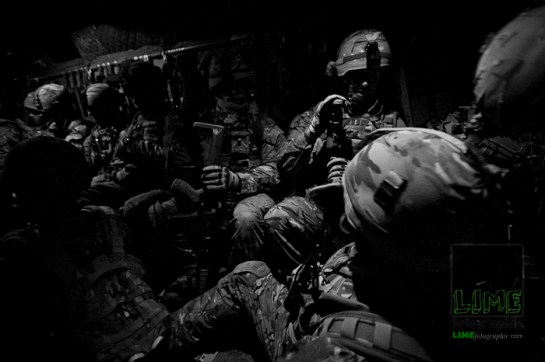
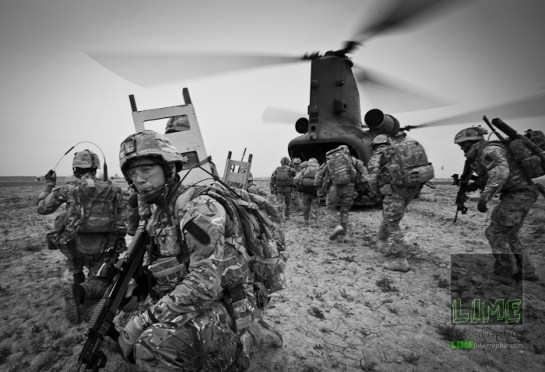
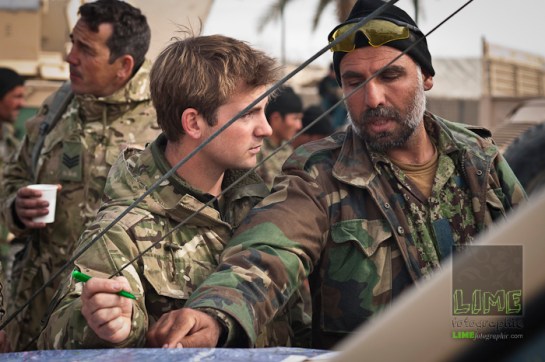
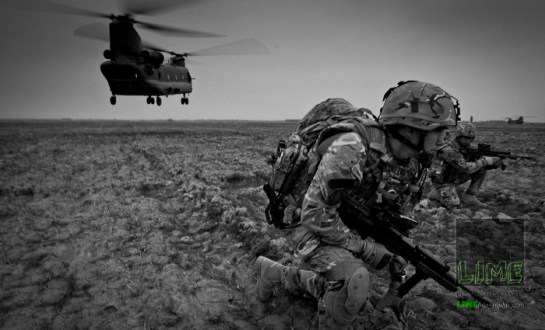
I recently went out to photograph a ‘HAF’, a Helicopter Assault Force with the Brigade Recce Force.  I am not what you would call a fighter, not battle hardened, I do, however, go out on patrol with many of the guys and consider myself to have been  very ‘lucky’ so far.  This was the first time on this operation (I have done similar things in Iraq) that I moved into what is perceived as a hostile area by helicopter, to be dropped off in the middle of a field to then watch our transport quickly vacate.
What were the feelings like?  Although only a couple of weeks have past now, those feelings are fading fast.  The night before was a night without much (or any) sleep.  I won’t lie, I was, you could say, a ‘tad’ apprehensive to say the least.  These are normal feelings that I have felt on quite a few occasions.  Adrenalin is good for you and keeps you alert.
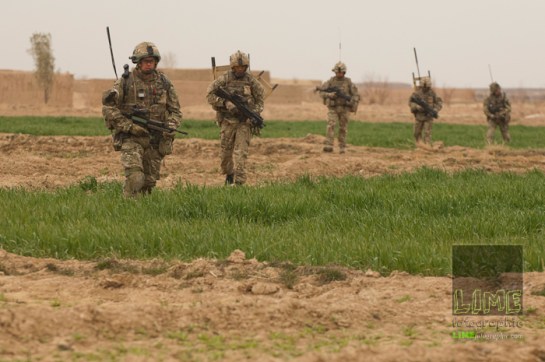
We met up at early o’clock for tea (the staple drink) and a ‘bacon butty’, which we forced down.  The operation was planned to enter an area believed to be an insurgent held area by helicopter, together with elements of the Afghan National Army, clear suspected enemy compounds and then extract all in time for lunch.
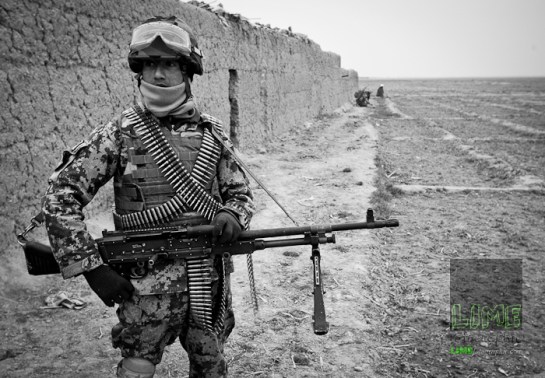
There was an atmosphere over the butties, one I have experienced before and no doubt will again.  It was one of focus, bravado, morale, humour.  The old ‘squaddie’ humour, though unique is very welcome.  The coaches laid on to get us all to the helicopter were a squeeze as we were laden like donkeys with all we would need for the operation.  The nervous laughter as each soldier tries and almost fails to find passage through the narrow aisle.
Waiting in the dark for our charriots, three Chinook helicopters with their distinct audio signature, line up ready to load.  We wait in our order to cram in.  On the order to move we all get in and sit.  There is no strapping in here.  Just sit, wherever you can, lucky if you get a seat.  As a photographer I push the camera towards its limits to get an image, any image.
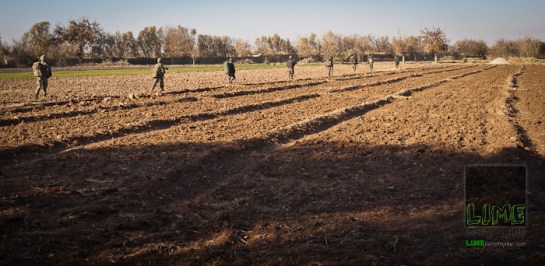
As we fly, the lights inside the cab are extinguished, the noise stops vocal communication and briefings come in the form of simple hand signals.  10 minutes, 5 minutes, 3, 2, 1!  We land in the early morning dull light, GO!  Quickly the helicopter spews its cargo into the middle of a mud field.  ‘Fan out’, I know the shot I need, so move as quickly as I can to get into position before the helicopter takes off again.

Its still pretty dark, so I have to think quickly about exposure.  It keeps my mind occupied.  I still want to give some sense to how dull it is.

All too soon our transport has gone and all that remains is silence exacerbated by our ear defence.   Then we wait………………………..in another bloody ditch!
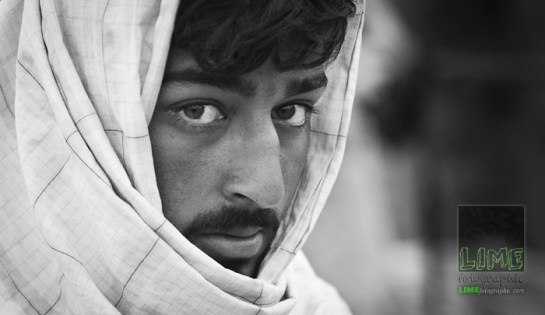
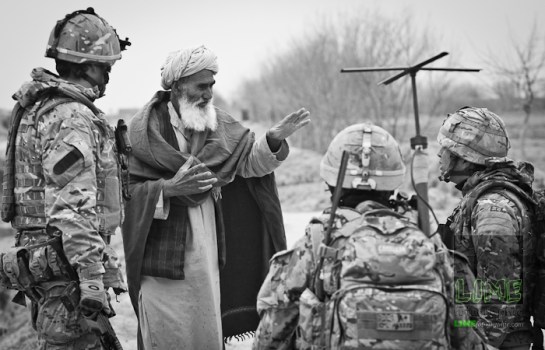
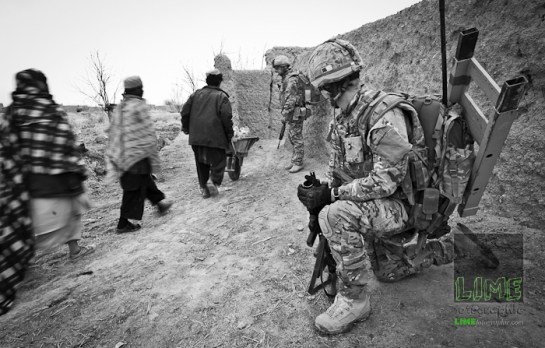
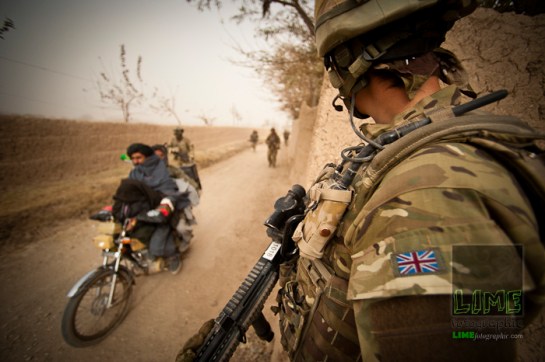
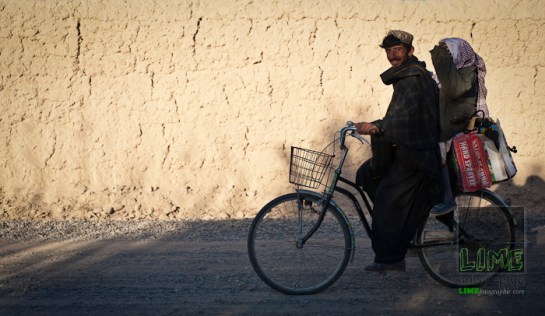
Before long we move from compound to compound, we meet locals, chat, drink chai (Afghan tea), move again, more chat, more chai.  All the time alert.
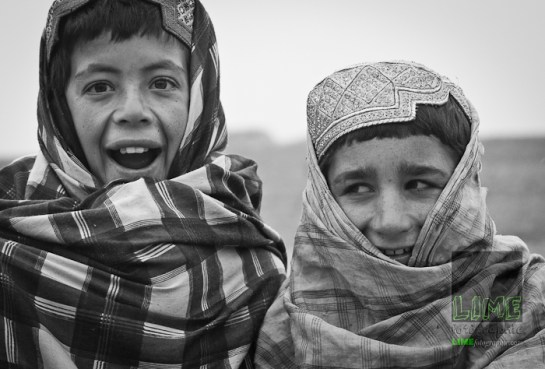
Exploring a compound looking for vantage points over the neighbours and there is always an opportunity for a photograph.  Some of these places are so dark it is a constant battle with exposures.  Challenging but rewarding.
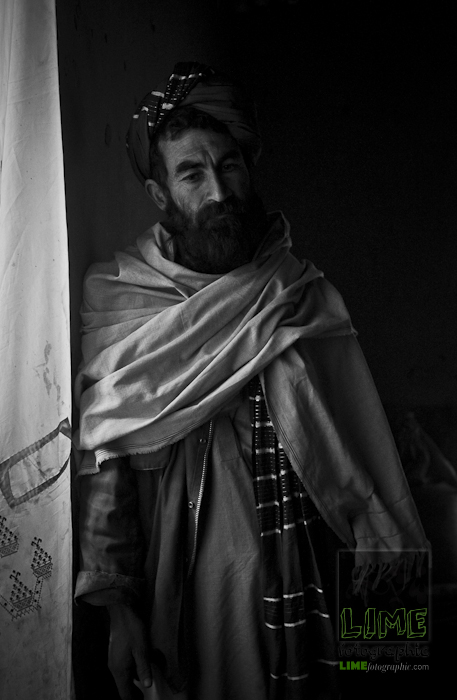
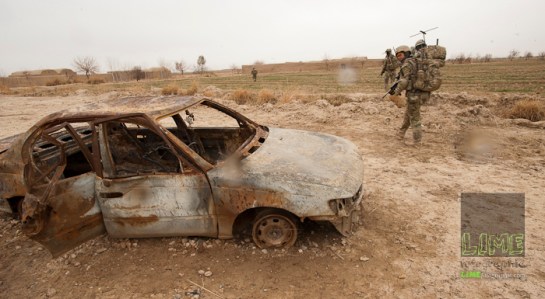
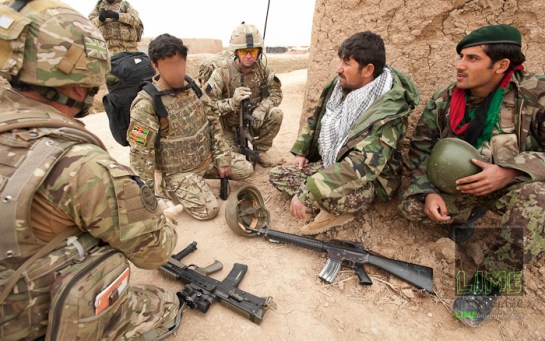
After meeting up with our Afghan colleagues it soon becomes apparent that by turning up in such numbers and prepared to fight a common enemy, the insurgents have employed their only real tactic in these situations and have melted into the community.  There is obvious frustration in this but there have been finds of weapons and no lives lost.
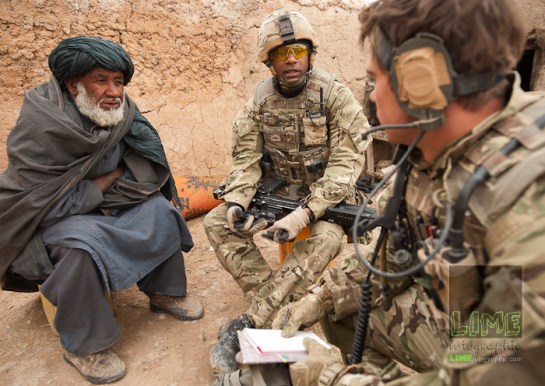
Before long its time to make our way to the pick up point and all the soldiers involved in this operation gather in their groups in the middle of a field awaiting once again our chariots.
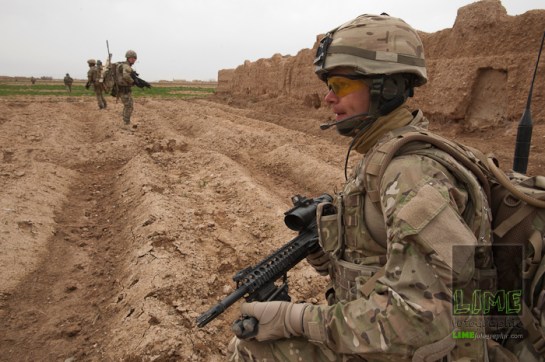
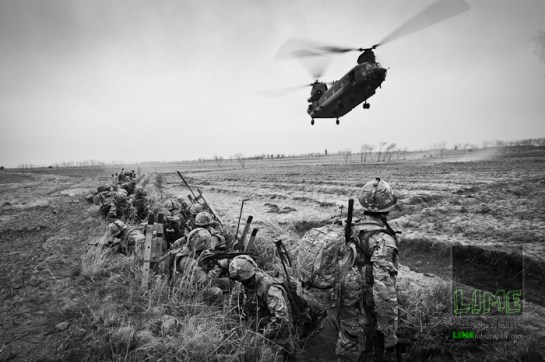
As quickly as the disembark, we are all back in the Chinook and soon back to our temporary home, as we say in the military, back in time for tea and medals.  As I look back, I don’t really think I can say I enjoyed the operation but I certainly cannot say I hated it either.  I am glad I went, saw these guys operate and I am certainly glad that this time at least we all came back.

These images were all taken during the operation, some under quite difficult lighting conditions.  This is what I enjoy doing so much that I feel so fortunate to be able to.  I know how lucky I am to have these opportunities even though they come with a huge sacrifice to my family, I know I have their support, which means so much to me.  I hope you like the images.
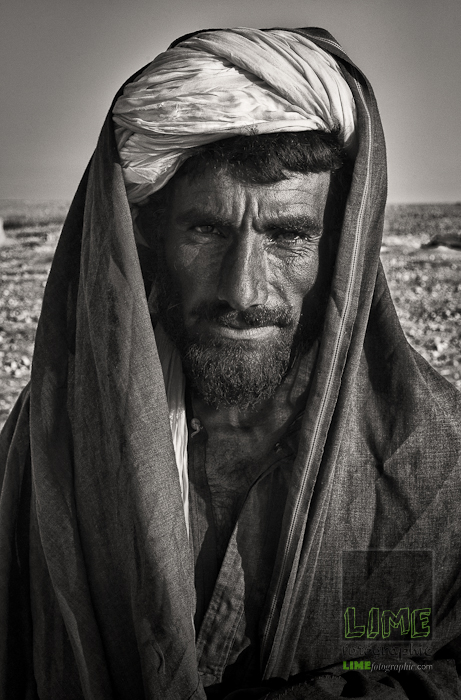
Afghanistan is a country with a long and difficult history, like many other nations, including our own (the United Kingdom).  Freedom comes at a cost and sacrifices unfortunately need to be made. On a basic level its just that people desire a simple life, they have few needs, but they crave a safe place to live to let their children grow up.

The Afghans are no different to us in this respect, but they are of course different culturally.  Yes this is a Muslim country but yet the culture is very different to that of Iraq which is also Muslim. There is almost always a pride in any nation or culture and this place is no different.  People are people wherever you go.  They sleep, eat (although diets vary), socialise, crap, laugh, cry and dream  Fundamentally they are the same as you or I.

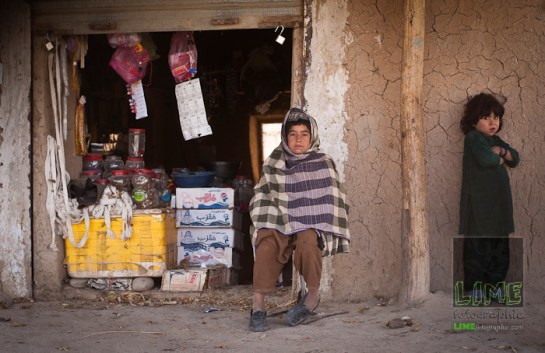
Afghanistan will manage itself, it has to and it is naive to think that they don’t already, but their cultural make up is very different to ours.  They manage themselves on a much more intimate level, where each village is an entity separate from other villages around them. Here in Helmand, the people don’t really care what is going on in Kabul, they have no desire to own a 50 inch plasma TV, almost all of them don’t even own a TV, few have radios or a car.

This is not a wealthy place in our terms yet is described as the bread basket of Afghanistan for its mineral rich soil. They will grow what they can sell here, poppy or wheat, what ever will help them feed their families.  We would be no different I am sure.  Should they really care what the west thinks they should grow? Existence here is tough, unbearably hot in the summer and freezing and wet in the winter.

This is a country of extremes. ISAF can not be here for ever, the government knows that, the people do too and the transition is moving on full speed towards a comprehensive security cover by its own forces.  When the security forces are left to deal with any problems themselves which I am sure they will do, I have no doubt that they will manage.  There will be hardships, but transition is a necessary step to grasp their own future. Only Afghanistan can ultimately choose its own path.

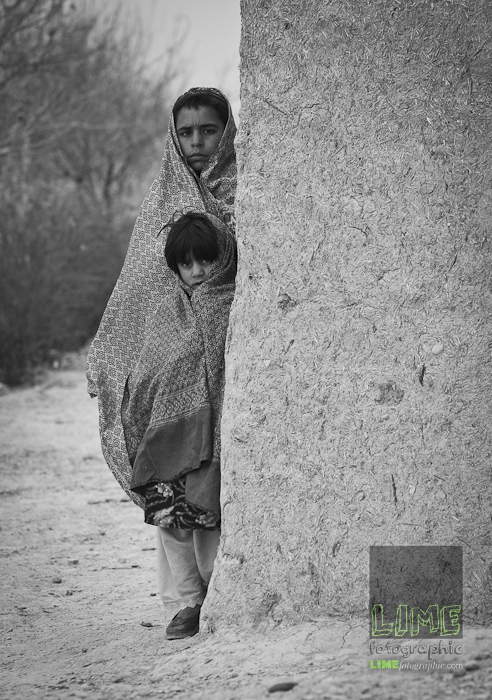
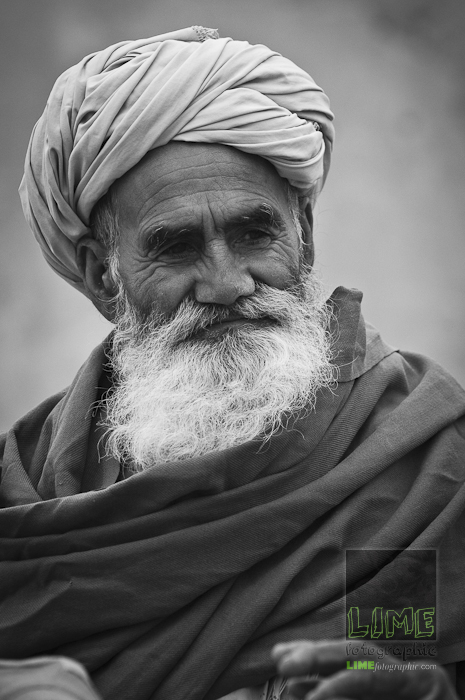
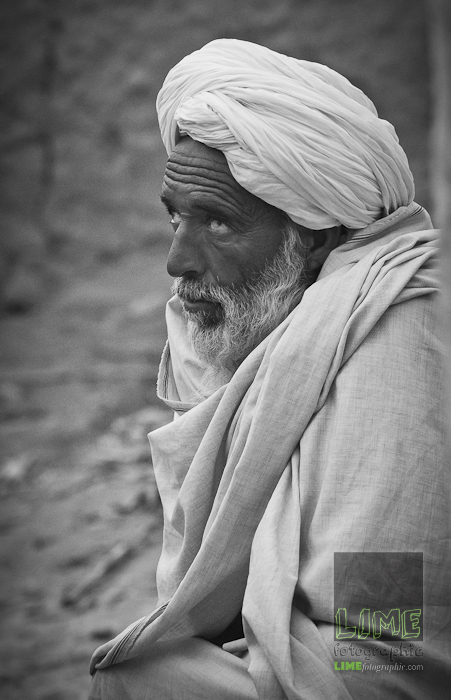
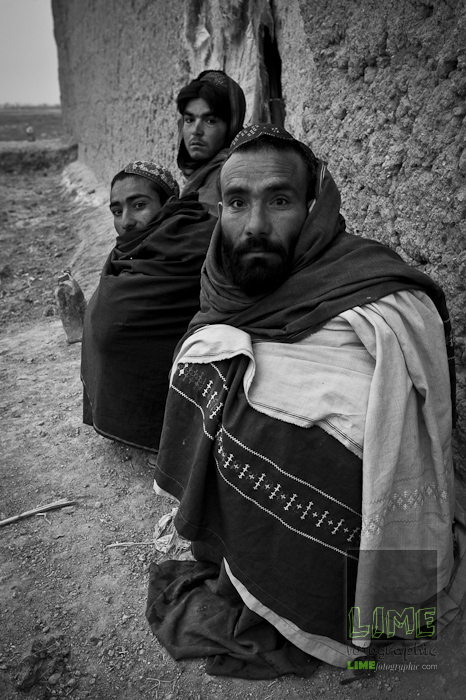
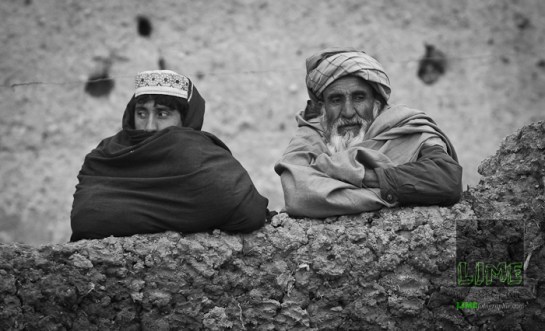
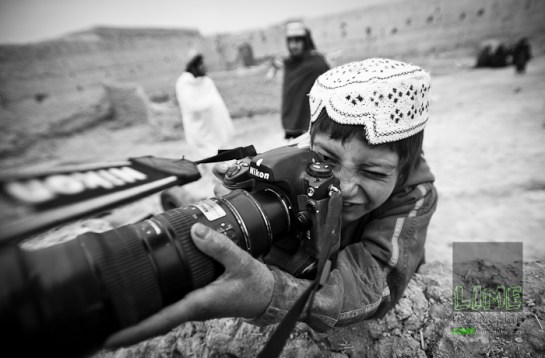
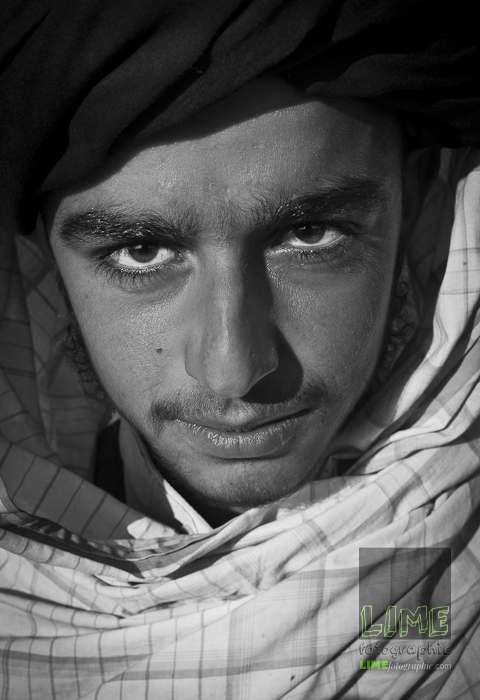
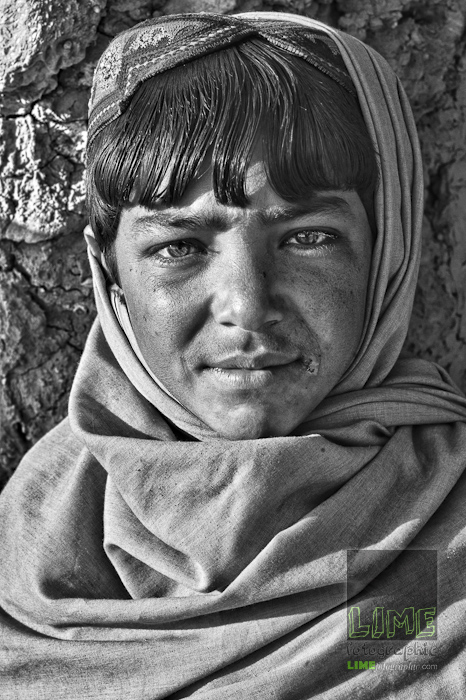
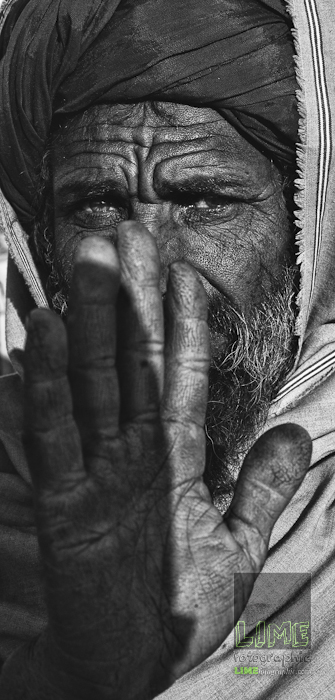
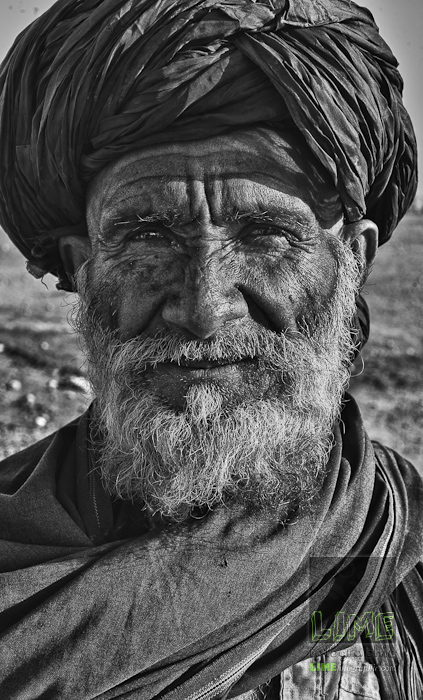
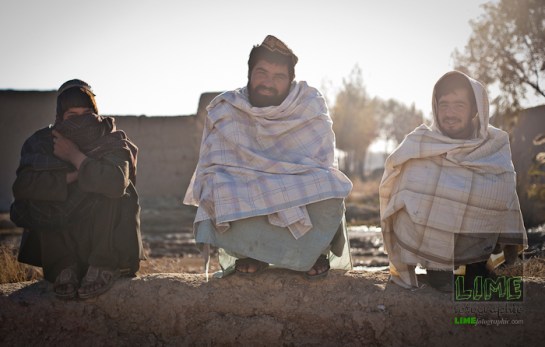
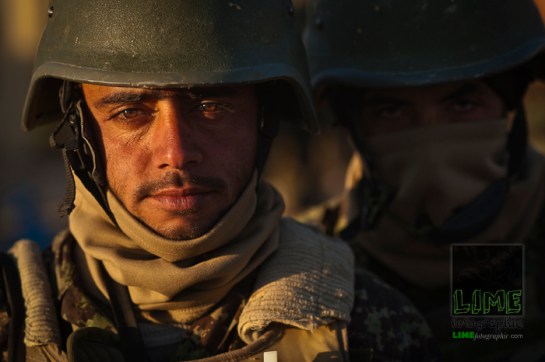
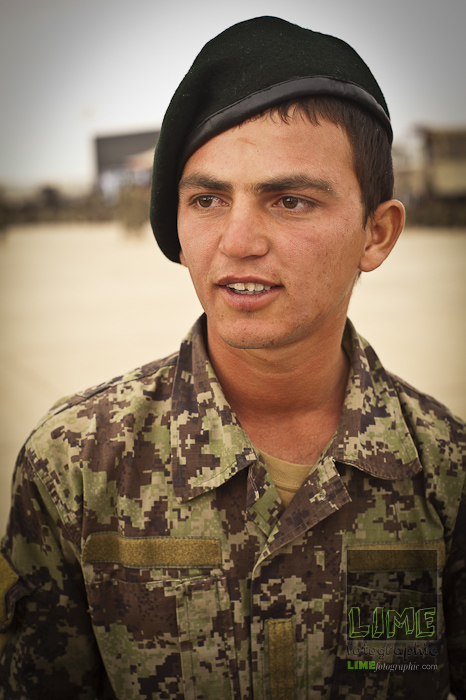
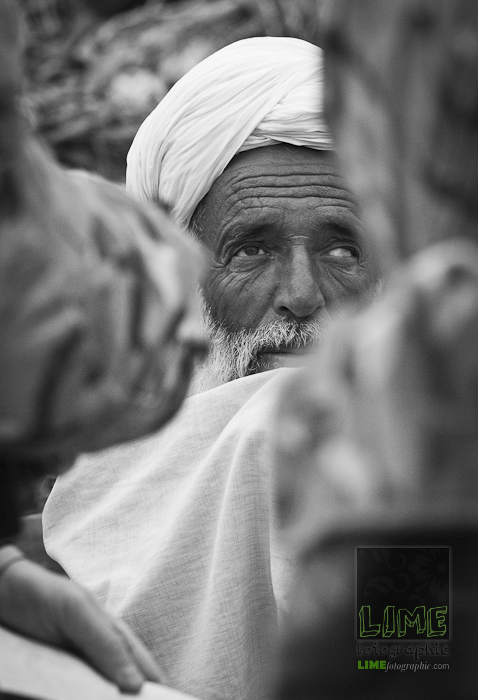
I wanted these images to show humanity, mood, character and highlight that upbringing notwithstanding we are the same.  I don’t speak any Pashtun or Dari (the two main languages spoken here in Helmand), and as a photographer I like to communicate with people, to direct a little for light and composition (at times), this was quite hard initially and to be honest I found the Afghans play up to the camera a bit and pose with ridiculous expressions.  I have over the weeks developed a basic sign language to try to direct them a tiny bit at least. A funny thing happened the other day when I was out photographing some local Afghans during an operation, I had been out a while and was tired and saw this young guy who I wanted to photograph, he was back lit (a look I really don’t mind), so I got the shot.  After I showed him the image he gestured to me to take another, he pointed at the sun and changed his position relative to the sun.  This was not something I thought I would have been able to get across in my basic sign language.  I did prefer the second shot though!

I am a professional photographer, that simply means I get paid to take photographs. This is my livelihood and not just a fun pass time (I know how lucky I am to enjoy what I do for a living). I am aware of the things that are said and done on the internet and the speed with which this industry is changing.

As anyone in this industry its hard to be truly objective about its development as anything I will say could be seen as sour grapes. On a positive note, digital photography has made photography accessible to anyone, which is a good thing, right? This means that the numbers of people with a ‘decent’ camera, clicking away has gone exponential. Even IPhone’s are regarded as excellent at gathering the image. You even have Pro’s shooting weddings with one!

Now I am not a photography snob (at least I don’t think I am), photography is not about your kit or equipment, its all about seeing the potential of an image before you take it and using your skill to capture it, however I do worry about perception with the public (clients) and more and more with people within the industry. Weddings are now being shot by Pro’s with the iphone 4, which is great for iphone and I am sure that a skilled operator does it justice. The problem is that every man and his dog has an iphone though and the perception ‘could’ be that anyone can now do a professional job with one. Not true. There will however be an issue with costs as you can get one of these cameras free on a contract and other photographers have over ten thousand pounds worth of kit, both pitching for the same wedding, there will be a massive range of costs, so where will this lead. Not having an iphone (for now), I really don’t know just how adept they are, my understanding is that you get app’s to re-work the images. This to me is like using a filter in Photoshop to give your images a ‘look’. In essence you use a filter to make ‘ordinary’ images stand out. This is only my opinion.
Where does that leave the industry? Well only time will tell, but one thing that gives me a degree of hope is that more and more clients are beginning to seek references from a photographer prior to booking, could this be down to the client now understanding that its the person that makes the image and not the camera? Is this knowledge borne from the experience of having a ‘good’ camera and wondering why they can not get the quality of image they expected by pointing it and shooting? Could this finally be the bubble of an over saturated market about to burst and the beginning of the rediscovery and homage to the skill of the photographer?

This is not intended to be an elitist subject, because these developments have brought some very talented people into an industry that was largely inaccessible before, but a statement about how an unregulated industry is seen by many as being in the dying twitches. Could we be seeing the dawn of a new era? Discuss. 
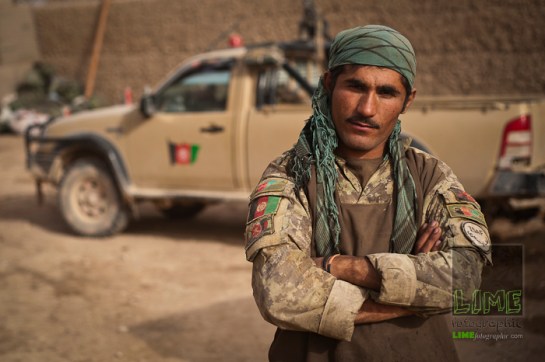
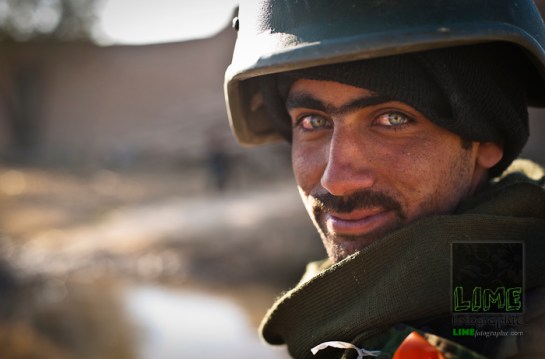
As I sit here getting ever closer to the end of my latest tour of duty, I contemplate the mind set of the British soldier.  This may or may not be one of the most dangerous places on the planet, probably not but it is still dangerous.  It makes me wonder exactly what bravery is.
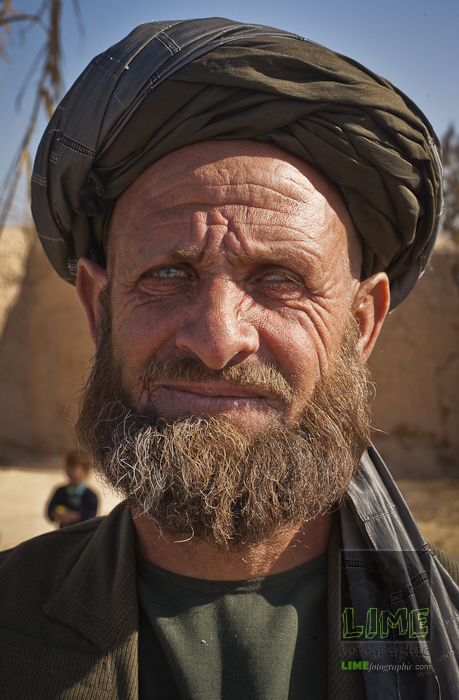
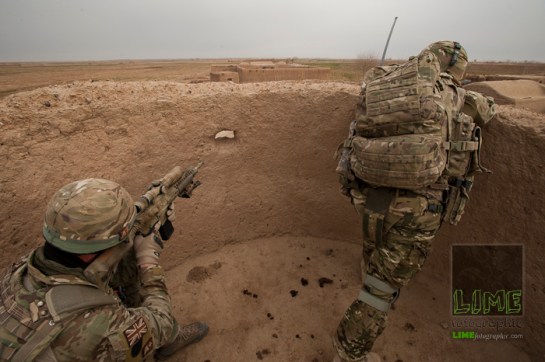
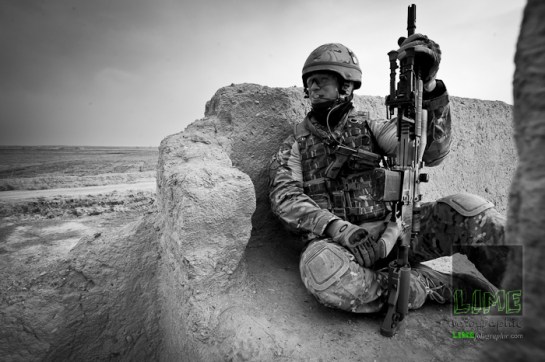
Is it simply brave to just be here?  Is it brave to step outside the wire?  Is it brave to fly those flying chariots that are our primary mode of transport here?  Is it brave to don all of your PPE (Personal protective equipment)?  Is it brave to poke your head up over a wall in the middle of Helmand?


I am not sure.  These are the day to day experiences of some of the soldiers out here in Afghanistan.  Although you feel trepidation prior to any of the above, when you get there, you just go, do your business and the training takes over.  You are so busy looking, thinking, observing, watching, you don’t really have the time to be worried.  We don’t constantly worry about every step, or that it could be your last.


I certainly don’t feel brave when in the relative safety of Camp Bastion.  I don’t feel ‘brave’ when I go out on patrol, I don’t feel ‘brave’ when I fly in the Merlin or Chinook and I certainly don’t feel brave wrapped up in my PPE (only bloody heavy).

So what is brave?

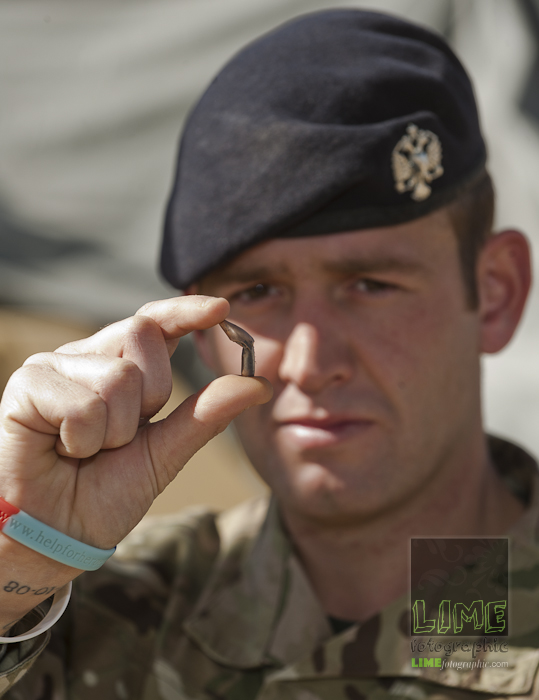
I had the good fortune this week to photograph a soldier who had been lucky.  He had been shot by an insurgent, whilst on patrol in Helmand.  Luckily for him he was saved by his body armour, the round embedding into his back plate.

Armed with what remains of the round, we were tasked to get some photographs of Trooper Dan Griffiths for the UK press, I asked him how he felt.  He told me that he ‘worried’ now.  During the incident he was knocked down with such force that he truly believed he was seriously injured.  He admitted to screaming in pain, clambering for cover.  Only when checked over by his comrade was he then aware he had escaped injury and just how lucky he was.  Dan is now one of the few who knows what it feels like to be shot and I am sure it is not an experience he would like to repeat, yet he still has to endure, he still has patrols to go on, operations to take part in, be part of a team.

Simply put, in light of his experiences, in my eyes, Trooper Griffiths is brave.

http://www.thesun.co.uk/sol/homepage/news/campaigns/our_boys/4156468/Squaddie-shot-in-the-back-but-battles-on.html

Any of you who know me on Facebook will no doubt have been made aware by my oh so generous colleagues that I was involved in a rather unfortunate incident.

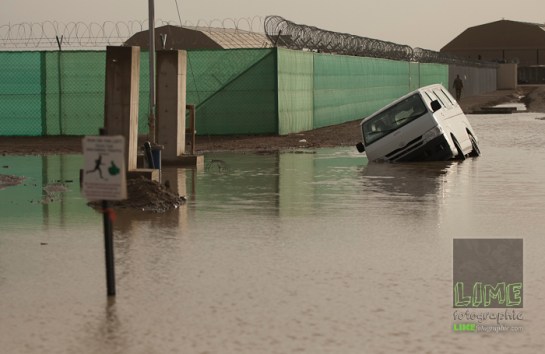
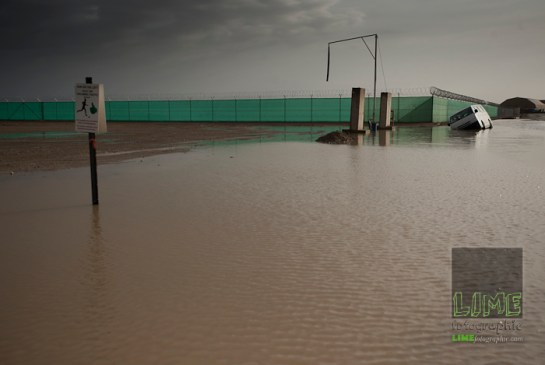
Those of you who may have been out here before will know that when it rains, it can rain hard.  Not that this happens too often, but when it does, this place (Bastion) can flood, and flood fast.  After being here for several years there has been quite a bit of development with a decent (relatively speaking) road network and huge drainage ditches.

Sounds great, but the problem is that when the big rain comes, it can quickly fill the ditches, and when it does in places the road disappears.

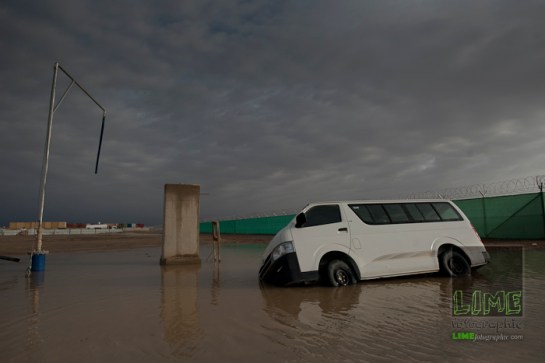
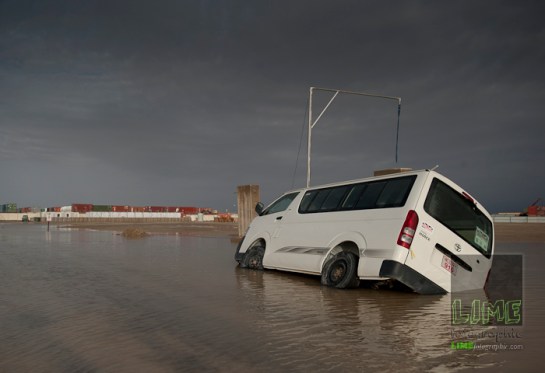
So driving through Bastion at night, in the rain claimed another victim……….me!

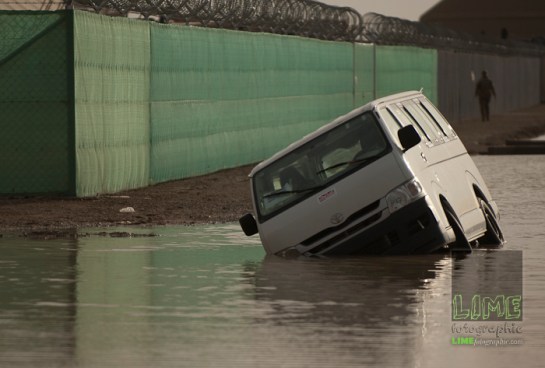
Laden with kit, driving back to the office, one of the roads was swallowed by a flood.  Initially it just looked like a patch but once in, it just seemed to get deeper.  Probably only 3 inches deep,  I slowed down, dropped gear to keep the revs up and tried to pick the route, but with no visible markers for the drainage ditches, once the minibus found the edge, it had me.

Evacuating the vehicle was interesting.  Pretty soon we were all up to our groins in the water.  And from there the good old military banter begins.

One thing I have learnt is that the ‘taking the piss’ is never not going to happen, so you have no choice but to laugh along.

So there we have it, I am a little red faced, I have added that little bit of morale to the team but the reality for me is that at least no-one was hurt and if this is the worst that happens to me on this tour, I will be happy.

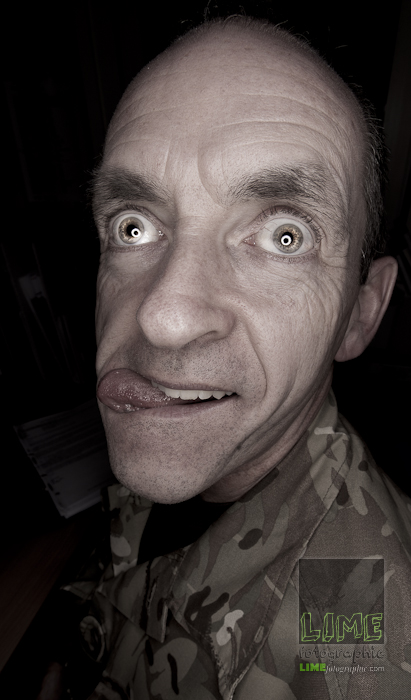
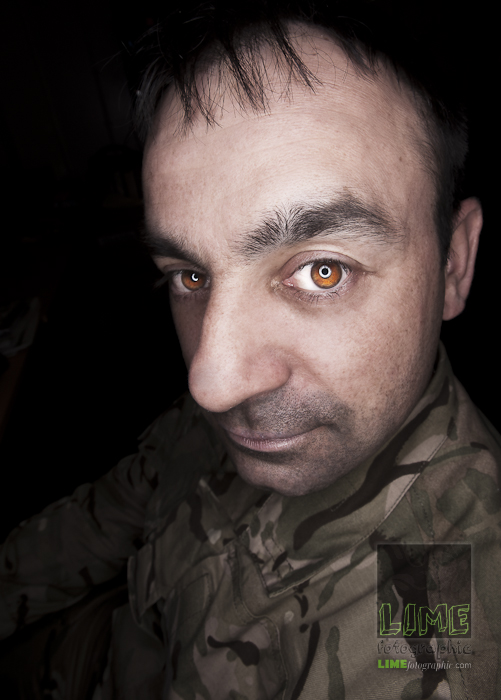
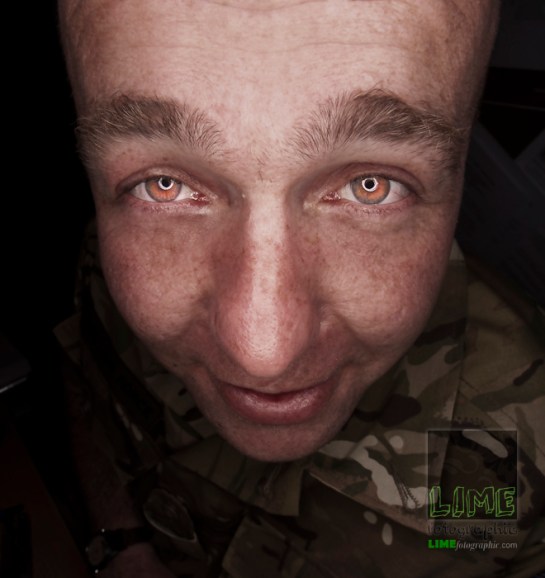
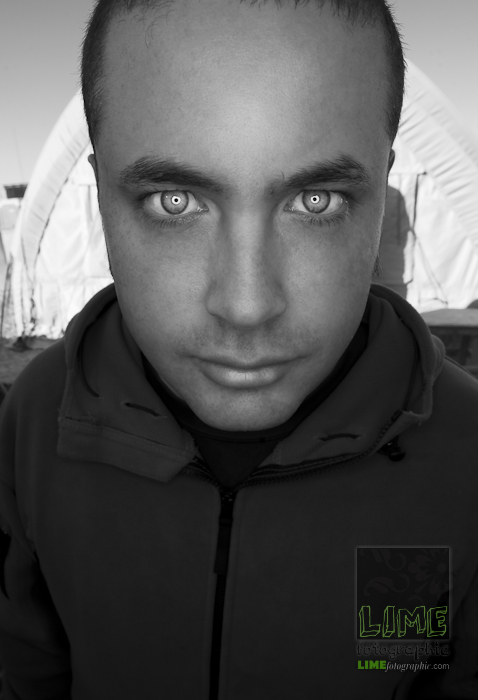
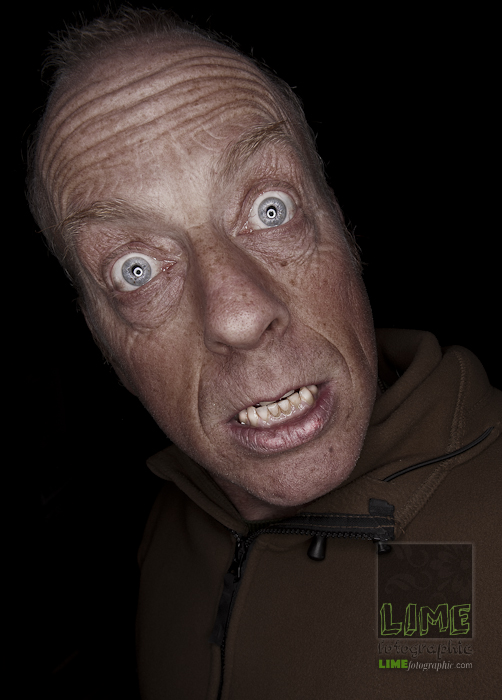
Playing with a ring flash, the opportunity arose to take some wide angle portraits which is not something I usually do.  By going extreme, the portraits became a caricature especially with this motley crew.

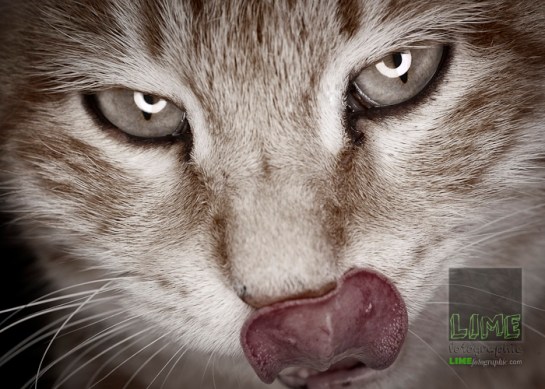
Also took the opportunity to photograph the cat, only because it is too fat to run away.

As we wait for our next assignment, I get the chance to look through some of my old archives (I only have a small portion of them out here).  The reason I brought these out was to look at creating a private coffee table book from the Iraq tour.

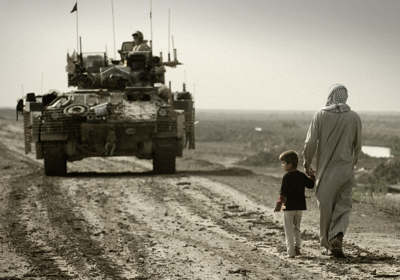
Some of you will have seen this on the home page of my website http://www.LIMEfotographic.com and the reason for that is that this image is personally my favourite image taken on my Iraq tour.  It was taken on an operation with the Scots Guards north of Basrah, where we went to assist on some Civic assistance providing some infrastructure maintenance in preparation for the winter months.  These marsh people were persecuted by the Hussain government and were openly friendly towards us, they were not threatened by our presence and in fact seemed to feel comfortable around us.  This image is an illustration of this with a father and son simply walking at ease towards one of our Warrior tanks.  When you consider what hardships these people had to endure at the hands of Saddam, the fact that they could differentiate between the army of that regime and ours was outstanding.  To see the way these people lived so close to a major city like Basrah which before the war was fairly modern, was indeed a contrast.

This image probably means more to me than it will anyone else, but like many images, the personal connection is what identifies the narrative.  I don’t know if this is a great image or not and a part of me does not care, this image means something to me and really that is all that matters.

Like many of us Army photographers, we have been criticised for making pictures that are too clean, well composed, too perfect and somehow missing the shot.  I think this may be true because if you look at some of the most well known press images, the ones that have become totally iconic are usually little more than snaps, however they capture something, usually raw emotive content, that compositional quantity overlooked by many photographers.  Sometimes this can be a harsh commentary as when trained to look for composition and create images you generally get to a point where you can not take a photo without slipping into one composition guide or another.  The composing of an image just becomes automatic.


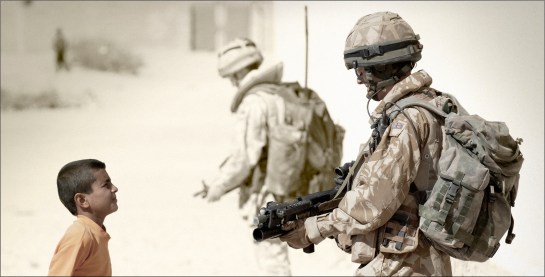
This is one of my personal favourite shots from my tour of Iraq in 2007-2008.  I know the colour popping is not to everyone’s taste and is not something I tend to do much of, but this moment was one of intensity and connection that I felt I had to do something to separate them from the background, from everything that was going on around them.  This situation was played out in a small village just outside of Basra and it was usual for numerous kids to come right up to you, into your personal space and beg for sweets or water, or even just grab at anything hanging off your body armour.  In this instance this boy just stopped and looked up at the young soldier.  For a moment they just looked at each other and connected in some way.

This image sat in my portfolio submission for Operational photography in the 2008 Army photographic competition and is still an image that I enjoy.

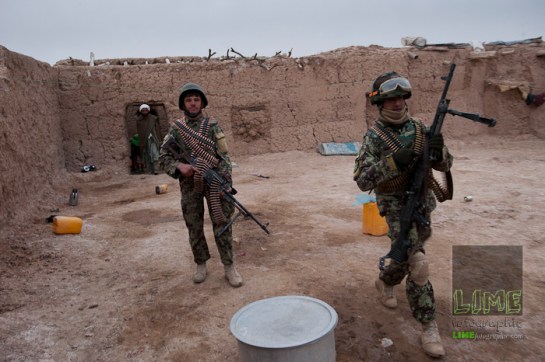
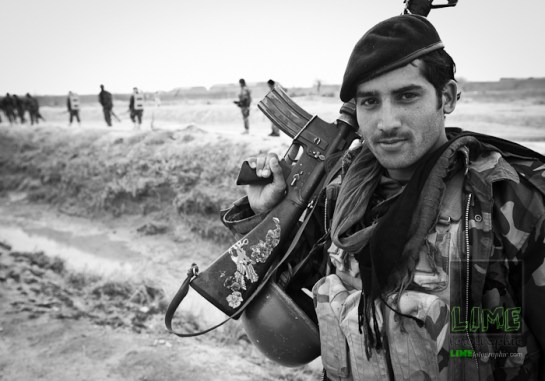
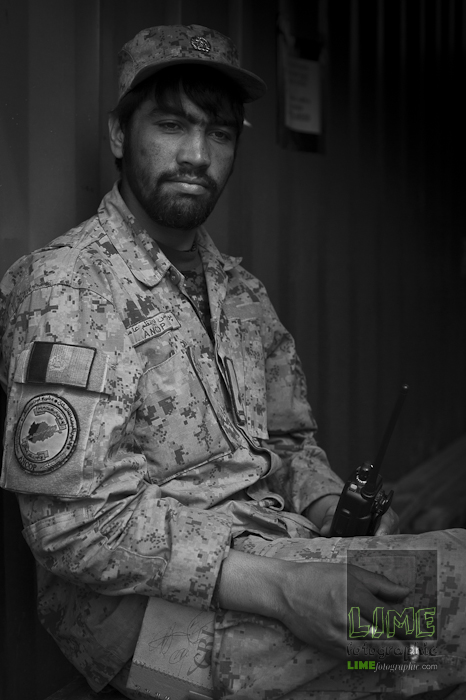
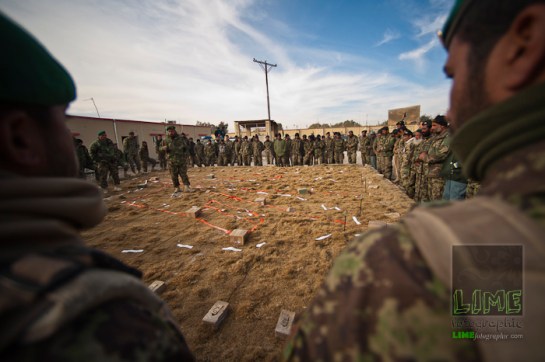
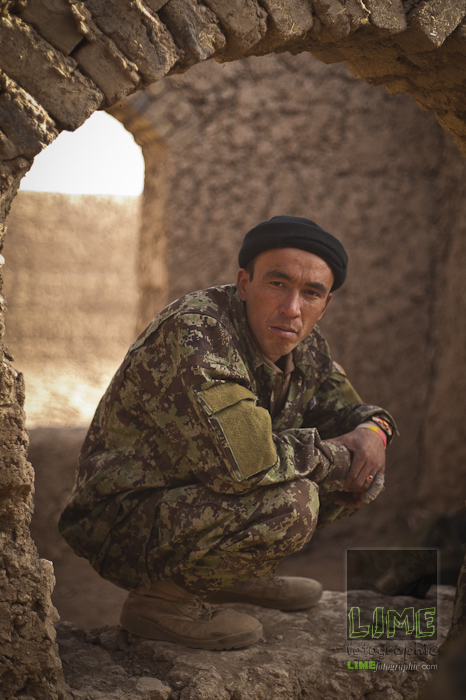
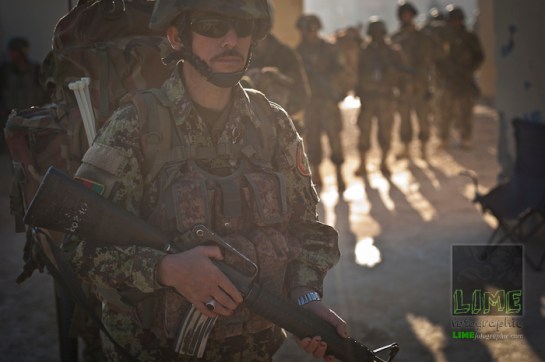
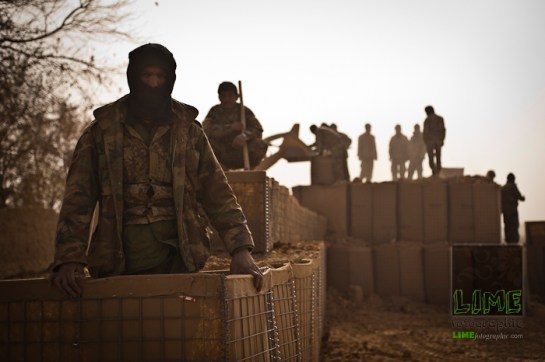
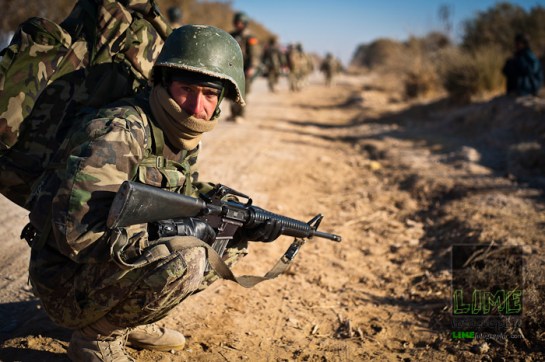
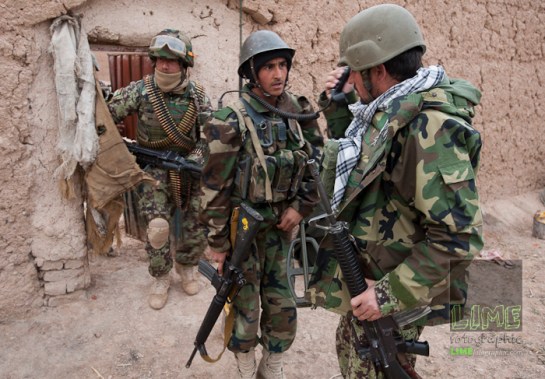
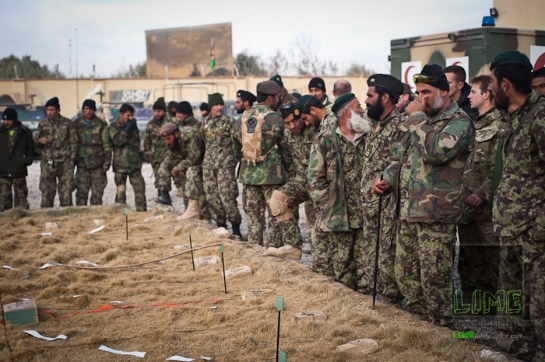
Our latest mission has been to go out with the Afghan National Army (ANA), to film and photograph them, as the ‘defining moment of operation Herrick 15’ would be their first major operation planned and executed by themselves to clear an area of Helmand from the influences of the insurgents.

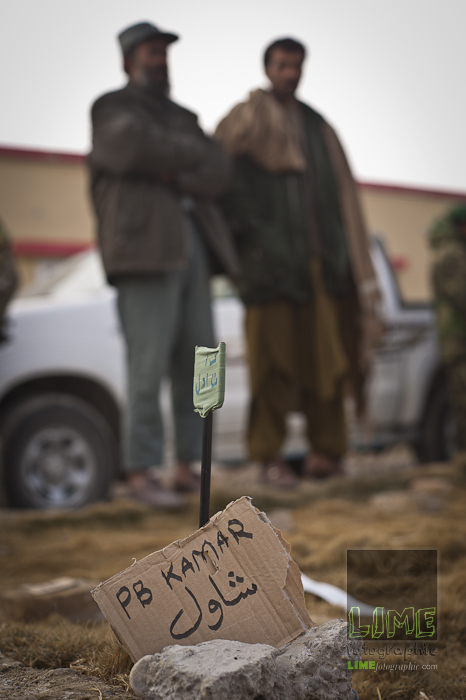
Being the video guy, my job was to film them from the orders through the patrol phase, to watch them as they took over compounds and created, from scratch, their Check points in an area that insurgents had been deeply embedded in.

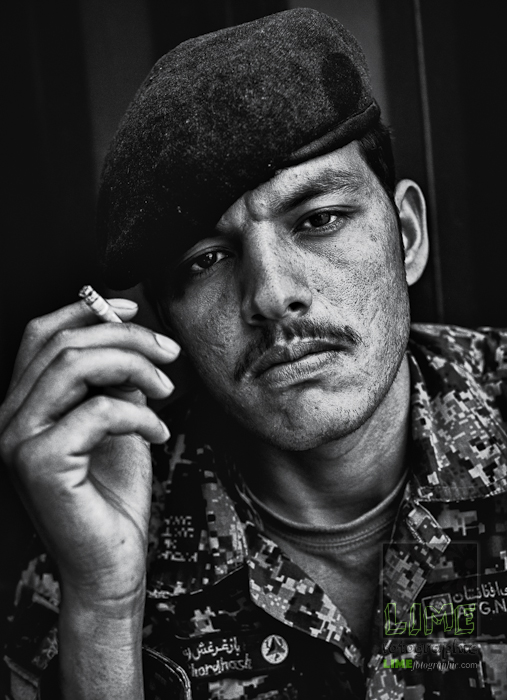
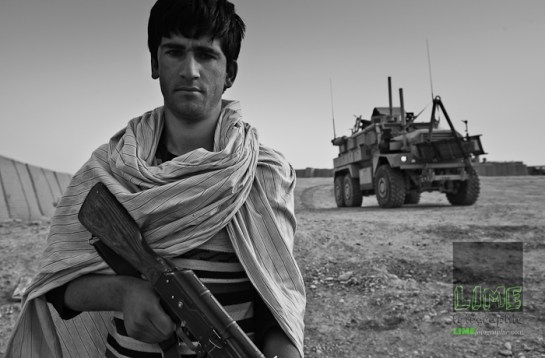
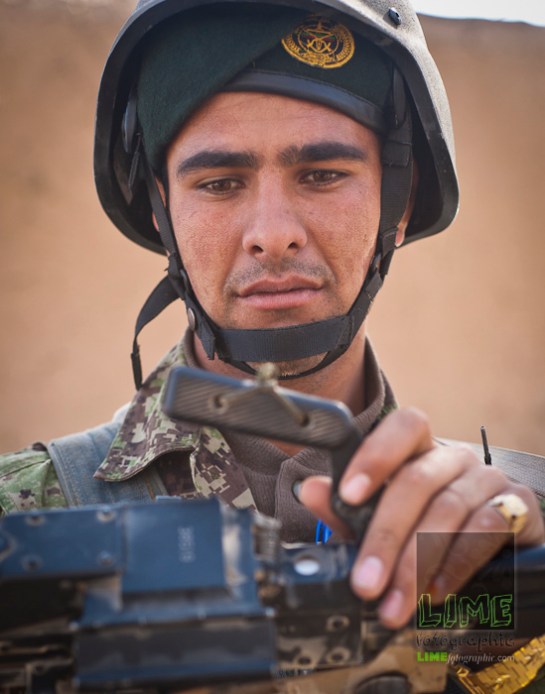
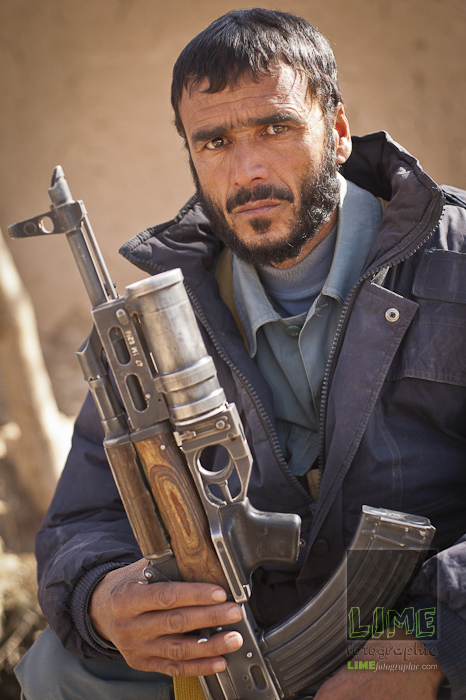
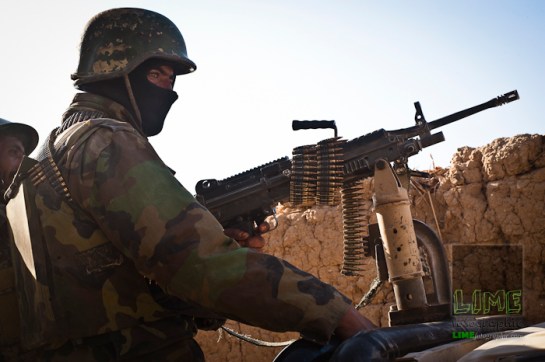
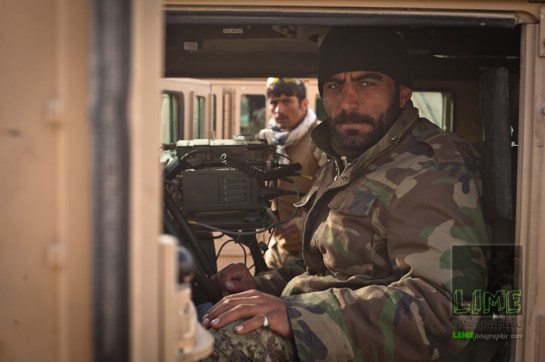
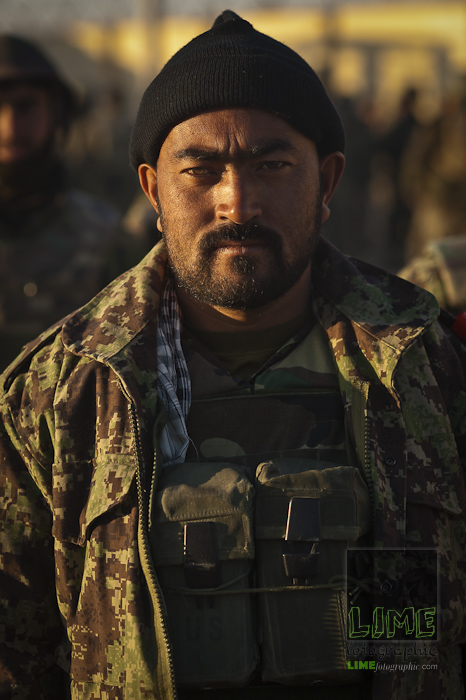
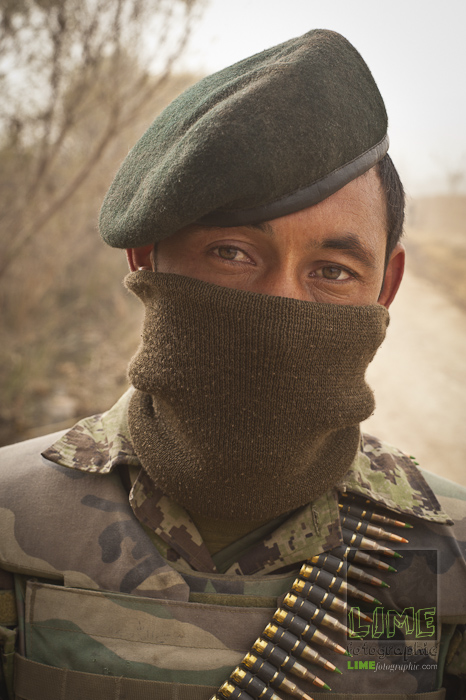
Say what you will about the ANA, they may lack an element of our professionalism, skill or ability, but when you consider that they are poorly paid, receive only a fraction of the training we get, are nowhere near equipped (by our standards), they do a fantastic job and in light of all this they are beyond doubt very brave indeed.

During this operation, they moved with all they needed to sleep rough across difficult terrain in freezing temperatures, which was tough indeed.  They don’t get issued the warm or wet kit that we all get issued, and yet they just continue to work. The Afghans seem to work without complaint, they know what they need to do and they have a resolve to do what they need to, in order to rid their country of the enemy.

The ANA is a fledgling army, already growing to the required numbers, they know they have a tough job and continue to do their best to get it done, and they are proud.

Regardless of any shortcomings, I tip my hat to the Afghan braves and only hope that they gain the popular support of their countrymen because they above all deserve it and with it can begin to make the giant step towards peace, the likes of which has not been seen in this part of the world for decades.

These soldiers are going to be a big part of this countries future and every journey of a thousand miles begins with the first step.

Good luck.

This gallery contains 13 photos.

A small selection of images taken from the wedding of Les & Natalie Simmons, who married in Bournemouth, UK. A blustery start to the day on the British south coast. As with all weddings, opportunities always present themselves for the cute shots. The dress detail is a must do shot. Loads of natural light and …

Read More

There can be little doubt that Afghanistan is a developing country.  Forty years ago it was considered an extremely forward thinking Muslim nation and quite liberal with it.  Not that you would believe that if you saw it today.  Prolonged conflict will do that to a country.

Are things changing?  Well things are always changing, so that is a given, the question is though, is it changing for the better?  The only people that can answer that are the Afghans themselves, so I won’t start.  However they are certainly taking charge in their own security.  If you measure ‘better’ by improving civil rights and education, then yes it is improving but it is still a dangerous place to grow up.

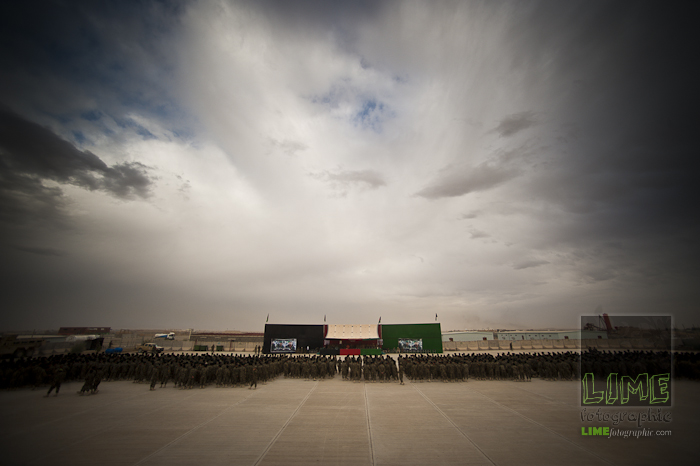
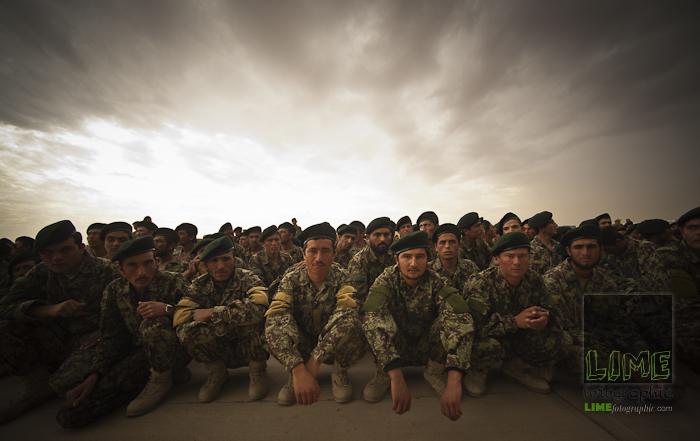
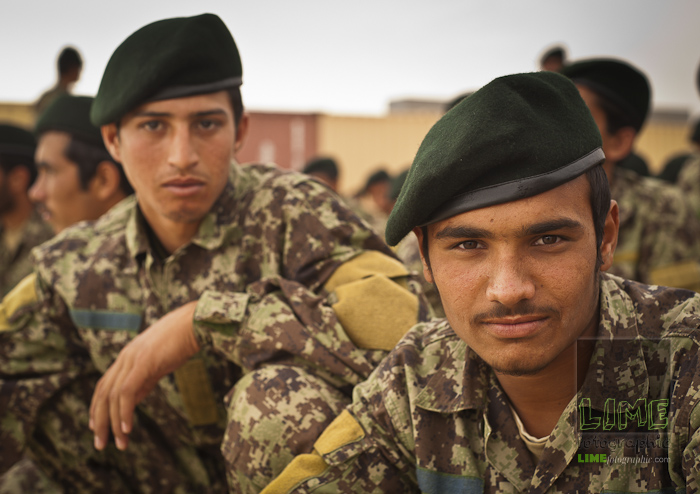
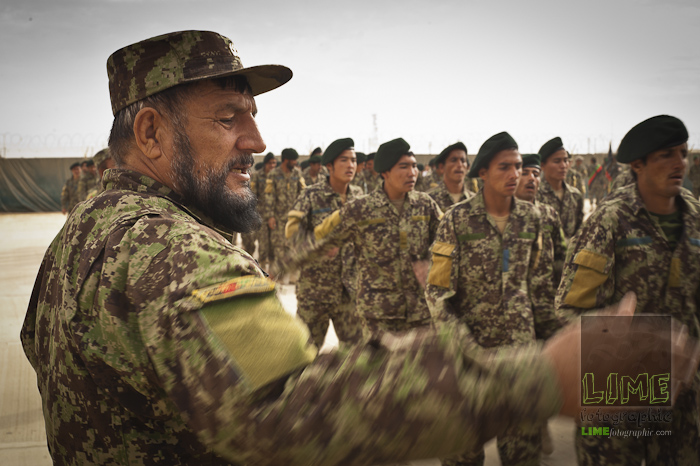
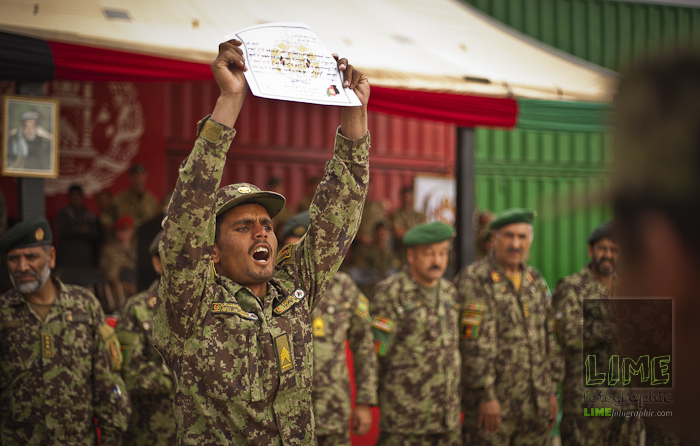
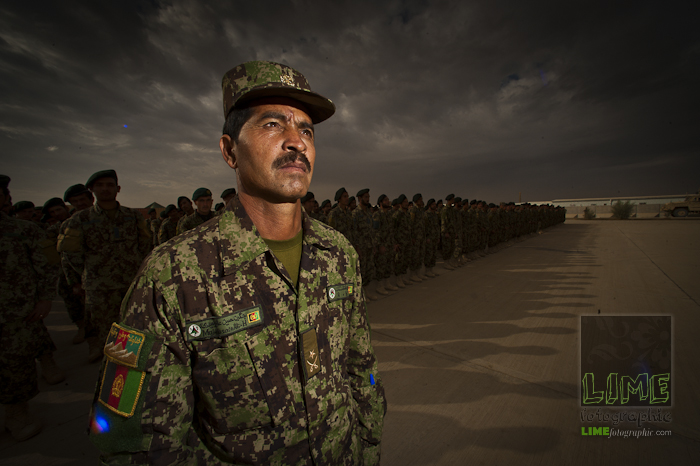
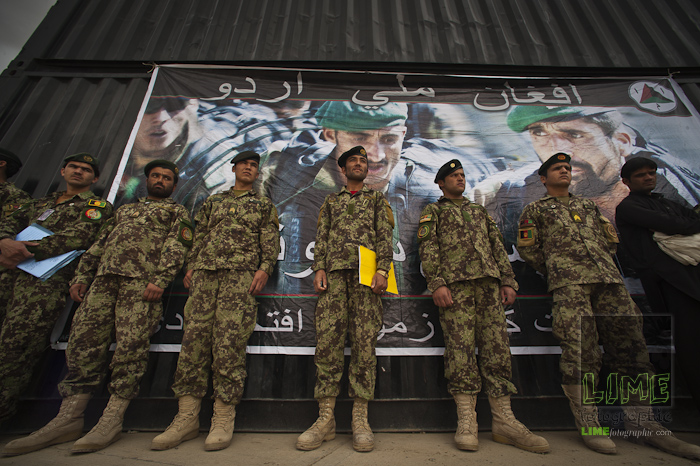
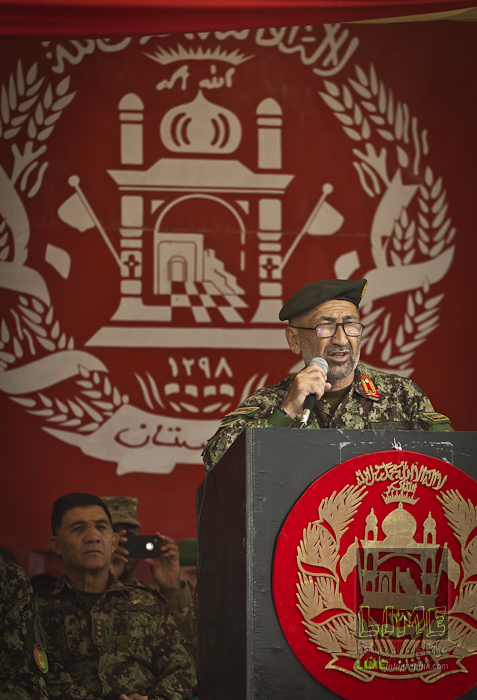
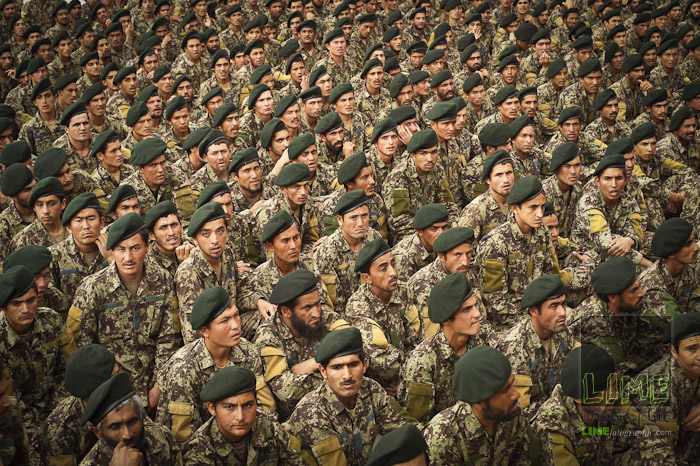
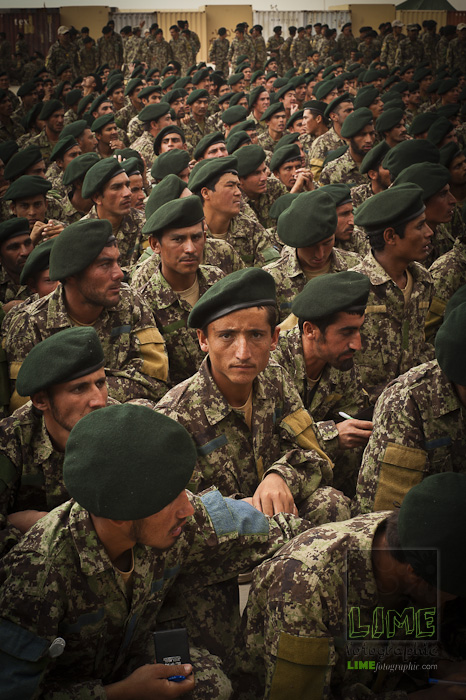
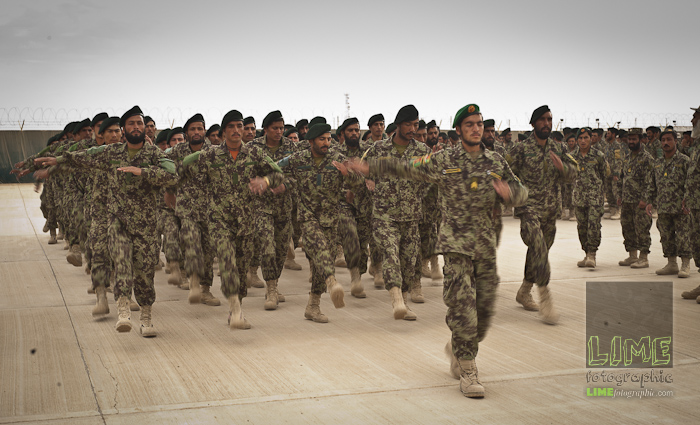
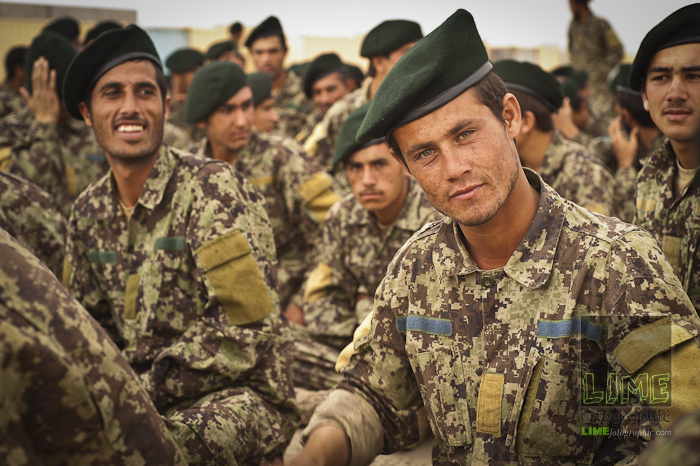
Having had the opportunity to observe a pass off parade in Helmand where 1400 newly trained soldiers formed up, I was not surprised to recognise many aspects.  Being a serving soldier I still remember what I felt like on the day I passed off the square.  You have been thrust together with strangers into an environment that tests you, trains you and as best it can prepares you for what comes next.  Yes there is a lot to learn, yes it is physically hard at times, yes at times you wonder how much of it is really necessary, but on this day, it all pails to insignificance as the pride of your achievement takes control.

Being a soldier in the Afghanistan Army, is nothing like being a British soldier, the equipment is different, the circumstances are different, the opportunities are different, but effectively the job is the same.  They are charged with the responsibility to protect and defend a nation.  Their nation.

In the case of Afghanistan, this is no easy task, but it not been easy for forty years, and it won’t get any easier over night.  A fledgling Army has to get up to strength, meet the challenges ahead and gain popular support, which it is doing.  They are gradually beginning to take over areas from ISAF (International Security Assistance Force).  They may not be able to operate the same way as their ISAF counterparts, but as they can communicate with the local population in a way ISAF cannot, you could argue that they will have greater effect.  The local population will, after all, be the ones to decide where the nation is going.

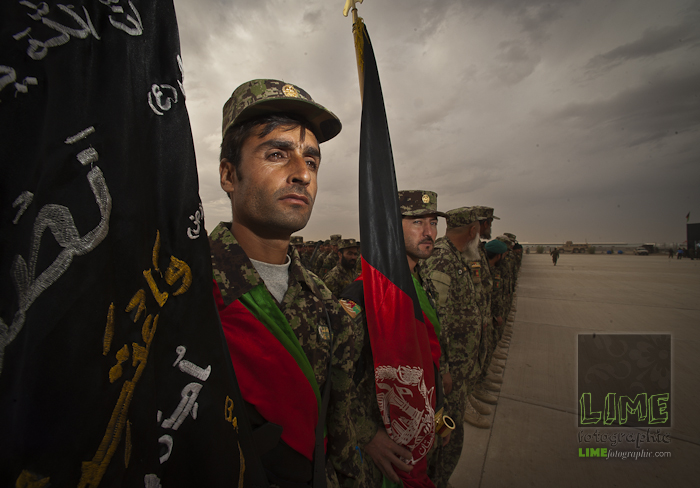
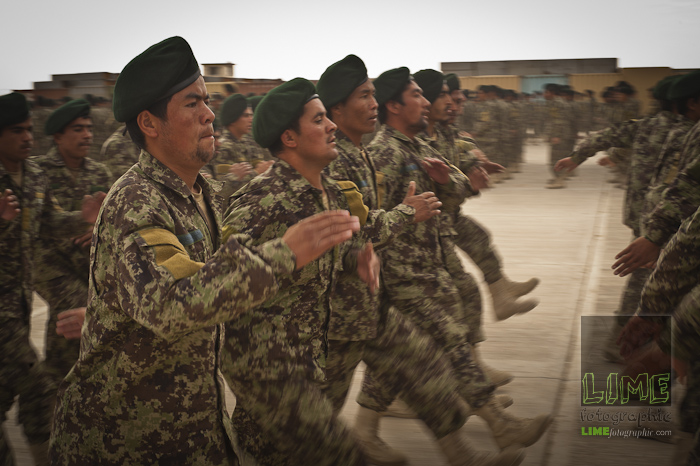
Afghanistan is a large multicultural nation which has had a past with the Soviets, so it is unsurprising that elements of the Soviet drill are practiced.  The Soviet drill that was witnessed all over the world beamed from Red Square during the height of the ‘Cold War’, was nothing if not impressive and imposing.  Stamping feet, swinging arms, heads help high, this is definitely not a simple march and at times timing was lost, but in the scheme of things, an ability to march in step all the time is possibly not of primary importance.

As a soldier over here, we try to find humour in that around us and I had a chuckle to myself with the marching.  When it was good, it was impressive (as is the intent), but at times as I photographed it I found myself thinking that it looked like a rehearsal for a Michael Jackson music video.  The the influence of the self appointed ‘King of Pop’, has reached far indeed.

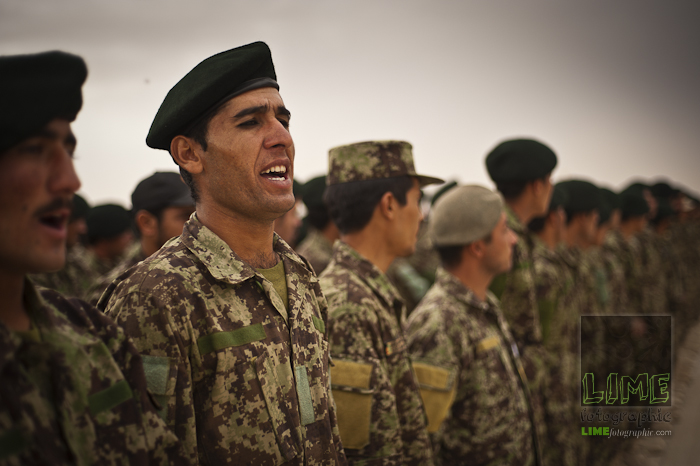
An Afghan parade holds very little similarities with a British one, this is not intended as a criticism as the Afghans are not British, nor I am sure, do they wish to be.  They follow their own cultural paths and do their best too.  There were times during the parade where the soldiers sang, and not just to their national anthem.  When they sing, they sing with passion, even if the National anthem is played over the PA system from a mobile phone.

My overall impression from witnessing this spectacle was they are a proud people that really love their country and they believe in themselves.  When they have all that what can stop them?

It will be a long journey but a journey that Afghanistan has to take for its own future and now there are an additional 1400 soldiers to help.